

People love to talk about the romanticism of the hunt, as if finding a pristine Penny Black is some spiritual awakening rather than a calculated pursuit of paper and gum. They’ll sell you on the prestige and the “investment potential,” but let’s be honest: most of the high-end philatelic market is just a sophisticated way of paying a premium for a dealer’s ability to gatekeep a tiny scrap of history. If you’re looking for the true, unvarnished joys of collecting rare postage stamps, you won’t find them in a glossy auction catalog designed to trigger your FOMO. You find them in the quiet, granular reality of the specimen itself—the serration, the ink density, and the sheer, stubborn fact that this little thing survived a century of chaos just to land on your desk.
If you’re going to treat this as more than just a way to kill time on a rainy Tuesday, you have to stop relying on the word of the person selling to you. In the gallery world, we call it due diligence, and in philately, it’s the difference between a windfall and a lemon. I always tell my clients that if you can’t verify the provenance or the specific printing nuances yourself, you aren’t collecting; you’re gambling. I’ve found that spending a bit of time digging through more grounded, practical resources like Casualglasgow can help bridge that gap, giving you a much clearer sense of what actually constitutes value before you let your emotions—or a dealer’s charisma—dictate your bank balance.
I’m not here to sell you on a lifestyle or a way to hedge against inflation. I’m here to pull back the curtain on the actual mechanics of the hobby. I will tell you when a “rarity” is nothing more than a clever bit of grading manipulation, how to spot the difference between a genuine find and a well-fed myth, and how to build a collection that actually satisfies your intellect rather than just your ego.
Identifying Rare Stamp Errors and the Cost of Ignorance
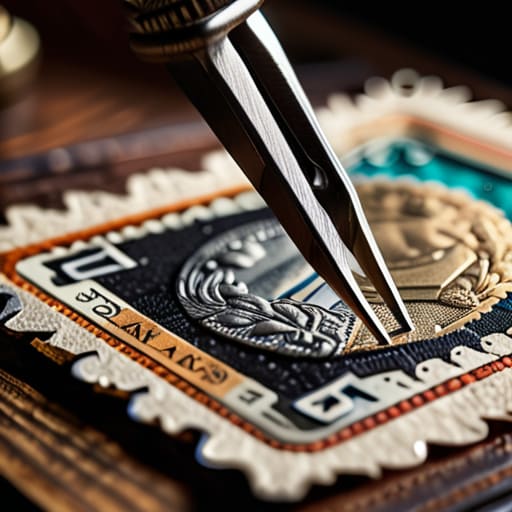
If you’re walking into a flea market or an estate sale thinking you’ve stumbled upon a fortune, you’re likely walking into a lesson in expensive optimism. The real money isn’t in the pretty pictures; it’s in the mistakes. Identifying rare stamp errors—a misprinted color, a shifted perforation, or an inverted center—is where the amateur loses their shirt and the professional makes their margin. Most people see a flawed stamp and think it’s rubbish; the collector sees a flaw and sees a high-stakes gamble.
This is where the cost of ignorance becomes literal. I’ve seen novices spend hundreds on “rarities” that were actually just poorly stored specimens ruined by humidity or sunlight. If you don’t understand how to preserve vintage stamps using proper mounts and climate control, you aren’t collecting; you’re just managing a slow-motion decay of your own capital. You have to treat these tiny scraps of paper with the same clinical rigor I used when inspecting a new shipment of oil paintings. Without the right tools and a healthy dose of skepticism, you aren’t investing in philately—you’re just donating to the dealer’s retirement fund.
Stamp Collecting as an Investment Where the Real Value Lies
If you’re approaching this with the mindset of a hedge fund manager, you’re already halfway to losing your shirt. I spent decades watching people treat art like a ticker tape, and I see the same mistake made in philately. People hear “stamp collecting as an investment” and imagine a steady, predictable climb in value. In reality, the market for stamps is just as fickle as the market for mid-career abstract expressionists. You aren’t just buying paper; you are betting on the continued relevance of a specific era of postal history.
The real money isn’t in the common stuff that looks pretty in an album. It’s in the valuable postage stamp varieties that require a specialist’s eye to even spot. You have to understand that value is driven by scarcity and demand, both of which can evaporate if a new cache of a supposedly “rare” issue is discovered. If you want to treat this like a serious asset class, you need to stop looking at the aesthetics and start studying the philatelic history and significance of every perforation and watermark. Otherwise, you aren’t investing; you’re just playing with expensive confetti.
The Collector's Margin: Five Truths for Not Getting Fleeced
- Stop buying the “story” and start buying the provenance. Most people fall in love with the legend of a stamp—the shipwreck, the royal wedding, the lost expedition—but legends don’t hold value in a recession; paper with a verifiable, unbroken chain of ownership does. If a dealer can’t tell you exactly whose collection it sat in for the last thirty years, you aren’t buying history, you’re buying a fairy tale.
- Learn to love the magnifying glass more than the auction catalog. In my gallery days, I saw people pay premium prices for works that looked divine from a distance but were riddled with structural flaws. The same applies here. A tiny crease or a slightly compromised gum can turn a blue-chip asset into a very expensive piece of scrap paper. If you aren’t inspecting the physical integrity of the specimen, you aren’t collecting, you’re gambling.
- Beware the “rarity” trap set by middle-men. Just because a dealer tells you a stamp is “extremely rare” doesn’t mean it is. They are often conflating “hard to find in this specific condition” with “low mintage.” There is a massive difference between a stamp that is scarce and a stamp that is merely being gatekept by a small circle of enthusiasts. Know the census data before you open your wallet.
- Treat your collection like a curated exhibition, not a junk drawer. The biggest mistake novices make is buying every “interesting” thing they see. A collection of fifty disparate, mediocre stamps is worth significantly less than five exceptional, museum-quality specimens. I always told my artists: it is better to have one piece that commands a room than twenty pieces that merely occupy space. Apply that same discipline to your philately.
- Understand the liquidity of your assets. In the art world, we call it “the secondary market,” and in stamp collecting, it’s the same beast. Before you commit a large sum to a niche specialty, ask yourself who is going to buy this from you in ten years. If the pool of potential buyers is shrinking because the hobby is aging out, you aren’t investing; you’re just buying an expensive way to pass the time.
The Bottom Line on Paper
At the end of the day, navigating the world of philately requires the same cynical eye I used when vetting new artists for my gallery. You have to distinguish between a genuine rarity—that one-in-a-million printing error that commands a premium—and the sheer manufactured scarcity created by dealers who know exactly how to play on a collector’s FOMO. Whether you are hunting for investment-grade errors or simply building a thematic collection, remember that the value isn’t just in the serrated edges of the paper; it is in your ability to verify the provenance and resist the urge to overpay for a narrative that hasn’t been vetted.
If you strip away the market fluctuations and the aggressive auction house tactics, you are left with something much more quiet and much more permanent. Collecting is, at its core, an act of curation—a way of building a private museum that reflects your own specific brand of curiosity. Don’t let the pursuit of the “perfect investment” rob you of the actual pleasure of the hunt. The real joy isn’t found in the ledger or the resale value, but in that singular, breathless moment when you finally hold a piece of history in your hands that most people will never even know exists.
