
Stop treating your sketchbook like a formal portfolio for a gallery that doesn’t exist yet. I spent twenty-six years looking at “finished” books that were so precious, so terrified of a single stray charcoal smudge, that they were utterly lifeless. Most of the advice you read online about how to keep a sketchbook is just a way to sell you more expensive, linen-bound journals that you’ll be too intimidated to actually use. If you are waiting for the perfect light or the perfect medium to begin, you aren’t making art; you are curating a museum of procrastination.
I am not here to give you a lecture on color theory or which Moleskine paper holds a wash best. Instead, I am going to tell you how to use a book as a private ledger of your mistakes, because that is where your actual visual language lives. We are going to strip away the performance and focus on the utility: how to document your process without the self-consciousness that kills creativity. I’ll show you how to build a tool that serves your career, rather than a decorative object that merely collects dust on a shelf.
Overcoming Sketchbook Anxiety and the Fear of Wasted Paper
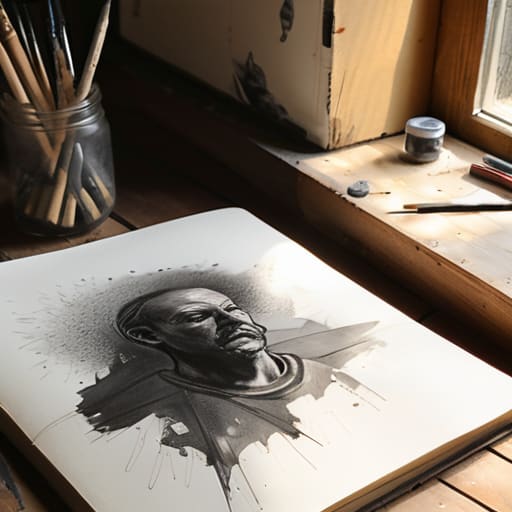
I see it every time I visit a studio: a pristine, expensive Moleskine sitting on a desk like a holy relic, untouched because the artist is terrified of ruining it. We call it “blank page syndrome,” but let’s be honest—it’s actually a fear of being mediocre. You’ve been trained to believe that every mark must be a masterpiece, but a sketchbook isn’t a gallery exhibition; it’s a laboratory. If you treat every page like a final sale, you’ll never actually experiment. Overcoming sketchbook anxiety requires you to accept that some pages are going to be absolute rubbish, and that is perfectly fine.
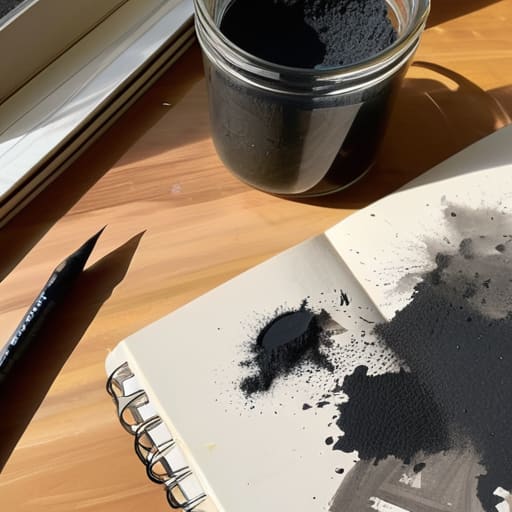
The secret to building daily drawing habits is to lower the stakes until they are practically underground. If you’re paralyzed by the white space, stop trying to “create” and start just recording. Use some basic art journal techniques—glue in a receipt, smudge some charcoal, or scribble a note about the weather—to break the surface. Once the paper is no longer perfect, it loses its power over you. Remember, the goal isn’t a finished product; it’s the process of thinking on paper.
Daily Drawing Habits That Build Actual Professional Capital
Stop looking at your sketchbook as a way to “practice” for a masterpiece. In my twenty-six years of running a gallery, I never once walked into a studio and asked to see an artist’s polished portfolio to judge their potential; I wanted to see the mess. I wanted to see the rhythm of their thinking. Developing daily drawing habits isn’t about producing something salable; it’s about building a visual vocabulary that you can actually draw upon when a collector finally asks for a commission.
If you wait for inspiration to strike, you aren’t an artist, you’re a hobbyist waiting for a lightning bolt. Professionalism is found in the mundane. Use your book to record the way light hits a glass of cheap wine or the specific, ugly tension in a stranger’s shoulder. Whether you are experimenting with art journal techniques or simply scribbling during a phone call, you are essentially conducting R&D on your own talent. This isn’t “wasted” time—it is the only way to ensure that when you finally sit down to create work that actually matters, you aren’t staring at a blank page wondering where your skill went.
The Paper Ledger of Your Real Process
Stop treating your sketchbook like a formal portfolio for a gallery that doesn’t exist yet; it’s a private ledger of your mistakes, and that’s exactly where the real value is hidden. If you only use it to produce ‘pretty’ things, you aren’t practicing—you’re just performing.
Vivienne Ashworth-Pryce
The Ledger of Your Evolution
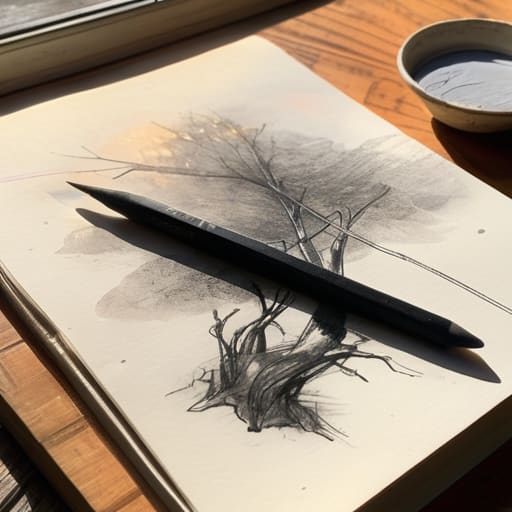
At the end of the day, a sketchbook isn’t a performance for a prospective dealer or a curated collection of “pretty” things; it is a private, messy, and essential record of your technical development. We have covered how to silence that paralyzing perfectionism, how to treat your daily marks as professional capital rather than wasted paper, and how to build a habit that survives the inevitable creative droughts. If you treat your sketchbook as a formal portfolio, you will inevitably freeze up, and a frozen artist is an artist who isn’t producing. Remember: the goal isn’t to create a masterpiece on page ten, but to ensure that by page three hundred, you have the muscle memory and visual vocabulary to actually execute the work you want to sell.
I spent twenty-six years looking at finished canvases, but I always knew which artists were the real deal by asking to see their scrapbooks. I wasn’t looking for beauty; I was looking for the evidence of thought. Your sketchbook is the only place in your practice where you are allowed to be wrong, to be ugly, and to be experimental without the crushing weight of market expectations. So, stop waiting for the perfect linen-bound journal to arrive in the mail. Pick up whatever scrap of paper is within reach, make a mess, and start building the intellectual foundation your future career demands.
Frequently Asked Questions
If I’m eventually going to show these sketches to a gallerist, do I need to keep them organized, or is the mess part of the "process"?
Oil on paper, 8×10, 2024. I don’t care about your mess, but I do care about your ability to find anything. If I ask to see your process and you spend twenty minutes digging through a chaotic heap of loose scraps, I’ve already lost interest in your professionalism. Keep the “mess” in the books, but keep the books in order. A disorganized sketchbook suggests a disorganized mind, and I don’t invest in disorganized minds.
At what point does a sketchbook stop being a private practice and start being something I can actually use to justify a price increase?
Oil on paper, 10×12, 2024. I love the honesty in these studies.
How much of my sketchbook should be "finished" studies versus just the raw, ugly experimentation that most artists are too embarrassed to show?
Oil on paper, 8×10, 2024. I’ll tell you what I think: if your sketchbook looks like a polished catalog, you’re doing it wrong. A sketchbook isn’t a showroom; it’s a laboratory. It should be roughly 80% raw, ugly, glorious failure. If you only record the “finished” studies, you’re just performing for an imaginary collector. I want to see the grit, the wrong turns, and the messy logic. That’s where the actual intellectual property lives.
