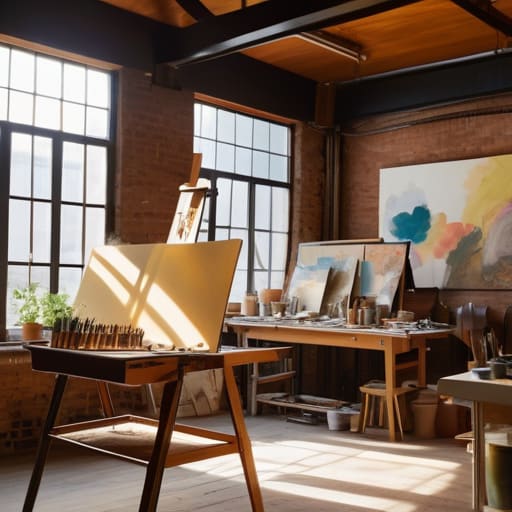

Most people will tell you that a “complete guide to studio practice” involves finding your muse, mastering your medium, or curating the perfect aesthetic for your Instagram feed. They treat the studio like a sacred, untouchable temple of pure inspiration, which is a lovely sentiment for a textbook but utterly useless once you actually have to pay rent. I spent twenty-six years on the other side of the gallery door, and I can tell you that the most successful artists I represented weren’t the ones waiting for lightning to strike; they were the ones who treated their workspace like a disciplined, professional engine.
I am not here to talk to you about your soul; I am here to talk to you about your sustainability. In this guide, I’m stripping away the romantic nonsense to give you the practical, unvarnished reality of managing your output, your inventory, and your time. I will show you how to build a practice that functions as a reliable business rather than a chaotic hobby, because if you can’t manage the mechanics of your studio, no amount of talent is going to save you from the market.
Maintaining Artistic Discipline When No One Is Watching
The problem with being an artist is that you are both the talent and the manager, and usually, the manager is a disaster. When I ran my gallery, I saw dozens of brilliant painters who were technically gifted but practically paralyzed because their workspace was a graveyard of half-finished ideas and dried-out tubes. They mistook “waiting for the muse” for a professional process. Let me be clear: if you only work when you feel inspired, you aren’t running a practice; you’re running a hobby. Maintaining artistic discipline isn’t about being a machine; it’s about building a structure that survives your bad moods.
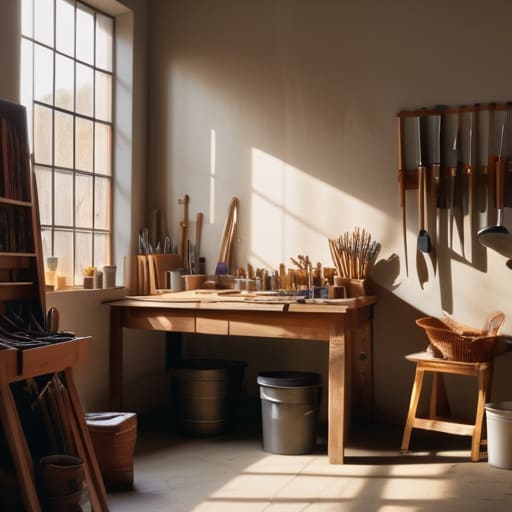
This is where most people fail. They think a professional artist workspace is about having the most expensive easel or the prettiest lighting, but it’s actually about creative workflow optimization. It’s about knowing exactly where your palette knives are so you don’t spend forty minutes hunting for them when the light is perfect. If your studio is a chaotic mess, your brain will be a chaotic mess. You need a system that allows you to sit down and actually produce, even on the days when you feel like nothing you touch will turn to gold.
Creative Workflow Optimization to Stop Wasting Your Life
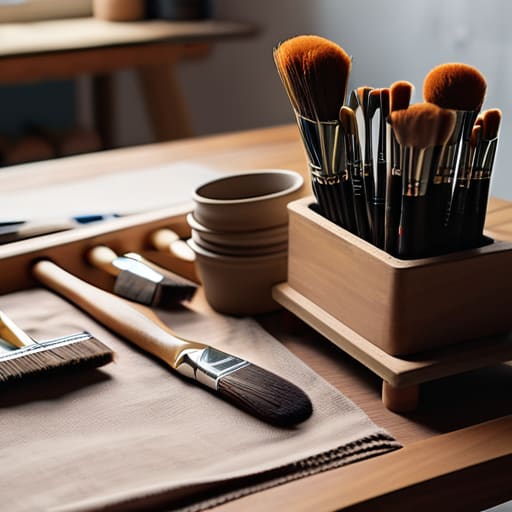
Most artists treat their studio like a chaotic sanctuary, believing that the mess is somehow synonymous with the muse. It isn’t. After decades of watching artists struggle to find a single palette knife while a deadline looms, I can tell you that a cluttered space is just a slow leak in your productivity. Real creative workflow optimization isn’t about being precious or aesthetic; it is about reducing the friction between having an idea and executing it. If you spend twenty minutes every morning hunting for your preferred brushes, you aren’t “finding your rhythm”—you are wasting the most valuable currency you have.
You also need to stop ignoring your physical reality. I’ve seen far too many talented painters develop chronic back issues because they treated studio ergonomics and setup as an afterthought. If your lighting is dim or your easel is at the wrong height, you aren’t just working harder; you are actively shortening your career. A professional artist workspace should serve your body as much as your vision. Treat your setup with the same respect you give your medium, because a body in pain is a body that can no longer create.
The Business of Being Alone
A studio practice isn’t just about the hours you spend wrestling with pigment; it’s about building a reliable engine of production so that when a gallery finally does come knocking, you actually have something to sell them besides a pile of half-finished excuses.
Vivienne Ashworth-Pryce
The Bottom Line
At the end of the day, a professional studio practice isn’t about finding some mystical, divine spark; it’s about the unglamorous architecture of discipline. We’ve talked about the necessity of maintaining your standards when the studio door is shut, and how optimizing your workflow isn’t about being a machine, but about protecting your most finite resource: time. If you don’t manage your rhythm, the administrative chaos and the creative droughts will eventually swallow your output whole. You cannot expect a gallery to build a career for you if you haven’t first built a sustainable engine of production that can withstand the inevitable ebbs and flows of the market.
Don’t let the industry’s obsession with “the breakthrough” distract you from the actual work. I spent nearly three decades watching artists come and go; the ones who lasted weren’t always the most gifted, but they were invariably the ones who treated their practice like a professional vocation rather than a hobby waiting for permission. Build your habits, refine your process, and own your space. The world will eventually show up to see what you’ve made, but only if you’ve actually stayed in the room long enough to finish it.
Frequently Asked Questions
How do I know if I'm actually being productive in the studio, or if I'm just performing "work" to avoid the terrifying reality of finishing a piece?
Oil on canvas, 40x40cm, 2024. I like it, but let’s be honest: you’re stalling. You know you’re performing “work” when you spend three hours cleaning brushes or obsessing over a minor detail that no collector will ever notice. Real productivity is uncomfortable; it’s the grit of making decisions that can’t be undone. If you aren’t making choices that scare you, you aren’t working—you’re just rearranging the furniture to avoid the finish line.
At what point does a disciplined studio routine stop being a tool for creativity and start becoming a cage that kills my spontaneity?
It becomes a cage the moment you start making decisions based on your schedule rather than your impulse. If you’re picking up the brush because it’s 10:00 AM on a Tuesday, rather than because you have something to say, you’re just a factory worker in a studio. Discipline should be the scaffolding that holds the work up, not the walls that keep the light out. If the routine feels like a chore, stop. Break it.
How much of my studio time should realistically be spent on the "business" side—documentation, inventory, and prep—versus actually making the work?
Oil on canvas, 40x40cm, 2024. I like it, but let’s be honest: it won’t sell if you can’t find the provenance or a high-res photo of it. You should be spending about twenty percent of your week on the “boring” bits. If you’re making masterpieces but your inventory is a shoebox of receipts and your documentation is non-existent, you aren’t an artist; you’re a hobbyist with a messy desk. Professionalism is the scaffolding that holds the art up.
