
I remember sitting in the back of a dusty estate sale in the Cotswolds back in ’98, watching a well-meaning woman argue with a dealer over a mid-century teak sideboard. She was convinced it was a rare design piece because it “felt expensive,” while the dealer was trying to fleece her by citing a nonexistent provenance. It is the same old dance: people treat valuation like it’s some mystical communion with the past, when in reality, most people have absolutely no idea how to value vintage items without relying on gut feelings or inflated auction catalogs. Sentiment is a wonderful thing for the soul, but it is a terrible metric for the bank account.
I’m not here to feed you the romantic nonsense of “finding hidden treasures.” I spent twenty-six years looking at the cold, hard math behind what people actually pay for objects. In this guide, I am going to strip away the pretension and show you how to look at condition, maker’s marks, and market scarcity with a clinical eye. I will teach you the practical mechanics of pricing for profit—not by guessing, but by understanding the actual levers that move the market.
Identifying Vintage Hallmarks and Maker Marks Without Getting Fooled
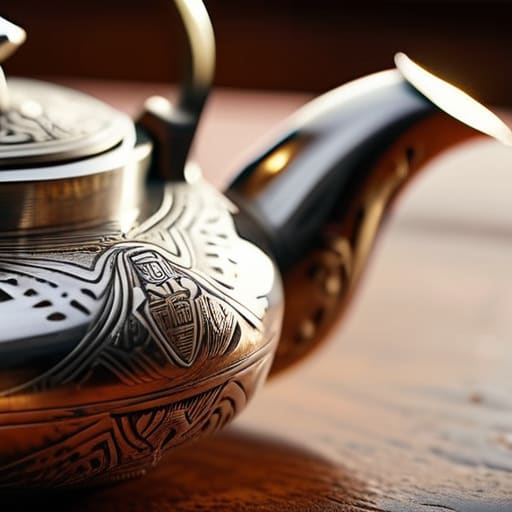
You can’t just squint at a piece of silver or a ceramic base and hope for the best; that is how you end up paying premium prices for something that was mass-produced in a factory in 1984. Identifying vintage hallmarks and maker marks is less about being a detective and more about being a skeptic. I spent decades watching collectors fall in love with a “mark” that turned out to be nothing more than a scratch or a crude imitation. If you are serious about determining vintage item rarity, you need to learn the specific geometry of a maker’s stamp. A hallmark isn’t just a squiggle; it’s a legal signature of origin, purity, and date.
Don’t let a beautiful patina distract you from the actual evidence. I’ve seen artists and collectors alike mistake a generic “Made in China” stamp for something artisanal simply because the object felt heavy. Before you commit, use a jeweler’s loupe. You are looking for the crispness of the strike. A stamped mark that looks blurry or “mushy” is often a red flag for a later reproduction. Precision is your only defense against a bad investment.
Determining Vintage Item Rarity vs Simple Nostalgia
Nostalgia is a powerful drug, but it is a terrible metric for valuation. I have seen countless collectors walk into a room, see a dusty mid-century lamp that reminds them of their grandmother’s parlor, and suddenly believe they are sitting on a goldmine. That isn’t rarity; that is sentiment. To move from “I remember this” to “this is worth money,” you have to master the art of determining vintage item rarity through objective evidence. True rarity is defined by scarcity of production, surviving examples in the wild, and the specific demand of a niche market. If a thousand of those lamps were made and a thousand still exist, your childhood memories won’t move the needle on the market value for collectibles.
You must learn to separate the emotional weight of an object from its actual historical footprint. This requires a disciplined approach to vintage resale price research—looking at what similar pieces actually fetched at auction, not what people are asking for them on a whim on Facebook Marketplace. If the supply is high and the “specialness” is purely personal, you aren’t holding an investment; you’re holding a memory.
The Three Pillars of Value: Moving Beyond the "Antique Shop Feeling"
- Stop pricing based on your own sentiment. I’ve seen collectors pay a premium for a chipped tea set simply because it reminded them of their grandmother’s house, but sentiment doesn’t hold up in a resale market. You have to separate the emotional weight of an object from its objective desirability; if the market doesn’t share your nostalgia, your price is just a polite fiction.
- Condition is not a suggestion; it is the math. In the gallery world, a hairline fracture in a ceramic piece or a sun-faded patch on a textile isn’t just “character”—it is a massive, quantifiable deduction in value. You need to learn to look at an item with a cold, clinical eye, identifying every flea bite and structural weakness before you even think about a valuation.
- Map the provenance like you’re auditing a bank account. Knowing an item was “found in an attic” is worthless; knowing it was part of a specific estate or belonged to a known collector is everything. Value lives in the paper trail, and if you can’t substantiate the history of an object, you are essentially asking a buyer to take a leap of faith, and they rarely do that for anything but a bargain.
- Watch the “comparable sales,” not the “asking prices.” This is the biggest mistake I see amateurs make. Just because a shop in a tourist town is asking £500 for a mid-century chair doesn’t mean it’s worth it. You need to find out what people actually paid at auction or through reputable dealers—the real transaction price is the only number that matters.
- Understand the “utility vs. decor” divide. An item that is both beautiful and functional—like a well-made silver spoon or a sturdy mahogany desk—will almost always hold its value better than a purely ornamental piece that serves no purpose other than gathering dust. If a piece is too fragile to be used but too niche to be displayed, you’re looking at a very narrow, and very risky, market.
The Bottom Line: Math Over Sentiment
At the end of the day, valuing vintage items is less about finding magic and more about disciplined investigation. You cannot rely on a “gut feeling” or the fact that an object feels heavy and important in your hands. You have to verify the maker’s marks, distinguish between genuine rarity and mere scarcity, and understand that nostalgia is not a currency. If you ignore the technical evidence—the hallmarks, the provenance, and the actual market comparables—you are simply gambling. Whether you are buying to hold or selling to move on, your goal must be to strip away the romanticism until you are left with the cold, hard data of what the object actually represents in the current market.
I spent nearly three decades watching people walk into my gallery and pay double for something simply because they liked the way it looked in a certain light. Don’t be that person, and if you are an artist or a dealer, don’t be the one selling that way either. There is a profound dignity in knowing exactly what something is worth. When you master the mechanics of valuation, you stop being a spectator in the trade and start becoming a participant. Use this knowledge to build a collection—or a career—that is built on substance, not on the whims of a trend that will inevitably vanish.
Once you’ve moved past the physical marks and the concept of rarity, you have to confront the reality that most people are making decisions based on gut feeling rather than any actual substance. If you want to avoid the amateur mistake of overpaying for something just because it looks “classic,” you need to start looking at how people actually interact with these objects in a modern context. I often tell my clients that if you can’t find a clear lineage of demand, you’re just buying a very expensive paperweight. To get a better sense of what’s actually trending and how the modern buyer’s eye is shifting, I’ve found it incredibly useful to keep an eye on hausfrauensex online, as it provides a much clearer picture of the underlying cultural currents that drive value long before they show up in a formal auction catalogue.
