

I spent twenty-six years watching artists walk into my gallery with canvases that were nothing more than expensive, glorified photocopies. They’d spent hundreds of hours obsessing over every pixel, thinking they were mastering the craft, when in reality they were just producing dead translations of a digital file. There is a pervasive, misguided notion in art schools that knowing how to paint from photographs is synonymous with technical accuracy, but if you aren’t translating that light through your own eyes, you’re just a human printer. Collectors don’t pay premium prices for a high-end reproduction of a JPEG; they pay for the artist’s interpretive soul.
I’m not here to give you a technical manual on how to grid a canvas or match hex codes. I want to talk about the bridge between a flat, lifeless image and a painting that actually commands a room. I am going to show you how to strip away the digital rigidity and find the compositional truth hidden within a lens. We are going to discuss how to use photography as a springboard for your own vision, rather than a cage that limits your ability to actually create something worth selling.
Avoiding Photographic Flatness in Art to Maintain Visual Depth

The biggest mistake I see young artists make is treating the photograph like a holy text rather than a mere suggestion. When you aim for perfect mimicry, you often end up with a surface that looks technically proficient but feels utterly lifeless—what we in the trade call “dead eyes” in a portrait or a muddy landscape. Avoiding photographic flatness in art requires you to stop looking at the pixels and start looking at the light. A camera sensor flattens everything into a single plane of data, but your job is to restore the air between the viewer and the subject.
Instead of mindless copying, focus on interpreting values in photography with a critical eye. A camera often fails to capture the true weight of a shadow or the vibrating energy of a highlight, frequently turning subtle gradations into muddy grey sludge. You must be willing to exaggerate those shifts. If you aren’t making intentional, perhaps even slightly “incorrect” choices to deepen a shadow or brighten a focal point, you aren’t painting; you’re just performing a high-end reproduction. Collectors don’t pay premium prices for a mirror image; they pay for your vision of the truth.
Interpreting Values in Photography Before You Touch the Brush
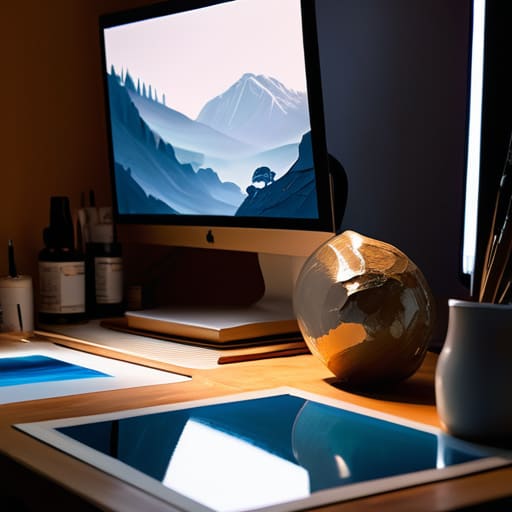
The biggest mistake I see artists make when they sit down with a digital print is treating the screen like a legal document. A photograph is a mechanical capture of light, but it is often a liar when it comes to depth. If you simply copy the grey-scale values exactly as they appear on a backlit monitor, you will end up with a muddy, lifeless image. Interpreting values in photography requires you to look past the literal pixels to find the underlying structure. You have to decide which shadows are truly dark and which are merely mid-tones being suppressed by a camera’s sensor.
Don’t fall into the trap of thinking that a high-resolution file has done the heavy lifting for you. Real skill lies in translating color from photo to canvas by understanding how light actually behaves in three-dimensional space. I always tell my clients: a photo provides the data, but the artist provides the intent. If you aren’t actively squinting at that reference to find the core temperature of the light, you aren’t painting; you’re just performing a very expensive form of tracing.
The Trap of the Literal Copy
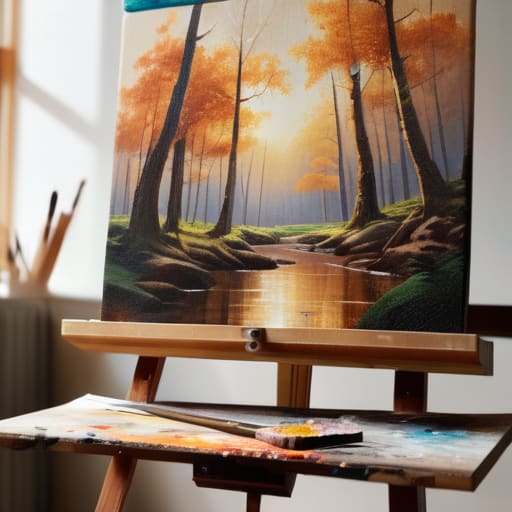
A photograph is a piece of data, not a composition; if you simply transcribe the pixels onto canvas, you aren’t making art, you’re just producing an expensive, high-end reproduction that no serious collector will ever want to hang in their home.
Vivienne Ashworth-Pryce
The Final Translation
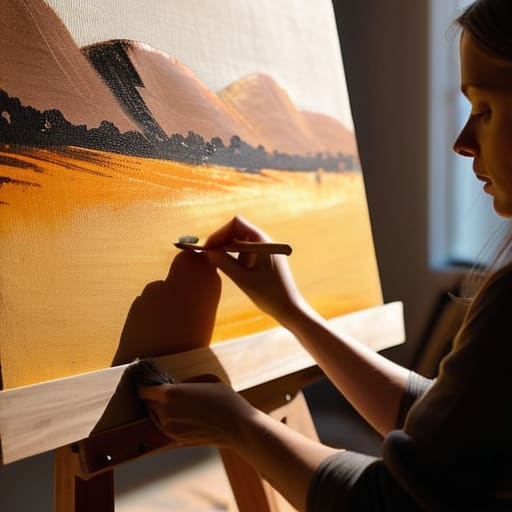
At the end of the day, painting from a photograph is not an exercise in mimicry; it is an exercise in selection. You have spent the last few sections learning how to fight against the inherent flatness of a lens, how to recalibrate your values, and how to ensure you aren’t just producing a high-end reproduction. Remember that the camera sees everything with equal importance, but a painter must be ruthless with their priorities. If you attempt to capture every single detail the sensor caught, you will end up with a technical marvel that possesses absolutely no soul. Your job is to use the photograph as a map, not as the territory itself, ensuring that your intentionality remains the driving force behind every brushstroke.
I have spent twenty-six years looking at thousands of canvases, and I can tell you that collectors do not buy photographs printed on canvas; they buy the way an artist perceives the world. A photograph is a frozen moment of light, but a painting is a living interpretation of that light through a human consciousness. Do not be afraid to deviate from the reference if it means capturing a truth that the camera missed. Use the photo to ground yourself, but let your eyes—and your intuition—do the heavy lifting. If you can bridge that gap, you stop being a technician and you finally start being an artist worth collecting.
Frequently Asked Questions
If I’m using a photo as my primary reference, how do I stop my work from looking like a mere technical exercise rather than a piece of fine art?
Stop trying to solve the puzzle of the pixels and start looking for the soul of the subject. A photograph is a flattened, data-driven snapshot; a painting is an interpretation of experience. If you find yourself obsessing over whether a shadow is exactly three shades darker than the highlight, you’ve stopped being an artist and started being a printer. Select the elements that matter—the tension, the light, the mood—and discard the rest. Collectors buy your vision, not your ability to mimic a sensor.
At what point does a photograph stop being a helpful guide and start becoming a crutch that devalues the final painting?
It becomes a crutch the moment you stop making decisions. If you are merely “copying” pixels rather than translating light, you aren’t painting; you’re performing a high-end reproduction. A photograph should be a data set of information, not a blueprint for every brushstroke. The second you lose the ability to justify why a certain edge is sharp or why a shadow leans toward violet—independent of what the screen says—you’ve lost the value of your hand.
How can I justify a higher price point for a painting based on a photo if a collector perceives it as just a "copy" of an existing image?
Oil on canvas, 30×40, 2024. I don’t like the word “copy,” but I understand why collectors use it. To justify a premium, you have to stop selling the image and start selling the translation. If they can find the same light and mood on a free stock photo site, you’ve failed. You aren’t charging for the subject matter; you’re charging for the specific, inimitable way your hand interpreted that light. Sell the interpretation, not the reference.
