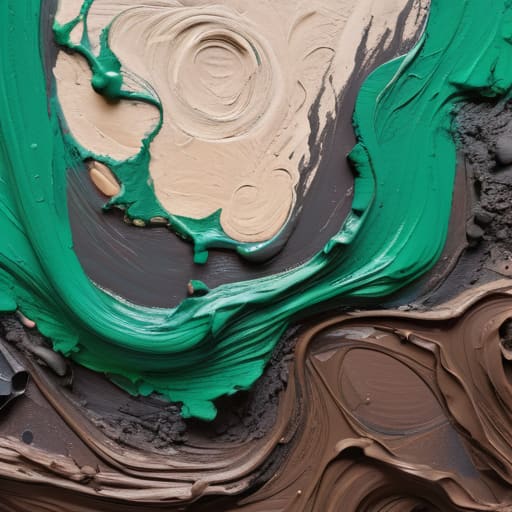

I remember standing in my gallery back in ’98, staring at a large-scale oil on canvas that a young, promising painter had brought in for a solo show. It was technically proficient, certainly, but it was exhausted. The artist had spent months scrubbing, layering, and correcting every microscopic imperfection until the soul of the piece had simply evaporated into a muddy, lifeless sheen. That is the quiet tragedy of the studio: you think you are perfecting the work, but you are actually performing an autopsy on it. I see it constantly with emerging talent who believe that more hours equals more value, failing to realize that how overworking ruins pictures is often a matter of losing the very vitality that makes a collector want to hang it in their home.
I am not here to give you a lecture on technical mastery or to tell you to “trust your gut” like some vague art school instructor. I’m going to tell you what happens when that work hits the gallery floor and why a buyer’s eye can sense a lack of confidence from across the room. We are going to talk about the economic cost of perfectionism and how to know exactly when to put the brush down and walk away.
Digital Noise and Over Sharpening the Death of Sophistication

We’ve entered a strange era where artists seem to believe that more pixels equals more value. I see it constantly in the digital submissions hitting my inbox: work that has been pushed through so many sliders that the soul has simply evaporated. When you fall into the trap of digital noise and over-sharpening, you aren’t enhancing the image; you are shouting over it. It creates a jittery, frantic energy that makes a collector’s eyes ache rather than linger. A sophisticated buyer isn’t looking for a hyper-realized digital miracle; they are looking for the intention behind the mark.
The real danger lies in the loss of nuance. Most people struggle with the distinction between color saturation vs color grading, often cranking the former until the palette looks like cheap plastic. If you lose the ability to manage subtle shifts in light because you’re too busy fighting for “pop,” you’ve lost the battle. One of the most common photo editing mistakes to avoid is the belief that clarity must be aggressive. True elegance lives in the soft transitions, the quiet shadows, and the parts of the image you have the discipline to leave alone.
Maintaining Image Clarity Against the Urge to Tweak
The problem with modern software is that it makes “improvement” feel like a game of sliders, and most artists are playing to win rather than playing to preserve. I’ve sat in my studio looking at prints where the artist has clearly spent hours fighting a battle against the original file, only to end up with something that looks processed rather than captured. When you fall into the trap of endless tweaking, you lose the essential soul of the frame. You aren’t enhancing the vision anymore; you’re just performing digital surgery on a patient that was perfectly healthy to begin with.
If you want to sell to serious collectors, you must master the art of restraint. This means understanding the delicate balance of color saturation vs color grading; one adds life, while the other often adds a cheap, plastic sheen that screams amateur. Instead of hunting for flaws to fix, focus on maintaining image clarity by knowing when to put the stylus down. A collector wants to see the texture of the light and the depth of the subject, not the evidence of your struggle with a software update.
The Cost of Perfectionism
I have spent three decades watching collectors walk past canvases because the artist was so terrified of a mistake that they’ve scrubbed every ounce of soul out of the pigment. When you overwork a piece, you aren’t adding value; you’re just adding noise, and quite frankly, you’re making it much harder for me to sell the very thing that made the work interesting in the first place.
Vivienne Ashworth-Pryce
The Final Polish (Or Lack Thereof)
At the end of the day, whether you are wrestling with digital sharpening or obsessively tweaking the micro-contrast in a print, the result is the same: you are suffocating the soul of the image. We have spent this time discussing how over-processing creates a sterile, artificial noise that collectors can sense from across the room. They aren’t looking for a mathematical perfection of pixels; they are looking for the intentionality of the artist. When you overwork a piece, you aren’t adding value; you are merely adding a layer of visual clutter that obscures the very reason the image was captured in the first place. Stop trying to engineer excellence through a slider bar and start trusting the initial vision that made you pick up the camera.
I spent twenty-six years looking at thousands of works, and I can tell you that the pieces that actually move people—the ones that end up in serious collections—are the ones that breathe. There is a certain vulnerability in a clean, well-composed image that allows the viewer to step into the frame. If you polish every edge until it shines like a piece of cheap plastic, you leave no room for the viewer’s imagination to inhabit the work. Trust your eye, trust your first instinct, and for heaven’s sake, learn to walk away from the screen. Your work deserves to be seen, not merely processed.
Frequently Asked Questions
If I’m not over-sharpening or tweaking the contrast, how do I ensure the image actually looks "finished" and professional enough to command a high price?
Oil on canvas, 24×30, 2024. It’s a fair question. You’re looking for the finish, not the filter. A “finished” work isn’t one where every pixel has been fought over; it’s one where the intention is clear. Professionalism comes from intentionality—the way your light falls or how a single brushstroke holds the composition together. Stop looking for technical perfection and start looking for visual cohesion. If the eye can rest, the work is done.
At what specific point does "polishing" turn into "destroying," and is there a way to tell if I've already crossed that line?
Oil on canvas, 40cm x 40cm, 2024. You’ve crossed the line when the image stops being a window and starts being a mirror of your own anxiety. If you’re zooming in to 400% to find a pixel that isn’t “perfect,” you aren’t perfecting the work; you’re suffocating it. The test is simple: step back six feet. If the soul of the piece vanishes into a muddy, hyper-real sludge, you’ve polished the life right out of it. Stop.
Does a collector actually care about these technical nuances, or are they just looking at the overall mood and subject matter?
Oil on canvas, 24×30, 2024. I don’t care if you think they don’t.
