

I remember sitting in my gallery back in the late nineties, watching a young painter look absolutely shell-shocked after being told by a “consultant” that he needed to pay a five-thousand-pound exhibition fee just to get his work on the walls. He thought he was buying prestige, but he was actually just paying for someone else’s expensive lease and a mediocre glass of prosecco. People often mistake these setups for legitimate career milestones, but if you want to understand how vanity galleries operate, you have to realize they aren’t in the business of selling art; they are in the business of selling access. They’ve turned the dream of professional representation into a subscription model, and frankly, it makes my blood boil.
I am not here to give you a lecture on the “mystique” of the art world or some lofty theory about aesthetic value. Instead, I’m going to pull back the curtain on the actual mechanics of these predatory spaces. I will show you exactly where your money is going, how to spot a transaction disguised as an opportunity, and how to tell the difference between a partner who earns their fifty percent and a landlord who is simply skimming your hard work.
Spotting Artist Exploitation Red Flags in Your Contract

When you finally sit down to read that contract—and please, for the love of God, actually read it—you aren’t looking for poetic language about “collaborative visions.” You are looking for the math. One of the most common artist exploitation red flags is a clause that allows the gallery to recoup “marketing expenses” or “administrative fees” directly from your sale price before your share is even calculated. In a legitimate commercial model, the gallery’s fifty percent is meant to cover those overheads. If they are nickel-and-diming you for every social media post or printed catalogue, they aren’t acting as your partner; they are acting as a landlord.
Watch out for “exclusivity” clauses that are far too broad. A reputable dealer might ask for exclusivity within a specific geographic radius or for a specific medium, but if they are claiming rights to every piece of work you produce anywhere in the world, run. These art industry predatory practices are designed to fence you in while they provide zero actual market movement. If the contract feels like it’s written to protect their ability to charge you for the privilege of being seen, rather than their obligation to sell your work, it’s a trap.
The Pay to Exhibit Art Scam Disguised as Opportunity

Let’s be clear about the fundamental difference between a legitimate partner and a predator: a real gallery makes money when you make money. In most standard art gallery business models, the gallery takes a commission from the sale price, meaning they have skin in the game. They are incentivized to market you, hang you, and sell you. If they aren’t sweating over whether a piece moves, they aren’t a gallery; they are a landlord renting out wall space.
The moment a venue asks you for an “exhibition fee,” a “marketing contribution,” or even just asks you to cover the full cost of the catalog printing, you have stepped out of the professional realm and into the territory of pay-to-exhibit art scams. These outfits aren’t interested in your career trajectory or your long-term value; they are interested in your upfront capital. They’ve swapped the risk of the market for the certainty of your entry fee, turning the exhibition into a product they sell to you rather than a platform they provide for you. It is a transactional relationship disguised as a professional milestone.
The Difference Between a Partner and a Landlord
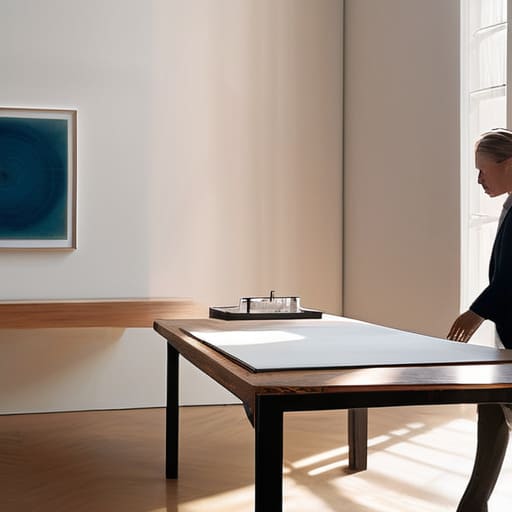
A real gallery is a risk-sharing partner that bets its own reputation and overhead on your ability to sell; a vanity gallery is just a landlord with better lighting, charging you rent for the privilege of standing in a room full of work that isn’t moving.
Vivienne Ashworth-Pryce
The Bottom Line

At the end of the day, the difference between a legitimate partner and a vanity operation is simple: one is invested in your career, and the other is only invested in your bank account. If you find yourself paying for the privilege of hanging your work on a white wall, or if the contract looks more like a lease agreement than a representation deal, you aren’t being discovered—you’re being billed. A real gallery takes a commission because they are betting on your future and putting their own reputation on the line to move your work. If they aren’t willing to share the risk, they have absolutely no business asking for your reward.
Don’t let the polished veneer of a high-end showroom trick you into thinking that prestige is something you can buy in installments. Your talent is the engine, but your business sense is the steering wheel. It is better to keep your work in the studio and build a slow, sustainable momentum than to burn your precious capital on a single, hollow exhibition that leaves you with nothing but a handful of expensive business cards. Hold onto your work, guard your margins, and remember that true professional validation comes from sales and longevity, not from a receipt for a rental fee.
Frequently Asked Questions
If a gallery isn't taking a commission on my sales, how am I supposed to know if they're actually working for me or just renting me wall space?
Look, if they aren’t taking a commission, they aren’t a gallery; they’re a landlord. A real gallerist is a partner in your career, sharing both the risk and the reward. If they aren’t incentivized to sell—through marketing, client outreach, or even just a decent opening—then they have zero skin in the game. If your only interaction with them is paying a fee to hang your work, you aren’t being represented; you’re just renting wall space.
Are there any legitimate "entry-level" spaces for emerging artists, or is the entire concept of paying to show my work inherently predatory?
Oil on canvas, 12×12, 2024. It’s a lovely question, but a dangerous one. To be blunt: if you are writing a check to a space in exchange for wall time, it is predatory. Period. Legitimate entry-level opportunities—juried group shows, non-profit spaces, or even a well-run cooperative—rely on merit or shared labor, not a fee structure. If they’re charging you to exhibit, they aren’t your agent; they’re your landlord.
How can I tell the difference between a gallery that is genuinely struggling to find its footing and one that is built entirely on an exploitative business model?
Look at the ledger, not the lighting. A struggling gallery is still focused on the art; they might be short on marketing budget or struggling with rent, but they are still trying to sell your work to collectors. An exploitative model is focused on the artist; they aren’t looking for buyers, they’re looking for exhibition fees. If their primary revenue stream is your checkbook rather than a collector’s wire transfer, they aren’t a gallery—they’re a landlord.
