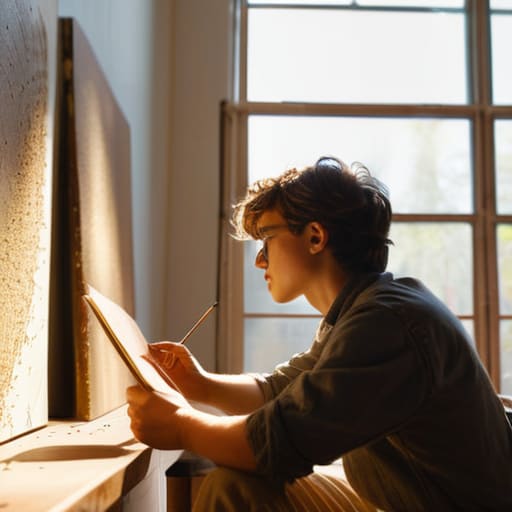

Most people think that learning how to develop taste requires a private jet to Basel or a postgraduate degree in semiotics, but that is a lie sold to you by people who want your commission. They want you to believe that discernment is a high-altitude, intellectual performance, something reserved for the velvet-roped elite who spend more time reading manifestos than actually looking at paint on a canvas. In my twenty-six years running a gallery, I learned that “taste” isn’t some mystical, inherited aura; it is a muscle that you build by looking closely at what people actually value versus what they are merely being told to value.
I am not here to teach you how to perform sophistication for the sake of social climbing. Instead, I am going to pull back the curtain on the mechanics of seeing. I will show you how to distinguish a genuine artistic breakthrough from a clever bit of branding, and how to identify work that holds its value long after the trend cycle has moved on. This isn’t about following the herd; it is about developing a ruthless clarity that allows you to navigate the market without being fooled by the hype.
Building Visual Literacy Beyond the Instagram Aesthetic

The problem with the current landscape is that we are being trained to consume art through a four-inch glass screen, optimized for a thumb-flick and a double-tap. Instagram is a graveyard of “vibes”—it rewards works that look good in a thumbnail but lack any actual structural integrity. If you are only looking at what is trending on a feed, you aren’t developing an eye; you are merely participating in a feedback loop of aesthetic mimicry. Building visual literacy requires you to step away from the algorithm and look at things that are difficult, uncomfortable, or even boring.
To truly begin how to refine your palate, you have to engage with the physical reality of the object. I spent decades telling collectors that a painting isn’t just a color palette; it is a topographical map of decisions. You need to see how the light hits a heavy impasto, how the scale of a canvas dictates the breath in the room, and how a frame acts as a window rather than a border. Stop looking for what is “pretty” and start looking for intentionality. If you can’t tell why an artist made a specific choice in a specific corner of a canvas, you aren’t seeing the work; you’re just glancing at it.
Cultivating Aesthetic Sensibility Through Intentional Observation
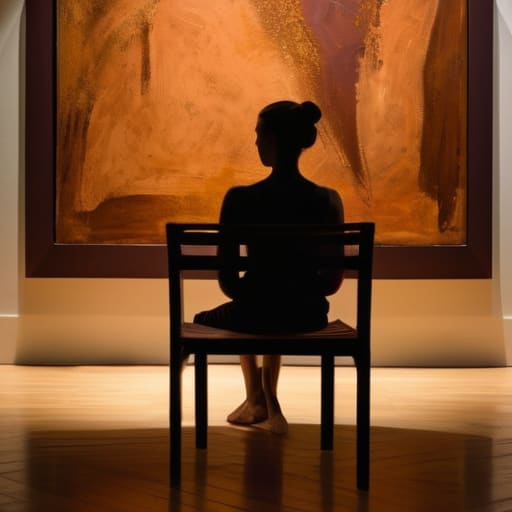
Stop scrolling. If your primary method of looking at art involves a thumb swipe every three seconds, you aren’t actually seeing anything; you are merely consuming digital wallpaper. To move beyond this, you must treat cultivating aesthetic sensibility as a discipline rather than a feeling. It requires what I call “slow looking.” Pick one piece—not a trending masterpiece, but something that makes you feel slightly uncomfortable or deeply confused—and sit with it for ten minutes. Note how the light hits the impasto, or how the tension in a line dictates the mood of the entire composition.
This isn’t some mystical, airy-fairy pursuit; it is a practical exercise in building visual literacy. You are training your brain to recognize the difference between a technical accident and a deliberate choice. When you start noticing how a specific shade of ochre anchors a chaotic field of blue, you are finally beginning the process of how to refine your palate. You aren’t just looking for what is “pretty” anymore; you are looking for the logic behind the execution. That is where the real value lies.
## The Difference Between Trends and Taste
Taste isn’t a collection of things you’ve seen on a curated feed; it is the hard-won ability to look at a piece of work and distinguish between a fleeting visual trend designed to satisfy an algorithm and a genuine, enduring vision that actually has something to say.
Vivienne Ashworth-Pryce
The Long Game of Seeing
Developing taste isn’t a destination you reach after reading the right monographs or following the right curators on social media; it is a muscle that requires constant, often uncomfortable, exercise. We have moved from the slow observation of texture and weight to the rapid-fire consumption of the “scrollable” image, and that has made us intellectually lazy. To truly cultivate a sensibility, you must bridge the gap between seeing a trend and understanding a visual logic. It requires moving past the immediate dopamine hit of a “pretty” picture and asking why a particular composition holds your gaze or why a certain use of pigment feels earned rather than decorative. It is about building a personal library of references that belong to you, not to an algorithm.
Ultimately, taste is your most valuable asset, whether you are the one making the work or the one signing the check. It is the only thing that cannot be manufactured by a clever PR firm or a sudden spike in auction prices. As you move forward, I urge you to be ruthlessly discerning. Don’t be afraid to admit when something is technically proficient but spiritually vacant, and don’t be afraid to champion the work that feels difficult or strange. The market will always try to tell you what is valuable, but your job is to decide what is true.
Frequently Asked Questions
If I’m following what’s trending on social media, am I actually developing taste or just training myself to be a consumer of whatever the algorithm decides is popular?
You aren’t developing taste; you’re being programmed. The algorithm is a feedback loop designed for engagement, not discernment. It rewards the immediate, the loud, and the familiar—the very things that prevent true aesthetic growth. If you only look at what is trending, you are simply practicing the art of being a consumer. Real taste requires the friction of looking at things that don’t immediately “click” or fit a curated grid.
How much of "taste" is actually an innate instinct, and how much of it is just a learned vocabulary of art history and market trends?
Listen, if you think taste is a divine spark, you’re being sold a very expensive lie. Oil on canvas, 40×40, 2024. It’s mostly learned. Instinct is just your brain recognizing patterns it has seen before. Most “taste” is simply a well-curated library of art history and an awareness of what the current market is rewarding. If you know the vocabulary, you can navigate the room; if you don’t, you’re just guessing.
Is there a danger in developing a "refined" taste that makes me blind to emerging artists who don't fit the established aesthetic standards?
Oil on canvas, 40cm x 40cm, 2024. It’s a valid fear. Refinement can easily slip into rigidity, and a rigid eye is a blind eye. If you only look for what you already recognize, you aren’t developing taste; you’re just building a museum of your own biases. The trick is to use your standards as a baseline for quality, not a filter for style. Look for technical rigor or conceptual depth, even if the aesthetic feels alien.
