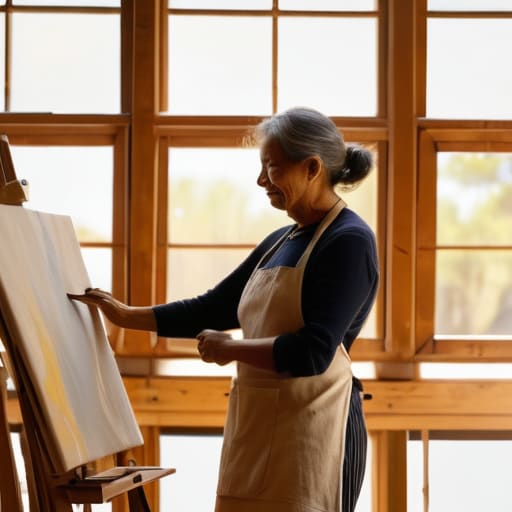

I remember sitting in my gallery back in the late nineties, watching a collector hesitate before a beautiful oil on canvas—twelve by twelve inches, 1994—because they were terrified of “doing it wrong” without a white-glove dealer holding their hand. They thought that without a prestigious street address and a polished salesperson, they were somehow participating in a shady transaction. It’s a nonsense myth that the art world has spent decades cultivating to keep the gatekeepers in power. The truth is, learning how to buy from an artist directly isn’t some high-stakes gamble; it is simply the most honest way to ensure your money actually reaches the person who spent months bleeding over the work.
I’m not here to give you a lecture on “curation” or teach you how to pretend you’re at a gala. I am going to tell you exactly what happens when you bypass the middleman, from the logistics of shipping a heavy frame to the etiquette of negotiating a price without being a nuisance. I will provide you with the unvarnished reality of direct acquisition so you can build a collection that is both meaningful and economically sound.
Why Direct to Consumer Art Sales Benefit the Creator
Let’s be blunt: when you buy through a gallery, the artist is often left scavenging for the crumbs of their own talent. By opting for direct to consumer art sales, you aren’t just skipping a markup; you are fundamentally shifting the economic power back to the person holding the brush. When that fifty-percent commission stays in the creator’s pocket, it translates into better pigments, more time in the studio, and the ability to actually survive as a professional rather than a starving hobbyist.
Beyond the immediate cash injection, this model allows for a level of intimacy that a polished white-cube gallery can never replicate. It opens the door for commissioning custom artwork that feels personal rather than transactional. Instead of choosing from a curated selection of what a dealer thinks will sell to a specific demographic, you are engaging in a real dialogue. You get to see the work in its natural habitat, understand the intent behind the stroke, and ensure that your investment is directly fueling the artist’s future output rather than paying for a gallerist’s expensive rent in Mayfair.
Negotiating Art Prices Without the Gallerys Unearned Cut
When you remove the gallery from the equation, you aren’t just saving money; you are entering a different kind of social contract. In a commercial space, the price tag is a fixed, unyielding thing, often inflated to cover the overhead of a white-walled room and a director’s commission. But when you are negotiating art prices directly with the person who actually held the brush, the conversation shifts from a transaction to a relationship. You aren’t fighting a retail markup; you are discussing the value of labor, materials, and time.
Don’t mistake this for a flea market haggle, though. If you walk into a studio and try to lowball a professional, you’ll find the door closed very quickly. Instead, approach it as a partnership. If a piece is slightly outside your budget, ask if they have smaller studies available, or perhaps discuss the possibility of commissioning custom artwork at a price point that respects their expertise while acknowledging your constraints. The goal isn’t to squeeze every penny out of them—it’s to ensure that the lion’s share of your investment actually stays in the hands of the person supporting independent creators through their craft.
The Myth of the Middleman
When you buy directly from an artist, you aren’t just getting a better price; you are ensuring that the person who actually bled for the work gets to keep the money they earned. I spent twenty-six years taking fifty percent of every sale, and while I certainly earned my keep through marketing and logistics, there is a profound, quiet dignity in a collector choosing to bypass the velvet ropes and put the full value of the art exactly where it belongs: in the hands of the maker.
Vivienne Ashworth-Pryce
The Bottom Line
At the end of the day, buying directly isn’t about being a contrarian or trying to “beat the system”; it’s about making sure the math actually works for the person who actually made the thing. We have covered how cutting out the middleman ensures the artist keeps their full margin, how you can negotiate fairly without a predatory commission standing between you, and why a direct relationship often leads to a much better piece of work in your home. When you bypass the traditional gallery model, you aren’t just saving a percentage; you are reallocating capital toward the very hands that hold the brushes. It is a shift from being a passive consumer to becoming an active patron of the craft.
Don’t let the perceived prestige of a white-walled gallery intimidate you into overpaying for someone else’s overhead. The most meaningful connections in this industry happen in studios, over coffee, or through a simple, honest email exchange. When you buy direct, you are investing in the artist’s ability to keep creating, rather than funding a gallerist’s expensive rent in Mayfair or Chelsea. Buy the work that speaks to you, pay the person who made it, and own the story behind the canvas. That is how you build a collection that actually matters.
Frequently Asked Questions
If I buy directly from the artist, am I missing out on the authentication or provenance documentation a gallery usually provides?
Oil on canvas, 40cm x 40cm, 2024. You aren’t missing anything, provided you aren’t being careless. A gallery is just a middleman with a fancy letterhead; they don’t magically grant authenticity. What you need is a signed Certificate of Authenticity and a clear invoice. If the artist can’t provide a paper trail that links their name to that specific piece, walk away. Documentation is about the audit trail, not the prestige of the building.
How do I know if the price an artist is quoting me is actually fair, or if they’ve just adjusted their "gallery price" to cover their own overhead?
Oil on linen, 30x40cm, 2023. I like it. But let’s talk about the math. If an artist quotes you a “direct” price that is suspiciously close to their retail gallery price, they aren’t being honest about their margins. A fair direct price should reflect the absence of that fifty-percent commission. If they aren’t dropping the price significantly, they aren’t passing the savings to you; they’re just padding their own overhead. Ask them plainly: “Is this price adjusted for the lack of commission?”
Is it considered bad form to approach an artist I saw in a gallery and ask to buy the piece directly from their studio instead?
Oil on canvas, 40cm x 40cm, 2023. It’s a lovely question, but let’s be blunt: it’s a minefield. If the piece is currently in a gallery, that gallery has a contract. They’ve done the heavy lifting—the lighting, the walls, the marketing—and they expect their cut. Trying to bypass them is bad form and, frankly, a breach of professional etiquette. If you want to buy direct, find the artist’s studio first. Don’t play middleman-ninja.
