
I remember sitting in a dimly lit backroom in London, watching a specialist squint through a microscope at a supposedly “undiscovered” sketch, while the air smelled of stale coffee and expensive anxiety. Everyone in the room was talking about carbon dating and chemical pigment analysis as if they were magic spells, but the truth is far more visceral. People think how forgeries are detected is some purely scientific, high-tech mystery reserved for the elite, but more often than not, it’s about a gut feeling that something in the provenance feels like a lie designed to protect a commission.
I’m not here to sell you on the romanticism of the hunt or the complexity of laboratory equipment. Instead, I’m going to pull back the curtain on the actual mechanics of the trade—the red flags that seasoned gallerists spot before the check even clears. I will show you the difference between rigorous authentication and the expensive, often performative, nonsense used to inflate prices. You’ll learn exactly what to look for so you can stop being a victim of information asymmetry and start seeing the market for what it truly is.
The Science of Suspicion Forensic Authentication Techniques
Now, don’t get me wrong; I’ve spent enough time in galleries to know that a sharp eye and a gut feeling are what get a sale across the finish line. But when the stakes involve six figures and a collector’s reputation, we move past intuition and into the laboratory. This is where the heavy lifting happens. We aren’t just looking for a shaky hand; we are looking for a chronological impossibility.
Technicians will use microscopic examination of brushstrokes to see if the “soul” of the work is actually a calculated imitation, but the real smoking guns are often chemical. I’ve seen cases where a painting claimed to be from the 1920s was unmasked simply because the spectroscopic analysis of pigments revealed the presence of a synthetic white that wasn’t even manufactured until the 1950s. It is a cold, clinical way to kill a masterpiece, but it’s the only way to be sure. It turns the romantic notion of “artistic genius” into a hard question of molecular reality, and frankly, that’s exactly how it should be.
Where the Paint Betrays Spectroscopic Analysis of Pigments
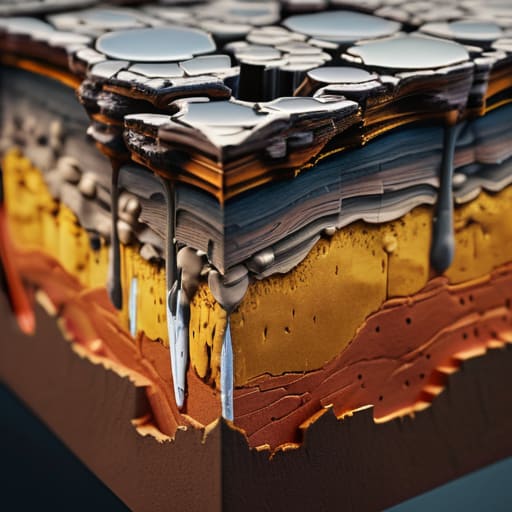
If you think a master forger is just someone with a steady hand and a penchant for old linen, you haven’t been paying attention. The real battleground isn’t on the surface; it’s tucked inside the molecular structure of the color itself. This is where spectroscopic analysis of pigments becomes the ultimate whistleblower. I’ve seen “Old Masters” that looked divine under a gallery spotlight, only to have their legitimacy dismantled because a lab found a trace of titanium white—a pigment that didn’t exist when the supposed artist was breathing.
It is a cold, clinical way to judge beauty, I know. But a painting can lie to your eyes, while the chemistry never does. When we use these tools, we aren’t just looking at color; we are looking for anachronisms in the chemical composition. If a collector is buying a landscape from 1850, and the spectroscopic reading flags a synthetic pigment invented in 1920, the conversation ends immediately. It doesn’t matter how much the provenance paperwork has been polished; once the light reveals the wrong molecule, the illusion is shattered.
The Smell of a Lie
You can run a canvas through every spectrometer in Europe and prove the cobalt blue is period-accurate, but science only tells you if the materials are right; it doesn’t tell you if the soul is missing. Most forgeries aren’t caught by a lab technician, they’re caught by a gallerist who realizes the brushwork feels less like an artist expressing an idea and more like a student trying too hard to mimic a master.
Vivienne Ashworth-Pryce
The Human Element in a World of Machines

We’ve spent this time looking at the heavy machinery—the spectrometers, the carbon dating, and the chemical breakdowns that can tell us if a pigment is too new for its supposed era. But let’s be clear: science is merely a tool to narrow the field, not a magic wand that guarantees truth. You can have a perfectly aged canvas with period-correct lead white, yet still be staring at a masterful deception. Detecting a forgery requires a marriage of forensic precision and that nagging, intuitive sense that something is fundamentally off. It is the intersection where the data meets the connoisseurship, proving that while a machine can identify a molecule, it cannot yet identify a lack of soul in a brushstroke.
For the artists reading this, do not let the fear of the counterfeiters discourage your pursuit of excellence. For the collectors, remember that you aren’t just buying a piece of fabric and pigment; you are investing in a verified piece of history. The battle between the forger and the expert is an old one, and it will continue as long as there is value to be stolen. But as long as we maintain our rigorous standards and refuse to let the allure of a bargain blind us to the necessity of due diligence, the integrity of the market remains intact. Buy with your eyes, but always verify with your head.
Frequently Asked Questions
If the science is so advanced, why do these high-profile fakes still manage to slip into major collections and museum databases?
Because science is a post-mortem, not a preventative measure. You can run every test in the book, but a lab can’t verify a feeling or a signature. High-profile fakes slip through because they exploit the gap between technical accuracy and human ego. A forger who understands the chemistry is dangerous, but a forger who understands a collector’s desire for a “lost masterpiece” is unstoppable. We aren’t just fighting bad paint; we’re fighting the desperation to be right.
At what point does the forensic testing become more expensive than the painting itself, and who actually foots that bill?
Oil on canvas, 40cm x 50cm, 2024. I’ll tell you the truth: once the testing costs approach twenty percent of the work’s estimated value, the math stops working for everyone. Usually, the seller foots the bill if they’re trying to prove authenticity to a buyer, but in high-stakes disputes, the lawyers or the auction houses get involved. It’s a brutal calculation—sometimes it’s cheaper to let a doubt linger than to prove a fact.
How much of "authentication" is actually just a matter of a few powerful experts agreeing on a provenance, rather than what the lab results say?
Let’s be blunt: the lab results are the foundation, but the experts build the house. You can have a perfect spectroscopic match for 19th-century cobalt blue, but if the provenance looks like it was scribbled on a cocktail napkin by a ghost, no one is buying. Authentication is a heavy, messy marriage of hard science and academic consensus. Often, the “truth” is simply the version of history that the most influential voices agree to stop arguing about.
