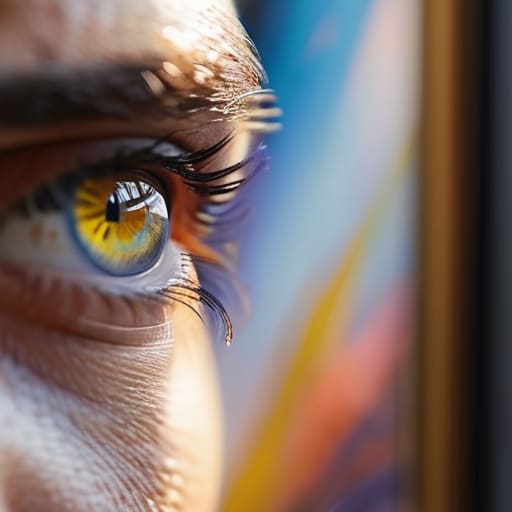

Stop treating a gallery visit like a silent prayer in a cathedral. Most people walk into a room, stare at a canvas with a look of forced profundity, and wait for the “art” to happen to them—usually while feeling an immense, unearned guilt because they don’t know the right vocabulary to justify why they like or hate what they see. This pretension is exactly why the industry thrives on confusion. If you are looking for a complete guide to looking at art that involves memorizing dates of the Renaissance or decoding the “subconscious angst” of a brushstroke, you can stop reading now. I’m not here to teach you how to perform; I’m here to teach you how to see.
I spent twenty-six years behind a gallery desk, and I can tell you that the most successful collectors weren’t the ones with the most degrees, but the ones who understood the mechanics of the work. In this guide, I am stripping away the academic fluff and the dealer’s mystique. I will show you how to evaluate composition, how to spot technical mastery versus mere trend-chasing, and—most importantly—how to trust your own eyes without feeling like you need a permission slip from a critic.
Developing Visual Literacy Skills to See Past the Hype

Most people walk into a gallery and wait to be told if something is “good” by the little white card on the wall or the hushed, reverent tones of the person standing next to them. That is a mistake. If you want to actually understand what you are seeing, you have to stop being a passive consumer and start building your visual literacy skills. This isn’t about memorizing dates or the names of dead men; it’s about training your eyes to see the scaffolding. I’m talking about the elements of design in art—the way a line pulls your eye toward a corner, or how a specific weight of pigment creates a sense of dread before you’ve even processed the subject matter.
Developing this kind of sight requires a certain level of critical thinking for art lovers. You need to move past the initial “I like this” or “I hate this” and ask why the artist made a specific choice. Was that brushstroke an accident, or was it a calculated move to create tension? When you start deconstructing the mechanics of a piece, you become much harder to swindle. You stop buying the hype and start seeing the work for what it actually is: a series of intentional, often expensive, decisions.
Using Critical Thinking for Art Lovers to Spot Substance

Once you’ve mastered the basics of seeing, you have to start questioning what you’re actually looking at. Most people walk into a gallery and wait to be told if something is “important” by the little white card on the wall. That is a mistake. Critical thinking for art lovers isn’t about being a contrarian for the sake of it; it’s about refusing to let the marketing do the heavy lifting for you. If a piece relies entirely on a three-paragraph artist statement to make sense, it’s usually because the work itself is hollow.
I spent decades watching collectors fall in love with a concept only to realize the execution was amateurish. To avoid this, you need to apply a bit of art history analysis to the present moment. Ask yourself: Is this artist actually pushing a boundary, or are they just performing a well-worn trope that happens to be trendy right now? Substance exists in the tension between the idea and the physical reality of the object. If the technical skill isn’t there to support the ambition, you aren’t looking at a masterpiece; you’re looking at a very expensive piece of theater.
The Myth of the Magic Moment

Stop waiting for the art to “speak” to you like it’s some mystical occurrence; if you aren’t looking at the brushwork, the scale, and the sheer audacity of the artist’s intent, you aren’t actually looking at the work—you’re just staring at a very expensive wallpaper.
Vivienne Ashworth-Pryce
The View From the Other Side of the Frame
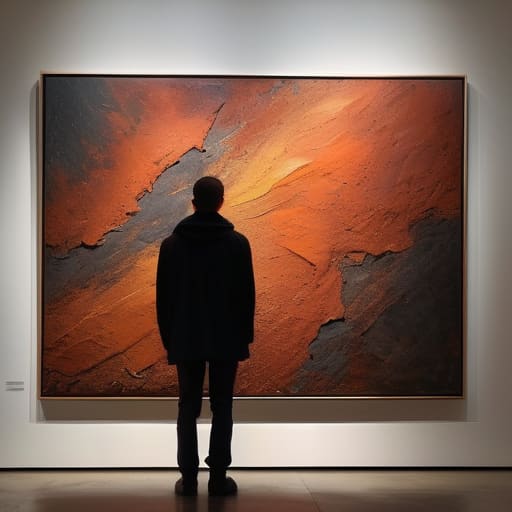
At the end of the day, looking at art isn’t about memorizing a list of dates or being able to recite the nuances of Post-Impressionism over cocktails. It’s about stripping away the performative nonsense of the gallery floor and applying the tools we’ve discussed: building your visual literacy, questioning the hype, and using a bit of cold, hard critical thinking to see if the work actually holds its own weight. You don’t need a PhD to realize when a piece is hollow, and you certainly don’t need a dealer’s permission to trust your own eyes. Once you stop looking for the “correct” answer and start looking for the substance, the entire experience shifts from a passive observation into an active, personal investigation.
My advice to you is simple: stop treating art like a sacred mystery that requires an initiate to unlock. It is a conversation, often a loud and messy one, between the person who made the object and the person standing in front of it. Whether you are a collector looking to invest or an artist trying to understand your audience, remember that the most important perspective in the room is your own. Don’t let the prestige of a white-walled room intimidate you into silence. Go out, look closely, and demand more from the work than just a pretty surface. That is how you truly learn to see.
Frequently Asked Questions
If I can see the technique and the substance, why does the price tag still feel like a complete mystery?
Because you’re looking at the canvas, while the market is looking at the ledger. Technique and substance are the entry requirements, not the price drivers. Price is a cocktail of provenance, scarcity, the artist’s career trajectory, and—let’s be honest—how much the gallery has spent on marketing that specific piece. You see the brushwork; the collector sees an asset class. It’s frustrating, I know, but stop looking for logic in the paint and start looking for it in the pedigree.
How do I distinguish between an artist who is actually making something meaningful and one who is just very good at playing the gallery game?
Oil on canvas, 40×40, 2023. I like it, but let’s be honest about why. You spot the difference by looking at the work’s stamina. A “game player” produces highly polished, trendy pieces that feel like they were designed specifically to match a mid-century sideboard or a certain Instagram aesthetic. They are shallow. A meaningful artist has a visual vocabulary that persists even when the trends shift. One is selling decor; the other is selling a perspective.
Once I’ve learned how to look at a piece properly, how do I know if a collector is buying the work for its merit or just for the social status attached to the name?
Oil on canvas, 40x40cm, 2023. I’ve seen it happen a thousand times. To tell the difference, watch the conversation. If they’re asking about the brushwork, the tension in the composition, or why the artist chose that specific pigment, they’re buying the work. If they’re only asking who else owns it or how much it’ll be worth in five years, they’re just buying a trophy. One is an investment in beauty; the other is just an expensive social receipt.
