
I remember a young painter, lovely girl, who came into my gallery ten years ago with a stack of beautiful lithographs and a look of absolute terror. She had been told by a “consultant” that her numbering system needed to be some esoteric, complex code to signify prestige. In reality, she was just making it impossible for my collectors to understand what they were actually buying. People treat the mechanics of art production like a dark art, but the truth is that understanding how print editions are numbered shouldn’t require a degree in mathematics or a secret handshake. It is simply a matter of controlled scarcity, and when you muddy the waters with nonsense, you aren’t adding value—you’re just creating friction.
I am not here to give you a textbook definition or a lecture on fine art theory. Instead, I am going to pull back the curtain on the practical, often messy reality of editioning. I will show you exactly how to structure your numbers so they protect your secondary market value rather than cannibalizing it. We are going to strip away the pretension and focus on the commercial logic that keeps an artist’s career sustainable.
Limited Edition vs Open Edition the Illusion of Value
The distinction between a limited edition vs open edition isn’t just a technicality; it is the difference between an asset and a souvenir. When I ran my gallery, I saw too many young artists treat their prints like posters, flooding the market with “open editions” because it felt safer to sell a hundred copies at fifty pounds than ten copies at five hundred. But here is the truth: if there is no ceiling, there is no scarcity. Without a hard cap on production, you aren’t building a collector base; you are merely running a gift shop.
A true limited edition relies on the promise of controlled supply. When a collector buys a numbered print, they are betting on the fact that the artist will eventually stop the presses. This is where understanding print numbering notation becomes vital. If you tell a buyer there are only fifty pieces, and then three years later you release another fifty because “the demand was there,” you haven’t just been opportunistic—you’ve devalued every single person who trusted your initial scarcity. You have effectively broken the contract of collectible art print rarity.
Understanding Print Numbering Notation Without Getting Ripped Off
Now, let’s get into the actual ink on the paper. When you’re looking at a print, you’ll see a fraction—something like 12/50. This isn’t just a decorative flourish; it is the most basic form of fine art print authentication you will encounter. The first number is your specific piece, and the second is the total size of the run. If you see a number that is significantly higher than the second digit, or if the second digit is missing entirely, you aren’t looking at a collector’s item; you’re looking at a poster.
You also need to be wary of the “special” designations that often appear near the signature. You’ll encounter terms like AP (Artist Proof) or PP (Printer’s Proof). While there is a legitimate difference between AP and PP prints—with APs typically being held back for the artist’s personal use or exhibition—some unscrupulous sellers use these labels to inflate the perceived rarity of a work that was actually part of a much larger, more commercial run. If an artist is handing out “Artist Proofs” like party favors, the scarcity is a lie, and your investment value will reflect that.
The Math of Scarcity
When you see a number like 3/50, you aren’t just looking at a sequence; you’re looking at the math behind your investment and the exact limit of how much scarcity the artist is actually allowing into the market. If those numbers aren’t managed with discipline, you aren’t selling art—you’re just running a printing press.
Vivienne Ashworth-Pryce
The Bottom Line on Editions
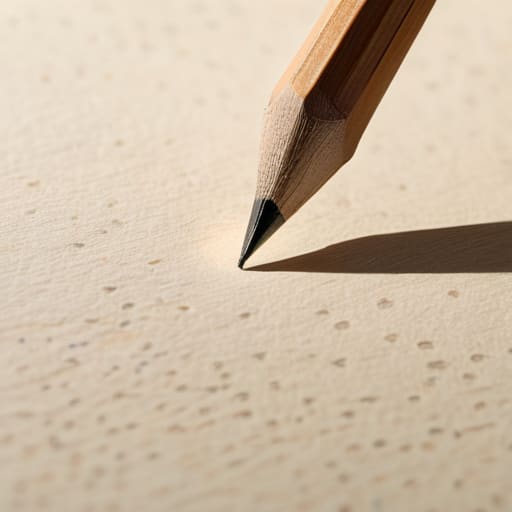
At the end of the day, whether you are an artist deciding on a run or a collector squinting at a pencil mark in the corner, the numbers matter because they represent a promise. We have covered the distinction between the manufactured scarcity of a limited edition and the infinite sprawl of an open run, as well as the specific shorthand of notation that tells you exactly where you sit in the hierarchy of a series. Remember, a number like 5/25 isn’t just a label; it is a contract of value between the creator and the buyer. If the numbering is inconsistent or the edition size is bloated without a clear reason, the mathematical integrity of the work collapses, and so does its resale potential.
I spent twenty-six years watching people chase the wrong kind of prestige, often buying into “limited” runs that were anything but. My advice to the artists I advise is this: treat your edition numbers with the same respect you treat your brushstrokes. Don’t inflate your numbers to pay the rent this month, because you will be the one paying the price when your market realizes the scarcity was a lie. Build your legacy on transparency and discipline. When you respect the math, the collectors will respect the art, and that is how you build a career that outlasts a single season of hype.
Frequently Asked Questions
If I decide to increase the edition size later because a series is selling well, how do I do that without devaluing the prints I've already sold?
Oil on paper, 12×15, 2024. If you want to expand, you don’t touch the original edition. You close it. Once you’ve promised a collector they own 1 of 25, that’s a contract, not a suggestion. To grow, you start a new series—perhaps a “Volume II” or a different paper stock. You maintain the scarcity of the first run to protect the early adopters, then introduce the new edition as a distinct, separate entity.
What is the actual difference in market value between an Artist Proof (AP) and a regular numbered print, and should I be charging more for them?
Oil on paper, 12×16, 2024. Listen, an Artist Proof isn’t some magical, superior relic; it’s simply a print pulled outside the main run, often used to check the press. In a healthy market, an AP can command a 10-15% premium because collectors love the feeling of owning something “extra,” but don’t overplay it. If you price an AP too high, you aren’t creating prestige; you’re just making your standard edition look like a bad deal.
Is there any legal or professional standard for how I should physically sign and number these, or can I just do whatever feels right?
Oil on paper, 10 x 12 inches, 2024. Honestly? There is no law, but there is a standard of professional dignity. You can scribble whatever you like, but if you want a collector to treat a print like an asset rather than a souvenir, consistency is your best friend. Use a pencil—never ink—and sign it in the same hand you use for the numbering. It signals that the edition is a deliberate series, not a frantic afterthought.
