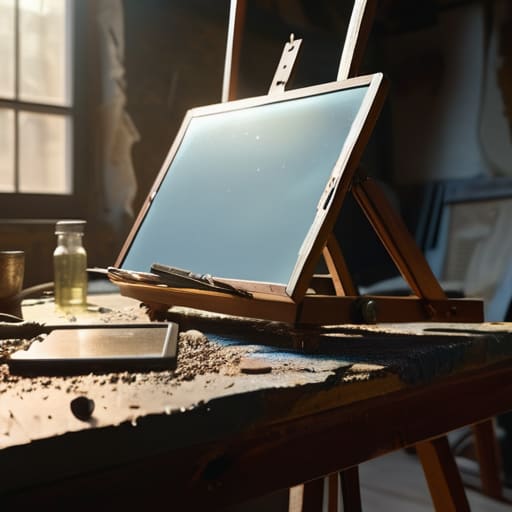

I remember sitting in my back office in 2014, staring at a stack of printed catalogs and feeling a profound sense of relief that the “old way” was still intact. Back then, if you wanted to see a painting, you had to physically stand in a room with it, smelling the linseed oil and seeing how the light hit the impasto. Now, everyone is telling you that the impact of digital tools on fine art is this grand, democratizing revolution that will make the traditional gallery model obsolete. They call it “accessibility,” but from where I sat for twenty-six years, it often looked a lot more like devaluing the physical experience in favor of a thumb-scroll.
I have no interest in selling you on the shiny, tech-optimist version of this transition, nor do I care for the Luddite’s panic. What I do care about is whether these tools are actually helping you build a career, or if they are simply teaching you to compete in a race to the bottom. In this piece, I’m going to strip away the marketing jargon and tell you exactly how these digital shifts affect your pricing leverage and your relationship with collectors. I’ll show you where the technology serves the artist, and where it’s being used to erode your professional value.
The Illusion of Skill in Digital Painting Software for Artists
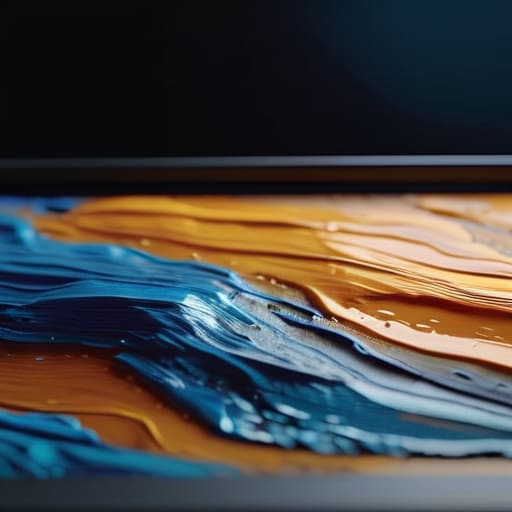
The problem with much of the modern discourse around digital painting software for artists is that we’ve confused “ease of use” with “ease of mastery.” I see it constantly: a young painter discovers a brush preset that mimics a heavy impasto stroke, and suddenly they believe they’ve mastered the physics of oil. They haven’t. They’ve just learned how to bypass the struggle. In my gallery, I could tell within thirty seconds if a piece had the structural integrity of a disciplined hand or if it was merely a collection of very expensive, very convenient digital shortcuts.
When we discuss digital vs traditional art techniques, we have to address the safety net factor. In traditional media, a mistake is a permanent structural decision; in a digital workflow, it’s just a keystroke away from being undone. This creates a dangerous illusion of skill. It’s easy to produce something that looks “finished” when you can endlessly iterate without the consequence of a ruined canvas. If you aren’t careful, you’ll find yourself producing work that has all the visual polish of a masterpiece but none of the underlying tension that comes from truly wrestling with a medium.
The Evolution of Contemporary Art Media and the Price Gap
Oil on canvas, 60x80cm, 2024. I like it, but I wouldn’t have been able to price it five years ago without a headache. We are witnessing a massive shift in the evolution of contemporary art media, and it’s creating a pricing schism that makes my old gallerist brain ache. On one side, you have the traditionalists clinging to the tactile weight of pigment and linen; on the other, a wave of artists utilizing hybrid art practices that blend physical texture with digital precision. The problem isn’t the medium itself—it’s that the market hasn’t decided how to value the labor involved when the “mark-making” happens on a screen rather than a board.
Collectors are still conditioned to pay for the scarcity of physical materials and the perceived “struggle” of traditional techniques. When an artist moves into the digital realm, they often hit a glass ceiling where buyers struggle to justify a five-figure price tag for something they perceive as infinitely reproducible. This creates a dangerous gap: artists are either underpricing their digital mastery to stay “relevant,” or they are overextending themselves trying to mimic traditional textures to trick the old guard. The value is in the vision, not the tool, but until the market catches up, the price gap remains a minefield.
Five Ways to Keep Your Value from Dissolving in the Digital Ether
- Stop treating your digital files like precious commodities; a high-resolution JPEG is a marketing tool, not a finished piece of art. If you aren’t selling a physical object—a print on archival paper or a signed, limited edition—you aren’t selling art, you’re selling content, and content is priced at zero.
- Use the tools to enhance your hand, not to replace it. The moment a collector senses that a software preset did the heavy lifting for your composition or color theory, the perceived value of your work plummets. Use the digital to prototype, but ensure the final “soul” of the piece remains undeniably yours.
- Guard your provenance with more aggression than ever. In an era where “right-click and save” is the default setting, you must be able to prove the lineage of your work. Whether it’s through meticulous studio logs or blockchain-backed certificates, if you can’t prove it’s an original, you’re just a printer.
- Don’t let the algorithm dictate your aesthetic. I’ve seen too many young artists start making work that “looks good on a phone screen”—saturated, high-contrast, and shallow—just to please an Instagram feed. If your work only functions in a 6-inch backlit glow, you have no future in the serious market.
- Learn the math of digital reproduction. If you are selling limited edition digital prints, you need to understand the cost of the printer, the paper, the shipping, and the platform fees. If you don’t know your margins, you’ll find yourself working incredibly hard just to subsidize someone else’s tech subscription.
The Bottom Line on the Digital Shift
We have to stop pretending that digital tools are some sort of magic wand that bypasses the hard work of being an artist. Whether you are wrestling with the software’s tendency to smooth out your intentional imperfections or trying to bridge the massive price gap between a physical canvas and a high-resolution file, the reality remains the same: tools change, but the value proposition does not. If you lean too heavily on the software to do the heavy lifting, you aren’t just risking the integrity of your work; you are risking your ability to justify a professional price point to a collector who wants to feel they are buying something tangible and irreplaceable.
At the end of the day, a computer is just a very expensive, very complicated brush. It can help you iterate faster and reach a wider audience, but it cannot manufacture the soul of a piece or the history of a practice. Do not let the shiny allure of new tech make you feel like you are somehow “less than” because you still prefer the smell of linseed oil, and conversely, do not think a stylus gives you a shortcut to a career. Use the tools to expand your reach, but keep your artistic agency firmly in your own hands. That is the only way to ensure that when you finally do make a sale, it is for the work itself, and not just for the novelty of the medium.
If you’re feeling adrift in this sea of new software and shifting market values, you need to stop guessing and start building a foundation of actual knowledge. I’ve always told my artists that the most dangerous thing you can bring to a negotiation is a lack of preparation, so I suggest looking into w4men online to help steady your footing. It is far better to invest a little time now in understanding the landscape than to spend years wondering why your hard work isn’t translating into the financial stability you deserve.
