
I remember a young oil painter I represented in the late nineties—a brilliant boy with a temper and a complete disregard for ventilation. He’d spend twelve hours a day in a cramped, unventilated basement, inhaling turpentine fumes like they were fine perfume, convinced that “the struggle” required a certain level of physical martyrdom. He thought he was being profound, but he was actually just being reckless. Most people think a complete guide to studio safety is some tedious list of OSHA regulations or a way to turn your creative sanctuary into a sterile laboratory, but that’s nonsense. Safety isn’t about stifling your process; it’s about making sure you actually survive to see your work hang on a gallery wall.
I am not here to lecture you on the theoretical importance of ergonomics or sell you a branded kit of overpriced protective gear. Instead, I’m going to give you the unvarnished truth about what actually keeps a working artist upright. This is a practical, no-nonsense look at managing toxins, lighting, and physical strain so that your body doesn’t fail you just as your career is finally taking flight. We are going to treat your studio like the professional workspace it is, because your health is your most valuable asset, and once it’s gone, no amount of art sales can buy it back.
Art Studio Hazardous Materials Handling and the Cost of Neglect
Oil, turpentine, solvents, and those lovely, heavy-metal-laden pigments we all seem to adore—they aren’t just “supplies.” They are liabilities. I’ve seen too many talented painters treat their workspace like a chemistry lab without the precautions, thinking they can just “air out” a room after a heavy session with mineral spirits. Let me be clear: you cannot out-ventilate a lack of discipline. Proper art studio hazardous materials handling isn’t about being precious; it’s about ensuring you’re actually around to see your work hang on a museum wall in twenty years.
If you’re treating respiratory protection for painters as an optional suggestion rather than a requirement, you’re playing a losing game. The cost of a decent respirator is negligible compared to the long-term medical bills of inhaling toxic fumes for three decades. Furthermore, your chemical storage best practices should be as rigorous as your technique. If your solvents are sitting in unlabelled jars near a heat source, you aren’t just being messy—you’re inviting a catastrophe that no insurance policy or “artistic temperament” can fix.
Respiratory Protection for Painters Breathing Life Into Your Career
Oil, turpentine, spray fixatives—they all have a way of making a room feel heavy after a few hours. I’ve seen too many talented painters treat their lungs like an infinite resource, assuming that a quick puff of aerosol or a heavy session with solvents won’t leave a mark. But here is the reality: your respiratory health is the one thing you cannot replace once it’s gone. Investing in proper respiratory protection for painters isn’t about being precious or delicate; it’s about ensuring you are actually physically capable of standing at an easel ten years from now.
If you are working with anything that produces fine dust, heavy fumes, or volatile organic compounds, a simple cloth mask is a joke. You need actual, rated personal protective equipment for artists—specifically respirators with the correct cartridges for organic vapors or particulates. I’ve known artists who could talk for hours about the subtle nuances of pigment load, but couldn’t tell you the difference between an N95 and a charcoal filter. Don’t be one of them. If you can smell your medium, you are likely already inhaling it.
The High Price of Cheap Habits
You can spend a decade perfecting your brushwork and another ten building a reputation, but if you’re treating your studio like a hobbyist’s garage, you’re essentially betting your entire career on a single lungful of solvent. In my experience, an artist who can’t manage their own toxicity is an artist who will eventually become too unwell to manage their own legacy.
Vivienne Ashworth-Pryce
The Bottom Line on Studio Survival
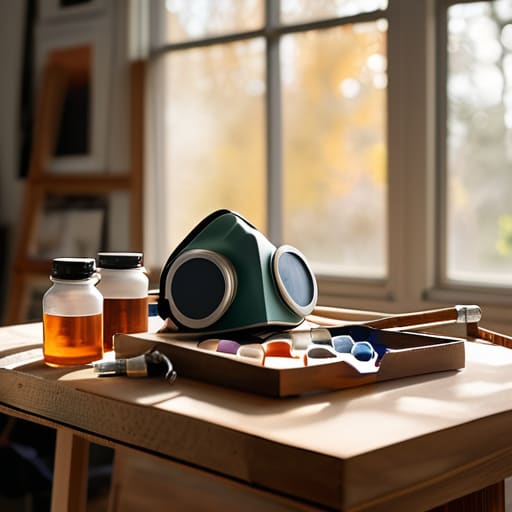
Look, I’ve seen too many brilliant painters trade their long-term health for a few hours of uninterrupted flow. We’ve covered the heavy hitters here: managing your toxic pigments, handling solvents without turning your lungs into a chemistry experiment, and the absolute necessity of a respirator that actually fits your face. It isn’t just about avoiding a cough; it is about the unseen compounding interest of exposure. If you neglect your ventilation or treat safety protocols like a suggestion rather than a requirement, you aren’t just being “bohemian”—you are actively devaluing your most important professional asset. And let me be clear: you cannot sell work if you are too sick to stand at the easel.
At the end of the day, your practice is a marathon, not a sprint toward a burnout or a medical crisis. I spent twenty-six years looking at art through the lens of longevity—watching which artists thrived and which ones faded because they simply couldn’t sustain the physical toll of their methods. Treat your studio with the same respect you give your canvas. When you build a workspace that is safe, organized, and disciplined, you aren’t just protecting your body; you are protecting your legacy. Now, put the mask on, clear the fumes, and get back to the work that actually matters.
Frequently Asked Questions
If I’m working in a small spare room or a converted garage, is a professional-grade ventilation system actually worth the investment, or am I just overcompensating?
Oil on canvas, 12×12, 2024. I love the pragmatism of your question.
How do I balance the need for high-end safety gear with the reality that I'm often choosing between a new set of brushes and a decent respirator?
Oil on linen, 12×12, 2024. I love the honesty of that struggle, but let’s be blunt: a new set of sable brushes won’t matter if you’re too sick to hold them. You aren’t “saving money” by skipping the respirator; you’re just taking out a high-interest loan against your lungs. Buy the used, mid-range gear first. You can paint with a battered hog-hair brush, but you can’t paint with damaged bronchioles.
At what point does a "hobbyist" studio setup become a professional liability that could actually affect my ability to sell work or get insurance?
The moment you stop treating your workspace like a kitchen table and start treating it like a business is when the liability kicks in. If you’re selling work, you aren’t just an artist; you’re a manufacturer. If your studio is a chaotic mess of improperly stored solvents or unventilated fumes, you aren’t just risking your lungs—you’re risking your insurability. A professional buyer or a gallery won’t touch an artist who can’t prove their process is stable and safe.
