
Stop waiting for a patron to descend from the heavens or for some prestigious academy to hand you a certificate of legitimacy. Most people think that learning how to start painting seriously involves buying the most expensive linen canvases or finding a mentor who will whisper sweet nothings about your “vision.” That is absolute nonsense. In my twenty-six years running a gallery, I saw more artists sink under the weight of expensive, useless gear than I saw succeed by mastering the unsexy mechanics of the trade. If you think “seriousness” is about the quality of your brushes rather than the discipline of your business model, you aren’t ready for a professional career; you’re just looking for an expensive hobby.
I am not here to give you a pep talk or tell you that your soul is on the canvas. Instead, I am going to give you the blueprint I wish every artist I represented had understood before they signed their first contract. We are going to talk about the actual, unromantic transition from making things you like to creating a body of work that someone else is willing to pay for. I will show you how to build a practice that survives the market, without the gatekeeping or the bullshit.
Developing an Art Practice Beyond the Sunday Hobbyist
There is a massive, yawning chasm between someone who paints because it feels good on a rainy Tuesday and someone who is actually developing an art practice. If you want to cross that gap, you have to stop treating your studio time like a leisure activity and start treating it like a job. That doesn’t mean you lose the joy, but it does mean you need a schedule that doesn’t rely on “feeling inspired.” Inspiration is for amateurs; professionals show up when the light is right and the coffee is black, regardless of their mood.
This shift requires a rigorous commitment to improving artistic technique through deliberate, often repetitive study. You cannot simply wait for talent to strike; you have to build it. This might mean spending three months obsessing over mastering color theory or drilling the way light hits a sphere until your eyes ache. It’s about moving away from the “happy accidents” that hobbyists cherish and moving toward a level of intentionality that a collector can actually see in the brushwork. If you aren’t pushing yourself toward a specific technical standard, you aren’t practicing—you’re just playing.
Forging an Art School Curriculum for Self Taught Artists
If you didn’t spend four years in a drafty studio being yelled at by a professor named Klaus, you are at a distinct disadvantage. You don’t have a syllabus, and more importantly, you don’t have someone to tell you when your work is merely “pleasant” rather than “necessary.” To bridge this gap, you must construct your own art school curriculum for self-taught artists. This isn’t about watching endless YouTube tutorials on how to paint a sunset; it is about structured, repetitive discipline. You need to pick a pillar—be it anatomy, perspective, or mastering color theory—and commit to it with the same rigor a student would.
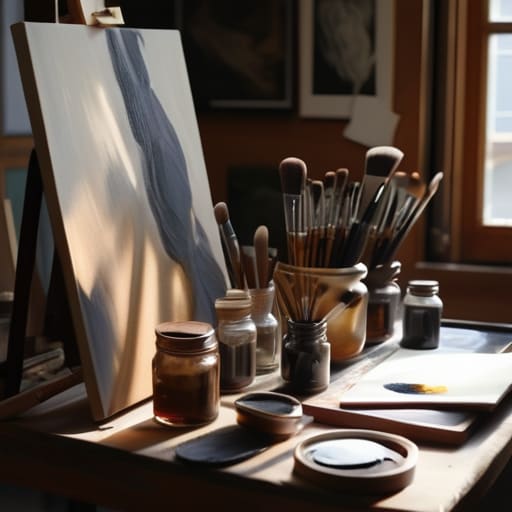
Don’t just wander through your studio aimlessly. If you are focusing on oils, stop buying every shiny new tube and instead curate a set of essential oil painting supplies that force you to learn how to mix, rather than how to rely on pre-mixed convenience. You need to schedule your “critiques” by stepping back from the canvas and looking at your work through a mirror or a photograph. If you can’t find a mentor, you must become your own most unforgiving critic.
The Shift from Canvas to Career
If you want to move from being someone who paints to being an artist, you have to stop treating your studio like a sanctuary and start treating it like a production house; the moment you decide that your time is a commodity and your output is a product, you’ve actually begun the work.
Vivienne Ashworth-Pryce
The Hard Truth and the Long Game
If you take anything from this, let it be this: moving from a hobbyist to a professional isn’t about finding a more expensive set of brushes or waiting for a sudden burst of divine inspiration. It is about the discipline of building your own curriculum and the grit to treat your studio time with the same respect a surgeon treats an operating theater. You have to bridge the gap between making things that look nice and building a body of work that someone—a collector, a gallery, or a curator—can actually recognize as a coherent career. It is a transition from the whims of emotion to the rigor of a practice, and quite frankly, that is where most people drop out.
Do not let the industry’s polished veneer intimidate you. The gates are not as locked as they look; they are simply guarded by people who value consistency over flashes in the pan. If you can commit to the structure you’ve built and maintain your standards when no one is looking, you will eventually find yourself in a position to negotiate, rather than just hope. Stop waiting for permission to be an artist and start behaving like one. The market doesn’t owe you a living, but it will certainly reward someone who has finally decided to take themselves seriously.
Frequently Asked Questions
I’ve spent years honing my technique, but how do I actually know when my work is "ready" to be priced for a market rather than just a gift for a friend?
Oil on canvas, 24×30, 2024. I think you’re looking for a feeling, but you should be looking for consistency. Your work is “ready” when you stop making “good paintings” and start making a body of work that looks like it was made by the same person. If I can’t look at three pieces and see a coherent visual language, you aren’t a professional; you’re just a person with a talent for variety.
Once I’ve moved past the hobbyist stage, how much of my time should realistically be spent at the easel versus managing the business side of things?
Oil on canvas, 12×12, 2024. It’s a lovely question, but it’s a trap. If you spend eighty percent of your time at the easel, you aren’t a professional; you’re a very dedicated enthusiast. Once you’re serious, aim for a sixty-forty split. Forty percent of your week must be spent on the unglamorous mechanics: invoicing, shipping, updating your website, and emailing collectors. If you don’t manage the business, the business won’t exist to support the art.
If I’m self-taught and haven't gone through the traditional academy route, how do I build the professional credibility needed to get a gallery to take me seriously?
You don’t need a degree to have a pedigree, but you do need a paper trail. Galleries don’t care about your diploma; they care about your consistency and your exhibition history. Start small. Local libraries, community centers, or even a well-curated pop-up in a rented studio. If I see a cohesive body of work that has been shown in three different venues, I stop seeing a “hobbyist” and start seeing a professional with momentum.
