

I remember sitting in my small market town gallery, clutching a lukewarm glass of Chardonnay, staring at a portfolio from a young painter who had “the look” but absolutely no sense of how to actually exist in a room. Everyone tells you that there’s some mystical, divine spark that triggers a gallerist’s interest, or that you need a certain pedigree to get through the door. That is utter nonsense. The truth about how galleries choose artists isn’t found in a star chart or a prestigious MFA; it’s found in the unglamorous, gritty reality of market viability and whether your work can actually sustain a career.
I’m not here to feed you the usual industry fluff or tell you to “just be yourself” and hope for the best. Instead, I am going to pull back the curtain on the actual mechanics of the selection process. I’ll tell you why I passed on brilliant painters because they were a logistical nightmare, and why I took a chance on artists who were technically imperfect but commercially savvy. This is the unvarnished truth about what happens behind closed doors, stripped of the pretension.
Curatorial Vision and Aesthetic Alignment It Is Never Just About Talent
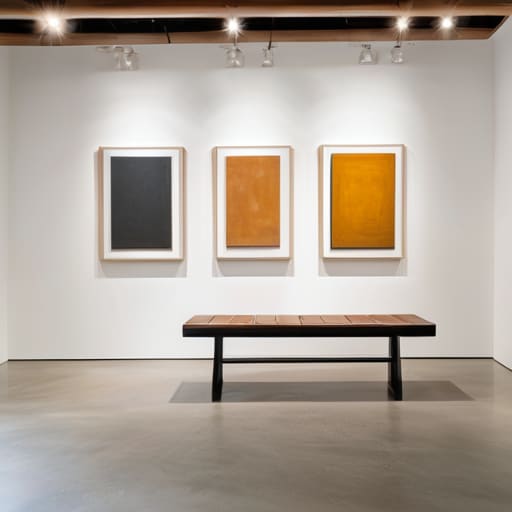
Let’s get one thing straight: being good at what you do is merely the entry fee. I’ve seen breathtakingly talented painters walk into my gallery with portfolios that were, quite frankly, a mess, and I turned them away without a second thought. Why? Because talent is a commodity, but a cohesive curatorial vision and aesthetic alignment is a business asset. When I was looking at my walls, I wasn’t just looking for a pretty picture; I was looking for a voice that could speak to the other pieces already hanging there. If your work is a chaotic grab-bag of every style you’ve ever experimented with, you aren’t an artist with a range—you’re an artist without a brand.
Galleries don’t just buy art; we buy a narrative that we can sell to a specific type of collector. When we evaluate art gallery representation criteria, we are looking for how your work fits into the broader conversation of emerging artist market trends. We need to know that if we commit our reputation and our precious wall space to you, your work will hold its own in a room full of other curated pieces. It’s not about being the best in the world; it’s about being the right fit for the room.
The Harsh Truth About the Commercial Viability of Contemporary Art

Let’s dispense with the romantic notion that a gallery is a sanctuary for pure expression. While I loved the soul of the work I represented, I was also running a business with overheads that didn’t care about your creative process. When I looked at a new artist, I wasn’t just looking for beauty; I was looking for a sustainable trajectory. I needed to know if your work could survive the transition from a studio to a living room. This is the cold reality of the commercial viability of contemporary art: a gallery cannot afford to represent a “brilliant” artist who produces work that is physically impossible to sell or too niche to find a home.
I spent many afternoons staring at portfolios, wondering if an artist’s output was consistent enough to build a brand. If you are building an artist portfolio for galleries, you must understand that we are looking for a cohesive language, not a collection of disparate experiments. We need to see that you can produce a body of work that tells a story, rather than a series of one-off impulses. If I can’t see how your work fits into emerging artist market trends or, more importantly, how it will hold its value for a collector, I simply cannot justify the risk of putting my name behind you.
The Myth of the Meritocracy
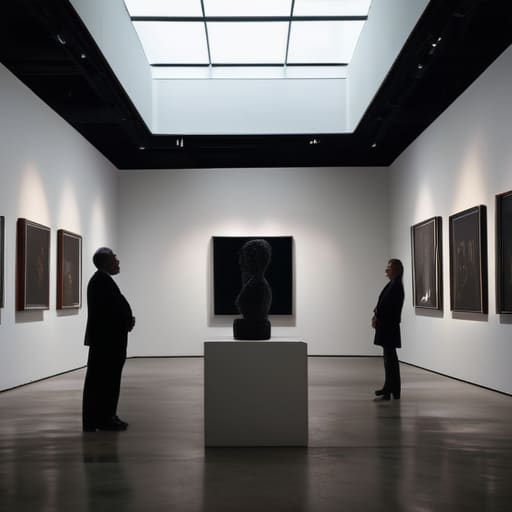
“Don’t mistake my silence for a critique of your technique. I can tell a master from a student in thirty seconds, but I don’t hang masters just because they’re talented; I hang them because they fit the story I’m telling my collectors, and because I know their work won’t be sitting in a dusty studio three years from now when the rent is due.”
Vivienne Ashworth-Pryce
The Bottom Line

At the end of the day, getting into a gallery isn’t a meritocracy of pure talent; it is a complex, often messy alignment of curatorial taste, commercial potential, and logistical reality. We discussed how a gallery needs to see a cohesive body of work that fits their specific “brand,” and we didn’t shy away from the uncomfortable truth that if your work doesn’t move, it doesn’t matter how much soul you poured into the canvas. A gallery is a business, not a charity, and we are looking for partners who can help us sustain that business. If you understand that a rejection is often just a sign of aesthetic misalignment rather than a failure of your ability, you are already ahead of most artists I worked with.
Please, do not let the gatekeepers make you feel small. The “velvet rope” is often thinner than it looks, and much of the mystery is just smoke and mirrors designed to keep the power in our hands. My advice is to keep refining your practice, keep your books in order, and stop waiting for permission to be an artist. Build your own momentum, find your own collectors, and treat your career with the professional rigor it deserves. When you finally do walk into a gallery with a body of work that is both visually arresting and commercially disciplined, you won’t be asking for a favor—you’ll be offering them an opportunity.
Frequently Asked Questions
If my work doesn't fit a gallery's current "aesthetic," does that mean I should change my style to be more marketable, or just find a different gallery?
Oil on canvas, 40cm x 40cm, 2024. I don’t like the premise of the question, but I like the honesty of it.
How much does an artist's social media following actually matter when a gallerist is looking at a portfolio?
Oil on linen, 40x40cm, 2024. I don’t care if you have ten thousand followers or ten. A large following is a double-edged sword; it proves you can market yourself, which is useful, but it often signals a “content creator” rather than an artist. If your engagement is high but your work lacks depth, you’re just a trend. I want to see a career, not a viral moment. Numbers are vanity; a collector’s intent is reality.
Is it better to approach a high-end commercial gallery with a polished body of work, or should I be looking for smaller, experimental spaces first?
Oil on canvas, 40×40, 2024. It’s a lovely question, but you’re asking about the wrong thing. You shouldn’t be looking for “types” of spaces; you should be looking for a match in business models. High-end galleries want a finished, predictable product they can sell to collectors who don’t like surprises. Experimental spaces want a conversation. If your work is still “finding itself,” don’t knock on a blue-chip door—you’ll just waste everyone’s time.
