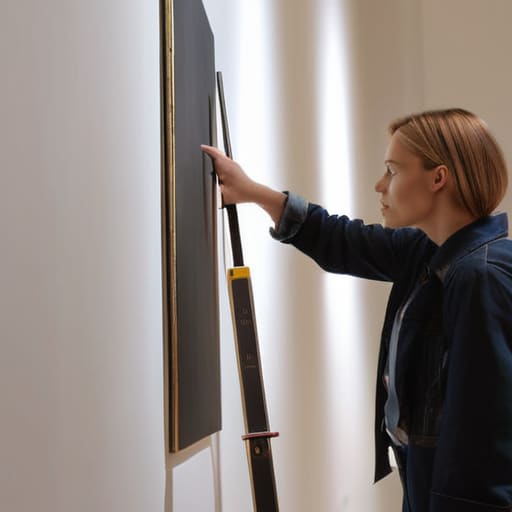

I remember a Tuesday in late November, twenty years ago, standing in my gallery with a bruised thumb, a level that wouldn’t stay straight, and a mounting sense of dread as I stared at a blank white wall. Most people think the magic happens when the artist finishes the canvas, but the real, unglamorous truth is that the entire commercial success of a show often hinges on the frantic, physical chaos of how exhibitions are hung. It isn’t some ethereal, curatorial dance performed by people in black turtlenecks; it is a high-stakes game of spatial manipulation, heavy lifting, and the desperate hope that your eye-line doesn’t make a fifty-hundred-pound oil painting look like a piece of discarded scrap.
I’m not here to give you a lecture on the “aesthetic philosophy” of wall placement. Instead, I want to pull back the curtain on the actual mechanics of the room. I am going to tell you exactly how we use lighting and sightlines to guide a collector’s wallet, why a poorly placed pedestal can kill a sale, and what you should actually expect from a professional installer. This is the business of the wall, stripped of the mystique.
Curatorial Hanging Methods More Than Just Hammer and Nail
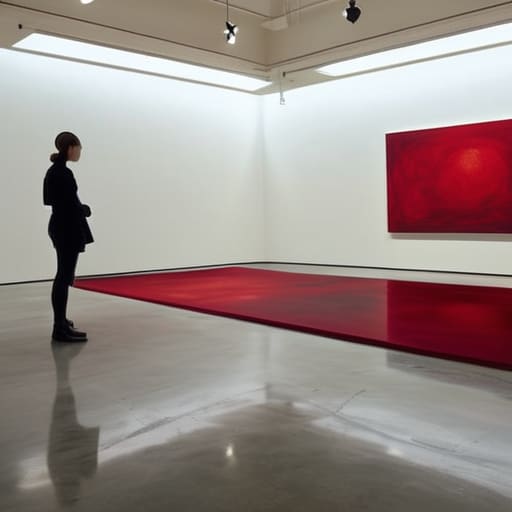
When we talk about curatorial hanging methods, most artists imagine a technician with a level and a steady hand. In reality, it is a calculated exercise in psychological manipulation. We aren’t just placing objects on a surface; we are choreographing a specific visual flow in galleries to ensure a collector doesn’t feel overwhelmed or, worse, bored. If I place a massive, aggressive canvas next to a delicate, understated charcoal sketch without a strategic buffer, I haven’t just made a mistake—I’ve killed the sale of both.
The technical side is where the “professional” distinction truly lies. It’s about adhering to strict eye level art installation protocols—usually centered around 57 to 60 inches—so the viewer feels a sense of subconscious stability. It involves a deep understanding of how museum lighting and placement can either breathe life into a texture or flatten a masterpiece into a dull smudge. We use these exhibition design principles to dictate exactly where a person stands, how long they linger, and ultimately, which price tag they find themselves staring at when they finally decide to reach for their checkbook.
Visual Flow in Galleries Controlling the Collectors Path
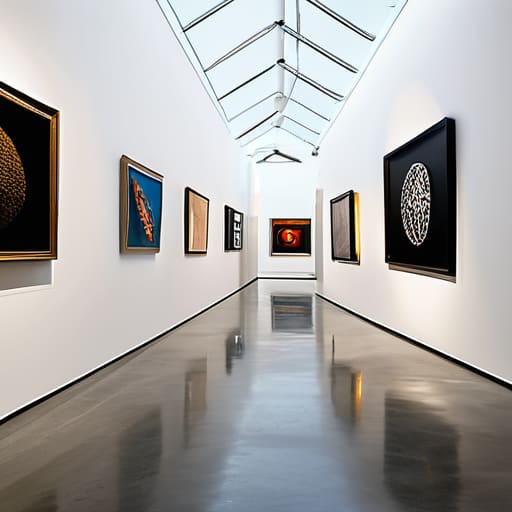
You have to understand that a gallery isn’t a hallway; it’s a psychological gauntlet. When I was running my space, I never viewed a floor plan as a mere layout of walls, but as a scripted journey. We used specific exhibition design principles to ensure a collector didn’t just wander aimlessly, but was instead guided toward the high-margin pieces. If you let a visitor drift without direction, they’ll gravitate toward the smallest, cheapest works near the entrance and leave before they’ve even reached the “anchor” pieces that actually pay the rent.
The secret lies in the rhythm of the sightlines. I always taught my assistants that visual flow in galleries is about managing tension and release. You place a heavy, commanding canvas to halt the momentum, forcing a pause, before leading the eye toward a series of smaller, more intimate works. This isn’t just aesthetic whim; it’s about controlling the pace of the sale. If the movement is too frantic, they feel rushed; if it’s too stagnant, they get bored. You are essentially choreographing a dance between the viewer’s curiosity and their wallet.
The Psychology of the Wall
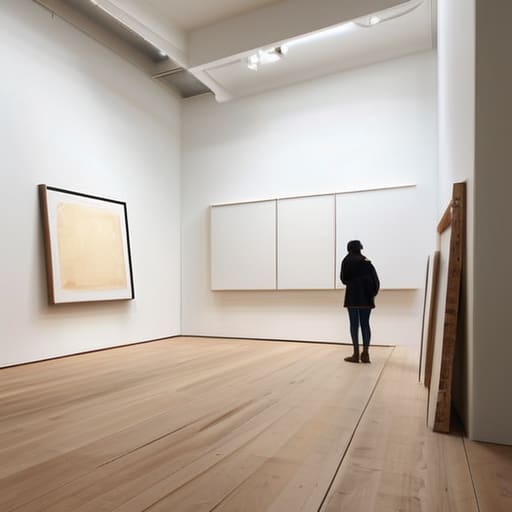
Hanging a show isn’t a decorating task; it is a calculated exercise in spatial manipulation. Every inch of white space between two frames is a silent instruction to the collector, telling them exactly when to breathe, when to linger, and—most importantly—when to reach for their checkbook.
Vivienne Ashworth-Pryce
The Final Layer
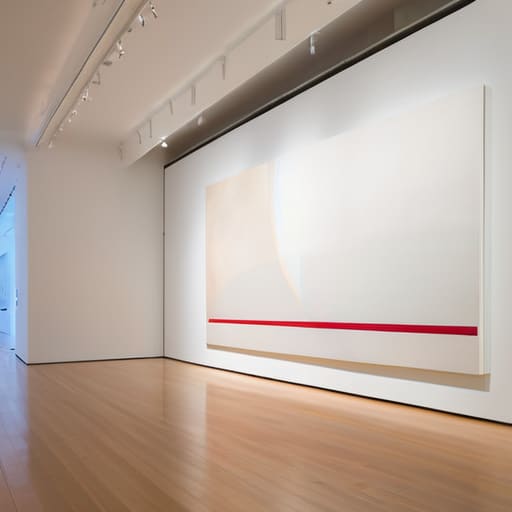
At the end of the day, hanging an exhibition is a delicate balancing act between spatial geometry and psychological manipulation. We’ve discussed how the physical placement of a piece—the sightlines, the breathing room, the deliberate pacing of the viewer’s journey—is what transforms a collection of objects into a cohesive narrative. It isn’t just about making sure nothing falls off the wall; it is about ensuring that the visual rhythm of the room directs the collector’s attention exactly where it needs to go. When you understand that every inch of white space is a calculated decision, you realize that the hanging process is just as much a part of the work as the brushstrokes themselves. It is the silent architecture of the sale.
To the artists reading this: do not view the hanging process as a technical chore or something that happens “to” you once the work is finished. View it as the final stage of your creative intent. When you step into a gallery, don’t just look at your paintings; look at the way the light hits the floor and how the walls dictate the conversation between your pieces. If you can master the marriage of your vision with the rigorous logistics of the gallery space, you stop being a person who merely makes things and start being a professional who commands a room. Now, go out there and make them look.
Frequently Asked Questions
If the hanging is so calculated, how much of my commission is actually going toward the physical labor of the install versus the "vision" of the curator?
Let’s be blunt: the physical labor—the heavy lifting, the level-checking, the inevitable scuffs on the floor—is a tiny fraction of that fifty percent. You aren’t paying for muscle; you’re paying for the spatial intelligence that prevents your work from looking like a garage sale. The “vision” is what justifies the price tag. I didn’t take a commission to hang pictures; I took it to ensure they were hung so convincingly that a collector felt foolish not buying them.
Can a poorly hung show actually devalue my work, even if the paintings themselves are technically brilliant?
Absolutely. Oil on canvas, 60x80cm, 2023—it doesn’t matter if the brushwork is divine if it’s hung at eye level for a toddler or crowded against a doorway like an afterthought. If the hanging is sloppy, the collector subconsciously assumes the artist is sloppy, too. A disorganized wall signals a disorganized career. You aren’t just selling a painting; you are selling the perceived value of the object, and bad lighting or poor spacing kills that value instantly.
How do I know if a gallery is using professional hanging systems to protect my pieces, or if they’re just slapping them on the wall to save on overhead?
Look at the ceiling. If you see a clean, continuous track system—not just a few stray hooks or, heaven forbid, nails driven directly into the plaster—you’re in a professional space. A proper gallery uses adjustable hanging rails that allow for precision without scarring the walls. If they’re treating your canvases like student work by hacking at the drywall, they aren’t respecting the art, and they certainly aren’t respecting your price point.
