
I remember sitting in a dusty studio in Cornwall back in ’94, watching a sculptor stare at a bill from a bronze foundry that was nearly triple what he’d budgeted for the materials alone. He looked at me like I was the enemy for asking why the numbers were so high, but the truth was much more unromantic: he had no idea how sculpture is made and cast, and the foundry knew he didn’t. Most artists treat the casting process like a black box of magic where you drop off clay and pick up bronze, but that ignorance is exactly how you end up priced out of your own career before you’ve even had your first solo show.
I’m not here to give you a romanticized lecture on the “soul of the metal” or the divine spark of creation. Instead, I’m going to pull back the curtain on the actual, grueling logistics of the foundry floor. We are going to look at the technical stages of lost-wax casting and the hidden financial leaks that happen between the mold and the final patina. By the end of this, you’ll understand the mechanical reality of the process so you can stop guessing and start pricing your work with actual authority.
The Invisible Labor in Clay Modeling for Casting
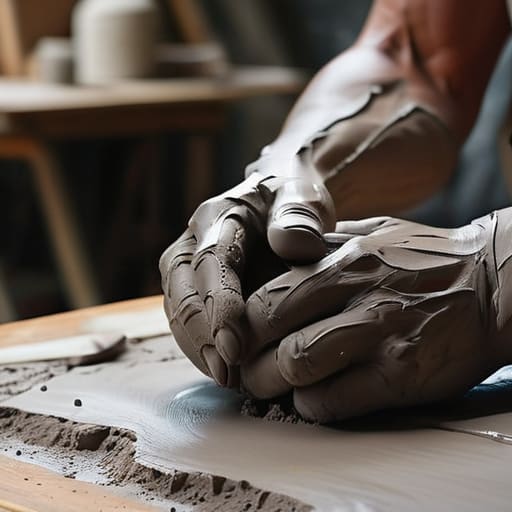
Before a single ounce of molten metal touches a crucible, there is the grueling, unglamorous reality of the studio. Most collectors see a polished bronze and assume the artist simply “made” it, but they miss the weeks of frantic, tactile struggle involved in clay modeling for casting. You aren’t just shaping a form; you are building a structural blueprint that must survive the violent transition from soft earth to hard metal. Every thumbprint, every subtle tension in the musculature, and every intentional imperfection has to be translated into a medium that doesn’t forgive mistakes.
This is where the real technical risk lives. The artist isn’t just playing with aesthetics; they are navigating complex sculpture mold making techniques to ensure the original model can actually be replicated. If the clay is too heavy or the internal armature is poorly placed, the entire project collapses before it even reaches the foundry. It is a high-stakes game of structural engineering disguised as fine art, and it is precisely this invisible stage that dictates whether a piece feels alive or merely heavy.
Mastering Sculpture Mold Making Techniques Without Losing Margin
Here is the part of the conversation where most artists bleed money without even realizing it. When we talk about sculpture mold making techniques, the conversation usually stays on the technical side—silicone, plaster, or rubber—but as someone who has looked at a thousand balance sheets, I want to talk about the math. If you spend three weeks perfecting a mold for a piece that you’ve priced as if it were a one-off, you aren’t an artist; you’re a charity. You have to account for the fact that a mold is a depreciating asset that dictates your entire production capacity.
The trick to maintaining your margin is understanding the scalability of the lost wax casting process. You cannot treat every edition like a bespoke commission. If you are moving into bronze, your pricing must reflect the initial high cost of the master mold, but it must also allow for the efficiency of subsequent pours. I have seen far too many talented people sink their entire profit into the foundry because they failed to bake the technical overhead into their initial retail price. Don’t let the complexity of the metalwork swallow your livelihood.
The Myth of the Finished Object
When a collector looks at a bronze, they see a finished moment in time, but they rarely see the wreckage of the process: the lost weeks in the studio wrestling with clay, the precision of the mold-making, and the terrifying, expensive gamble of the foundry. You aren’t just selling a shape; you are selling the successful navigation of a dozen technical disasters that almost happened.
Vivienne Ashworth-Pryce
The Bottom Line on Bronze and Beyond
At the end of the day, understanding the journey from a lump of wet clay to a finished bronze casting is about respecting the math behind the magic. We’ve looked at the grueling hours spent in the modeling phase, the technical precision required to create a flawless mold, and the sheer logistical weight of the foundry process. If you are an artist, you cannot afford to treat these stages as mere footnotes; they are the primary drivers of your overhead. When you sit down to price a new series, remember that you aren’t just charging for the final object sitting on a plinth, you are accounting for every failed mold, every wax pour, and every hour of labor that the collector will never see. If you don’t factor in the hidden costs of the casting house, you aren’t running a practice; you’re running a charity.
However, don’t let the spreadsheets dampen your spirit. There is a profound, almost sacred dignity in the transformation of raw material into something permanent. While I am always going to be the woman reminding you to check your margins and protect your profit, I am also the woman who knows that a perfectly executed cast can move a room in a way a sketch never could. The technical mastery required to navigate these processes is what separates a hobbyist from a professional. Master the craft, master the economics, and you will find that you have the freedom to create work that actually lasts.
Frequently Asked Questions
If I’m paying a foundry for a bronze cast, how much of that invoice is actually for the metal versus the artist’s markup?
Oil on canvas, 24×30, 2024—no, that’s not right. Let’s get to the brass tacks.
How do I know if a sculptor is cutting corners on the mold-making stage to save money at my expense?
Look for the tells in the final finish. If you’re buying a bronze and see “pitting”—tiny, pinprick holes—or a surface that feels suspiciously sandy, they likely rushed the mold or used a cheap, low-grade silicone. A sculptor who cuts corners on the mold usually does it to avoid the tedious work of refining the wax. If the texture feels inconsistent or the detail looks “mushy,” you aren’t paying for precision; you’re paying for their shortcuts.
When a gallery lists a cast sculpture, are they pricing it based on the artist's labor or just the weight of the bronze?
If a gallery is pricing a bronze based on the weight of the metal, they aren’t running a gallery; they’re running a scrap yard.
