
I remember standing in a client’s sun-drenched drawing room in 2004, watching a beautifully saturated landscape by a local watercolorist turn a sickly, washed-out grey right before my eyes. The owner was convinced she needed a bespoke, museum-grade lighting installation that cost more than the painting itself, believing some high-tech gadget would solve everything. It’s the same nonsense I see today: people spending thousands on “preservation tech” while ignoring the basic physics of how light damages artwork. You don’t need a laboratory; you need to understand that a direct sunbeam is essentially a slow-motion arsonist, and no amount of gallery prestige can protect a canvas that’s been bleached into oblivion by a poorly placed window.
I’m not here to sell you expensive dimmers or complex UV-filtering films that promise miracles they can’t deliver. Instead, I’m going to give you the unvarnished truth about what actually matters—the difference between UV rays and visible light, and why your “aesthetic” lighting choices might be quietly devaluing your entire collection. I’ve spent twenty-six years seeing what survives and what fades, and I intend to make sure you know exactly how to protect your investment without being fleeced by the industry.
The Science of Loss Photodegradation of Pigments
Let’s stop treating “fading” like a slow, poetic transition and call it what it actually is: a chemical assault. When we talk about the photodegradation of pigments, we aren’t just talking about a color getting a bit tired; we are talking about high-energy photons physically smashing the molecular bonds that hold a color together. Once those bonds snap, that vibrant cadmium red or that deep ultramarine isn’t just “muted”—it is chemically altered. You cannot paint it back into existence.
This isn’t just a concern for the high-end conservators; it’s a reality of the visible light spectrum damage that happens in even the most well-intentioned living rooms. While most people fret over the obvious UV rays streaming through a window, they ignore the cumulative impact of standard LED or halogen bulbs. Even without direct sunlight, constant exposure to high lux levels can trigger a slow-motion robbery of your work’s integrity. If you aren’t mindful of the energy hitting that surface, you are essentially presiding over the gradual destruction of the artist’s original intent.
Ultraviolet Radiation Effects on Canvas You Cant See
It isn’t just the colors that suffer; it’s the very skeleton of the piece. While we obsess over the pigments, the ultraviolet radiation effects on canvas are often far more insidious, attacking the organic fibers of the support itself. I’ve seen linen supports become brittle and “scorched” looking simply because they were hung in a room with high-transmittance windows. When the UV rays strike the cellulose, they trigger a chemical breakdown that turns a supple, flexible canvas into something as fragile as an old biscuit. Once that structural integrity is gone, you aren’t just looking at a faded painting; you’re looking at a ticking clock of physical decay.
Furthermore, we must talk about the binders. Even if you’ve used high-quality oils, the light is constantly working to sever the molecular bonds that hold the paint to the surface. This is why some works begin to micro-crack or flake in ways that look like age, but are actually just the result of poor environmental management. If you aren’t mindful of the visible light spectrum damage occurring in your living room, you are essentially presiding over a very slow, very expensive demolition.
The Cost of a Sunbeam
I’ve seen collectors spend fifty thousand pounds on a canvas only to hang it directly opposite a south-facing window, effectively paying a premium to watch their investment bleach itself into a ghost. You cannot negotiate with physics; once those pigments have surrendered to the UV rays, no amount of provenance or prestige is going to bring the color back.
Vivienne Ashworth-Pryce
Protecting the Legacy
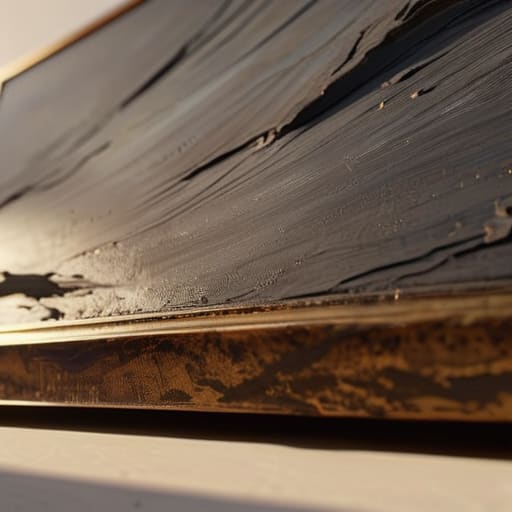
At the end of the day, whether you are an artist watching your life’s work fade or a collector realizing your investment is under siege, the reality remains the same: light is a slow-motion thief. We have discussed how UV rays dismantle the chemical bonds of your pigments and how that invisible radiation weakens the very fibers of the canvas itself. You cannot stop the laws of physics, but you can certainly stop being a victim to them. Control your lux levels, invest in proper glazing, and for heaven’s sake, stop hanging your most precious oils directly opposite a south-facing window. It isn’t just about aesthetics; it is about preserving the physical integrity of the object so it actually survives to be seen by the next generation.
I spent twenty-six years convincing people that art was an enduring asset, but endurance requires stewardship, not just passion. Don’t let a lack of technical foresight turn a masterpiece into a ghost of its former self. Treat your lighting setup with the same respect you afford the artist’s hand, and you will find that your collection—and your legacy—remains vibrant and commercially viable for decades to come. After all, the goal isn’t just to own beautiful things; it is to ensure they stay beautiful long after we are gone.
Frequently Asked Questions
If I've already noticed my paintings are fading, is there any way to stop the damage, or is the value already gone?
Oil on canvas, 40cm x 50cm, 2024. I’ll tell you the truth: once the pigment has surrendered, you can’t call it back. You can’t “un-fade” a painting. However, if you catch it early, you can arrest the decay by moving it to a controlled environment—UV-filtering glass or LED lighting away from windows. You aren’t fixing the value, you’re simply stopping the bleeding so the loss doesn’t become total.
Does the type of light bulb I use at home actually matter, or is it all just "light" regardless of the source?
It matters immensely. If you’re hanging a piece in a room lit by cheap, old-school incandescent bulbs or—heaven forbid—unfiltered fluorescent tubes, you’re essentially inviting a slow-motion arsonist into your home. It’s not just “light”; it’s a specific spectrum of energy. LED is your best friend here, provided you choose high-quality, UV-filtered options. Don’t treat your lighting like an afterthought; it is the difference between preserving a legacy and watching it vanish.
For an artist selling work, what is the bare minimum I should tell a collector about lighting to ensure my pieces don't look terrible in two years?
Don’t lecture them on physics; just give them the practical boundaries. Tell them two things: keep the work out of direct sunlight, and if they’re using LEDs, ensure they’re UV-filtered. I used to tell my clients that a sunbeam is just a slow-motion fire for pigments. If they want the work to look as good in five years as it does today, they need to respect the light, or they’re just buying a very expensive fading act.
