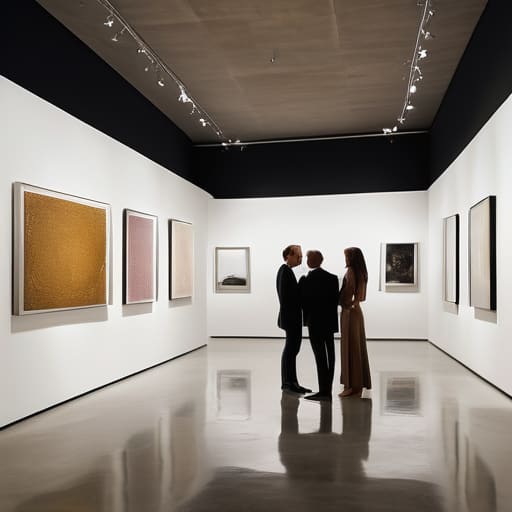

Oil on canvas, 60cm x 80cm, 2014. I remember looking at a particularly luminous landscape during a mid-winter opening, feeling the exact moment the room shifted from polite chatter to actual commerce. Most people think a private view is just a glorified cocktail hour where people sip cheap Prosecco and pretend to understand abstraction, but that is a romanticized lie. In reality, understanding how private views work is about recognizing the calculated choreography of the room. It is the precise moment a gallerist moves a collector toward a specific piece, or how a certain light is used to mask the dust on a frame. It isn’t about the party; it’s about the strategic placement of opportunity.
I’m not here to tell you how to host a lovely evening or which hors d’oeuvres pair best with acrylics. I am going to pull back the curtain on the mechanics of the event—from the way guest lists are weaponized to why the “sold” stickers appear exactly when they do. You are going to learn the unvarnished truth about the social engineering behind the sales, so you can stop being a spectator and start navigating the room with your eyes wide open.
Curating Guest Lists to Manufacture Desirability

A private view isn’t just a party; it’s a calculated move to get the right collectors in a room before the general public can even touch the price list. When I ran my gallery, I spent as much time on the guest list as I did on the hanging schedule. You see, curating guest lists is less about hospitality and more about social engineering. You want a specific cocktail of “old money” stability and “new money” energy. If the room is too full of students and tire-kickers, the real buyers feel like they’re at a flea market; if it’s too sparse, the room feels dead.
The goal is to create a sense of manufactured scarcity. By using bespoke invitation strategies, we ensure that the people in the room believe they are part of an inner circle. We aren’t just inviting people to look at paint on canvas; we are inviting them to witness an event that is happening right now and might be gone by tomorrow morning. It is about increasing sales through exclusivity, ensuring that when a collector sees someone else eyeing a piece, their instinct isn’t to admire the technique, but to claim the prize before it vanishes.
Bespoke Invitation Strategies for the Ultra High Net Worth

Now, if you think a standard email blast or a post on Instagram is enough to move the needle for the heavy hitters, you’ve fundamentally misunderstood the game. For the truly serious collectors, the invitation itself is a signal of status. We aren’t just sending out notices; we are employing bespoke invitation strategies that feel more like a personal summons than a marketing effort. I used to have my assistant hand-write notes on heavy, cream-laid paper for our top five clients. It wasn’t about being precious; it was about signaling that this specific evening was a curated experience, not a public spectacle.
When you are dealing with ultra-high-net-worth individuals, the goal is to make them feel that their presence is the final, necessary ingredient to the evening’s success. This isn’t about mass appeal; it’s about increasing sales through exclusivity by creating a sense of scarcity. If a collector feels like they are just one of fifty people standing around drinking mediocre Prosecco, they won’t buy. But if they feel they are part of an intimate, highly controlled circle, the barrier to a six-figure transaction begins to dissolve.
The Performance of Scarcity

A private view is rarely about the art itself; it is a carefully choreographed piece of theater designed to make a collector feel that if they don’t buy that canvas tonight, someone else—someone more decisive and much wealthier—certainly will.
Vivienne Ashworth-Pryce
The Bottom Line: It’s Not Just a Party
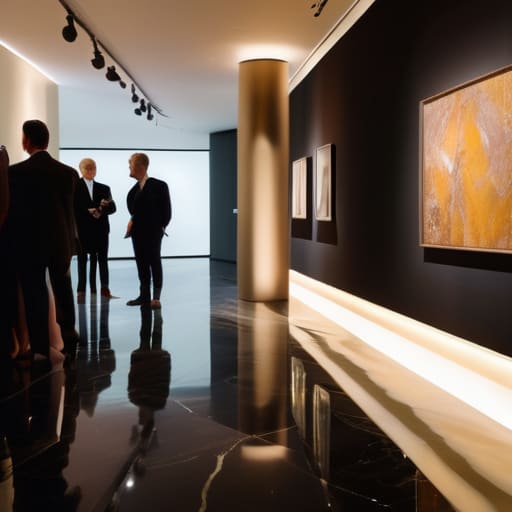
Let’s be clear: a private view is a choreographed piece of theater designed to convert interest into investment. We’ve discussed how the guest list is a tool for social engineering and how invitations are tailored to whisper directly into the ears of the wealthy. It isn’t about the free prosecco or the polite chatter; it is about creating a sense of scarcity before the doors even open to the public. When you understand that the gallery is playing a high-stakes game of perception management, you stop seeing these evenings as mere social obligations and start seeing them for what they truly are: the engine of the secondary market.
If you are the artist standing in the corner of that room, feeling slightly out of place while the collectors circle your work, remember this: you are the most important person in the room, even if you are the least understood. Don’t let the gloss of the event intimidate you into thinking the business side is some dark, impenetrable magic. The mechanics of the sale are predictable, even if the players are eccentric. Own your value, understand the theater, and never forget that the work is the only thing that actually matters once the lights go down and the wine bottles are empty.
Frequently Asked Questions
If the gallery is spending all this money on bespoke invitations and curated lists, why am I still seeing a fifty percent commission taken off the top of my sales?
Look, I know it feels like you’re paying for a very expensive cocktail party, but you aren’t just paying for the invitations. That fifty percent covers the rent, the lighting, the insurance, and—most importantly—the thirty years of social capital I spent building so that when I tell a collector, “You must have this piece,” they actually listen. You’re paying for the bridge between your studio and their bank account.
How can I tell if a private view is actually a genuine attempt to sell my work, or if the gallery is just using my show as a social event to keep their own collectors happy?
Look at the guest list, not the wine selection. If the room is packed with local socialites who haven’t bought a piece in three years, you’re the wallpaper for a cocktail party. If the list includes your specific collectors and people who have recently acquired similar works, they’re working. Ask the director: “Who are the three people coming specifically to see this series?” If they can’t name them, they aren’t selling; they’re hosting.
Is it better for my career to have a crowded, noisy room of enthusiasts, or a quiet, exclusive evening with only three serious buyers?
Oil on canvas, 60x80cm, 2024. I don’t care for the noise, but I love the intent.
