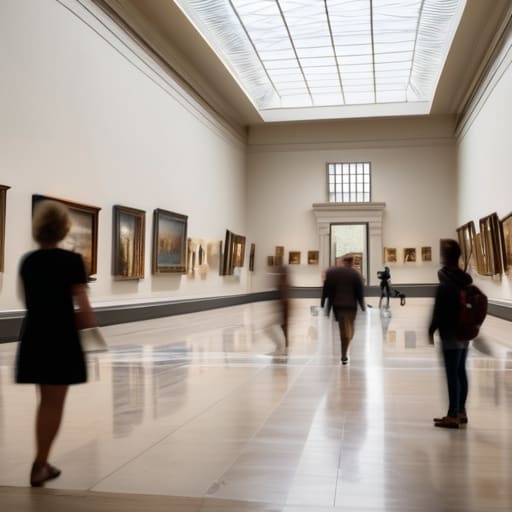

I remember sitting in a drafty corner of a municipal museum in the late nineties, watching a young painter stare at a blank wall with a look of pure, unadulterated heartbreak. She had just been told her work was “too commercial” for a public collection, which is a polite, institutional way of saying they had no budget to buy it. Most people think the distinction between a museum and a shop is just about the prestige, but they miss the fundamental reality of how public galleries differ in their very DNA. One is a custodian of culture funded by the taxpayer, while the other is a business designed to keep the lights on and the artist fed; if you confuse the two, you’ll end up starving on principle.
In this post, I’m stripping away the academic fluff to tell you how these two worlds actually function. I won’t bore you with lectures on curation theory; instead, I’m going to explain the practical mechanics of funding, acquisition, and why a public nod doesn’t always put money in your bank account. I’ve spent twenty-six years navigating both sides of the velvet rope, and I promise to give you the unvarnished truth about what you can actually expect from each.
Non Profit Art Funding Models and the Death of the Commission

When you look at a private gallery, the math is brutal and transparent: we sell a piece, we take our cut, and we keep the lights on. But public institutions operate under entirely different non-profit art funding models, which means the very concept of a “commission” effectively dies the moment a work enters their orbit. They aren’t looking for a return on investment in the way a commercial dealer is; they are looking for social capital, educational impact, and long-term stability.
Because they aren’t driven by the weekly pressure of a sales ledger, their curatorial practices in public spaces tend to lean toward the academic or the civic. They aren’t asking, “Will this sell to a hedge fund manager by Friday?” Instead, they are asking how a piece contributes to the broader narrative of the era or how it serves the local community. This shift in motivation changes everything about how they interact with an artist. You aren’t a vendor to them; you are a contributor to a larger, often much slower, cultural machine that prioritizes legacy over liquidity.
Art Acquisition Policies Who Actually Decides What Survives

In a commercial gallery, I decided what to hang based on a cocktail of my gut instinct and whether the work would actually move before the rent was due. It was transactional, yes, but it was fast. Public institutions, however, operate under the heavy, often glacial weight of formal art acquisition policies. They aren’t looking for the “next big thing” to pay the electric bill; they are looking for pieces that justify their existence within a broader historical narrative. When a museum acquires a work, they aren’t just buying an object; they are making a claim about what constitutes cultural heritage preservation for the next century.
This means the decision-making process is stripped of the gallerist’s singular whim and replaced by committees, boards, and rigorous provenance checks. While I might have fought for a young artist because I saw a spark, a public curator has to prove how that artist fits into the existing tapestry of museum collection management. It is a much higher bar to clear, which is why public collections often feel more “important” but move significantly slower than the frantic, living pulse of the private market.
The Mission vs. The Margin

A public institution is looking for a legacy, often chasing a narrative that justifies their next grant; a commercial gallery is looking for a sale that justifies their next rent check. One wants to preserve the history of art, while the other is trying to survive the reality of it—and if you mistake a curator’s praise for a market signal, you’re going to find yourself very well-reviewed and very, very broke.
Vivienne Ashworth-Pryce
The Bottom Line for Your Career
At the end of the day, understanding these distinctions isn’t about being cynical; it’s about being strategic. You cannot walk into a public institution expecting the same transactional velocity as a commercial space, nor should you expect a private gallerist to care about your “cultural impact” if your work doesn’t move. One is fueled by grants and civic duty, the other by market relevance and sales velocity. If you try to treat a museum like a retail outlet, you’ll end up frustrated and ignored. You have to know which door you are knocking on and, more importantly, what they are actually looking to acquire from you.
Don’t let the complexity of the system make you feel like an outsider. Whether you are chasing a prestigious residency at a non-profit or trying to secure a solo show with a dealer who takes fifty percent, remember that you are the one providing the value. The institutions exist to frame your talent, but you are the one who must build the foundation. Use the public sector to build your intellectual pedigree and the private sector to build your livelihood. Once you stop viewing the art world as a single, monolithic entity and start seeing it for the collection of distinct business models it truly is, you finally start playing the game on your own terms.
Frequently Asked Questions
If public galleries aren't looking for a profit, how do they actually decide which artists are "important" enough to get the floor space?
Oil on canvas, 60x80cm, 2024. I like it, but let’s be clear: importance in a public space isn’t about sales, it’s about discourse. While I was looking for a work that would move a local doctor’s living room, a curator is looking for work that moves a needle in a conversation. They decide based on institutional relevance—historiography, social impact, or technical innovation. They aren’t looking for a “good” painting; they are looking for a necessary one.
Does an artist's career actually benefit more from a museum show or a high-end commercial sale, or is that just a romanticized myth?
Oil on canvas, 40 x 40, 2024. I like it, but let’s not pretend it pays the rent. A museum show is a prestige marker; it builds your “historical value,” which is lovely for the ego and the CV. But a high-end commercial sale? That’s what buys the studio space. One gives you a legacy, the other gives you a life. Don’t mistake the applause of a curator for a bank deposit.
If I get a piece into a public collection, does that mean my market value automatically goes up, or is it just a hollow trophy?
Oil on canvas, 40x40cm, 2024. It’s a lovely piece, but let’s be honest about what it actually does for your bank account. A public acquisition is a vital stamp of legitimacy—it’s the “long game” validation that tells collectors you aren’t a flash in the pan. However, it isn’t an automatic price hike. It’s a trophy that buys you time and prestige, but you still have to do the hard work of pricing your next series.
