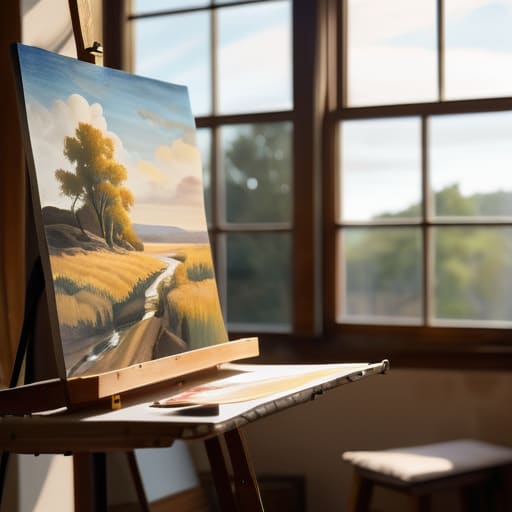

I remember sitting in my gallery office ten years ago, staring at a print of a landscape—oil on canvas, 30×40, 2012—that had been reproduced on a cheap tea towel without the artist’s permission. The artist was devastated, weeping because they felt their “soul” had been stolen, while the person who made the towels treated it like a victimless prank. Most people will tell you that understanding how copyright works for artists requires a law degree and a mountain of expensive paperwork, but that’s a lie designed to keep you feeling small and unprotected. In reality, the law is actually quite simple; it’s the lack of practical application that leaves you vulnerable to being fleeced.
I’m not here to bore you with legalese or sell you a subscription to a high-priced legal service you don’t need. Instead, I’m going to pull back the curtain on the actual mechanics of ownership so you can stop being a victim of “accidental” infringement. I will give you the straight truth on how to spot a breach, how to protect your income, and exactly what you should do when someone decides your hard work is their free resource.
Securing Your Intellectual Property Rights for Creators
Now, let’s get practical. There is a common misconception that you simply create something and the universe automatically wraps it in a protective layer of legal steel. While it is true that copyright exists the moment your brush hits the canvas, relying solely on “automatic” protection is a lazy way to run a business. If you want to actually enforce your intellectual property rights for creators, you need to understand the difference between having a right and having the paperwork to prove it.
In the digital age, where a high-res scan of your work can be shared across three continents before your tea has even gone cold, protecting digital artwork requires more than just a watermark. I’ve seen artists spend years fighting people who thought they could just “borrow” an image for a commercial project because it was online. While the copyright registration process might feel like a bureaucratic chore—and frankly, it is—it is the only way to secure statutory damages if things go south. If you aren’t documenting your provenance and your ownership clearly, you aren’t just being an idealist; you’re being an easy target.
Navigating the Copyright Registration Process Without Getting Ripped Off
Now, let’s talk about the actual paperwork, because this is where the vultures start circling. I’ve seen far too many young painters treat the copyright registration process like a bureaucratic chore they can ignore, only to realize they have no teeth when a large-scale manufacturer decides their floral study would look lovely on a line of cheap tea towels. You don’t need a law degree, but you do need to stop being precious and start being procedural.
The most important thing to understand is that while your work is technically protected the moment it hits the canvas, formal registration is your only real weapon in a courtroom. If you are protecting digital artwork, the speed of theft is breathtaking; a high-resolution file can be scraped and repurposed across the globe before your paint is even dry. Don’t let anyone tell you it’s too expensive or complicated. It isn’t. It’s a small, necessary tax on your peace of mind. I’ve sat in rooms where a collector tried to skirt the edges of what they “owned,” and believe me, having that certificate in your hand changes the entire temperature of the conversation.
The Myth of the 'Fair Use' Handshake
Stop thinking of copyright as a dusty legal concept tucked away in a textbook; think of it as the only fence you have around your livelihood. In my years running a gallery, I saw too many talented painters treat their rights like an afterthought, only to realize too late that once you let someone use your image without a contract, you haven’t just shared your art—you’ve handed over the keys to your bank account.
Vivienne Ashworth-Pryce
The Bottom Line on Your Ownership
At the end of the day, copyright isn’t some dusty academic concept meant to clutter up your studio time; it is the legal scaffolding that supports your entire career. We have covered the necessity of securing your rights, the practicalities of registration, and how to avoid the predatory “experts” who charge a premium for what you can do yourself. Remember, the moment you create something, you own the rights to it, but passive ownership is not the same as active protection. If you aren’t keeping an eye on how your images are being used, or if you aren’t prepared to defend your work when a brand decides your aesthetic is “up for grabs,” then you aren’t just being optimistic—you are being unnecessarily vulnerable.
I spent twenty-six years watching brilliant artists lose their grip on their livelihoods because they thought being “good” was enough to protect them. It isn’t. The market is a machine, and if you don’t understand the mechanics of your own intellectual property, the machine will simply grind you down. But here is the silver lining: once you master these basics, you stop being a victim of the industry and start being a professional participant in it. Treat your copyright with the same reverence you treat your brushes or your palette, and you will find that you carry much more weight in every room you enter.
Frequently Asked Questions
If a gallery takes a fifty percent commission, do they also own a piece of my copyright, or is that strictly between me and the buyer?
Oil on canvas, 24×30, 2024. Let’s get one thing straight: a gallery takes fifty percent of the sale, not fifty percent of your soul. They are selling a physical object, not your right to reproduce it. Unless you have signed a specific contract handing over reproduction rights—and if you have, you should be very angry—the copyright remains yours alone. The buyer owns the canvas; you own the image. Don’t let a hungry dealer convince you otherwise.
What happens to my rights if I sign a contract for a solo show that includes "promotional use" clauses—where does the permission end?
Oil on canvas, 60x80cm, 2024. I’ve seen this exact clause sink more careers than a bad review. Listen: “promotional use” is a broad, dangerous umbrella. It should mean they can use an image to announce your show, not that they own the right to slap your series on a line of tote bags or coffee mugs. If the contract doesn’t specify a timeframe or a medium, they’re essentially asking for a free license to your identity. Tighten the leash.
If I sell an original painting to a collector, am I effectively giving away my right to make prints or digital reproductions of that specific image?
Oil on canvas, 40x50cm, 2024. No, you aren’t. When you sell a physical painting, you are selling the object, not the idea. The collector owns the canvas hanging over their sofa, but you still own the copyright. Unless you’ve signed a specific contract that explicitly transfers those intellectual property rights—which, frankly, you shouldn’t do unless the check is massive—you are perfectly entitled to turn that image into prints, postcards, or digital files.
