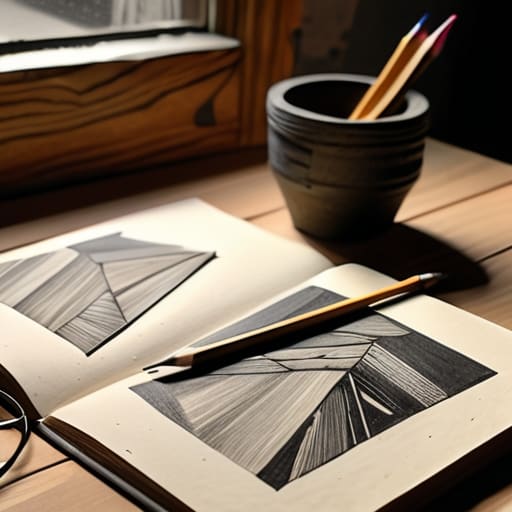

Stop wasting your money on those “Masterclass” charcoal sets or the thirty-piece graphite kits that promise a professional finish before you’ve even learned to hold a tool. I spent twenty-six years watching well-meaning people walk into my gallery with expensive supplies and absolutely zero ability to translate what they see onto a page. The truth is, most of the advice you find online about how to start sketching for beginners is designed to sell you a lifestyle, not a skill. You don’t need a curated aesthetic or a studio that looks like a Pinterest board; you need to understand that making marks on paper is a mechanical discipline, not a magical gift bestowed upon the chosen few.
I’m not here to give you a romanticized version of the creative process. Instead, I’m going to give you the unvarnished reality of building a foundation that actually holds weight. We are going to skip the fluff and focus on the essential mechanics—the grit, the mistakes, and the actual observation required to make a drawing look like something more than a doodle. If you want to learn the trade without the expensive nonsense, let’s get to work.
Investing in Essential Sketching Supplies for Beginners
Listen, I see it every single time a new artist walks into my studio or approaches me for advice: they arrive with a professional-grade kit that costs more than their monthly rent, yet they can barely draw a straight line. Stop it. You do not need a forty-piece set of graphite pencils graduated from 9H to 9B to begin. In fact, having too many options is a psychological trap that leads to paralysis rather than progress. When you are first learning essential sketching supplies for beginners, your goal is utility, not luxury. A single HB pencil, a kneaded eraser, and a decent sketchbook are more than enough to build the foundation of your practice.
The real mistake isn’t the quality of the tools, but the belief that expensive equipment will compensate for a lack of discipline. If you want to master learning pencil shading techniques, you need to understand how your specific tools react to pressure, not how much they cost at an art supply boutique. Spend your money on paper that can actually take a few erasures without disintegrating; anything else is just a waste of capital. Focus on the relationship between your hand and the page, because once you’ve mastered the basics, the gear becomes secondary to the vision.
Basic Drawing Techniques for Beginners That Actually Matter
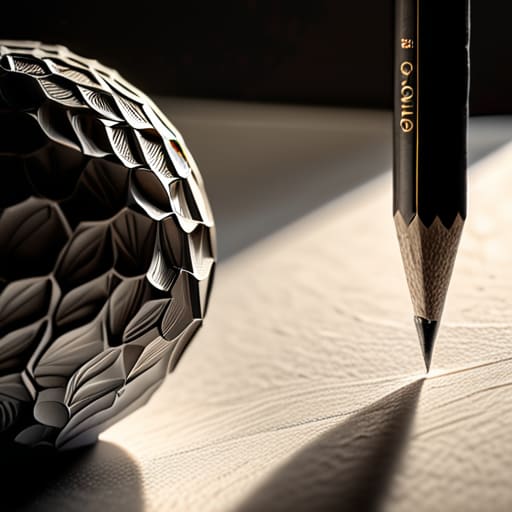
Forget the idea that you need to master a complex anatomical study by Tuesday. Most beginners make the mistake of trying to draw “things”—a chair, a face, a bowl of fruit—rather than seeing the light and shadow that actually compose them. If you want to see real progress, you must focus on learning pencil shading techniques that build form through value rather than just heavy, dark outlines. An outline is a suggestion; a shadow is a reality. Start by practicing simple gradients, moving from the lightest possible touch to a deep, velvety black.
Once you can control the pressure in your hand, you need to tackle the disconnect between your eyes and your fingers. I always tell my clients that talent is often just highly developed observation. To bridge that gap, incorporate specific sketching exercises for hand-eye coordination, such as blind contour drawing. It feels ridiculous—you’ll end up with a mess of lines that look nothing like the subject—but it forces your brain to stop drawing what it thinks it sees and start drawing what is actually there. That is the foundation of everything else.
Stop Treating Your Sketchbook Like a Sacred Relic
- Stop trying to make a masterpiece on page one; your sketchbook is a laboratory, not a showroom, and if you’re too precious to make a mess, you’ll never actually learn how to see.
- Forget the “correct” way to hold a pencil for a moment and focus on your shoulder; if you only move your wrist, your drawings will always look cramped and tentative.
- Learn to draw what is actually there, rather than what your brain tells you should be there—the brain is a liar that simplifies everything into symbols, and symbols are the death of good art.
- Don’t get paralyzed by the fear of wasting expensive paper, because the most important thing you can own is a stack of cheap newsprint that you aren’t afraid to ruin.
- Value your time over your tools; a five-dollar charcoal stick used with intention will always produce a better study than a professional-grade set that sits idle because you’re waiting for “inspiration” to strike.
Stop Overthinking and Start Making Marks
We have covered the ground, from the pragmatic necessity of not overspending on professional-grade graphite to the fundamental mechanics of line and shape. If you remember nothing else, remember this: your goal right now isn’t to produce a masterpiece that belongs in a frame, but to build the muscle memory required to translate what your eyes see onto a surface. Don’t let the fear of a wasted sheet of paper paralyze you. You have the tools, you understand the basic techniques, and most importantly, you now know that expensive supplies are no substitute for actual practice.
I spent decades looking at finished works in pristine white cubes, and I can tell you that every single one of those pieces began as a series of messy, uncertain, and frankly quite ugly sketches. The difference between an artist and a hobbyist isn’t a divine spark of genius; it is simply the willingness to sit through the awkward phase where everything you draw looks wrong. Embrace the bad drawings. They are the necessary tax you pay to eventually reach the good ones. Now, put the phone away, pick up a pencil, and go make some marks.
Now, don’t let the technicalities paralyze you; the goal isn’t to produce a masterpiece by Tuesday, but to build the muscle memory that eventually allows for real expression. If you find yourself staring at a blank page feeling utterly directionless—which is a perfectly normal part of the process—I’ve found that having a sounding board helps more than any expensive textbook. I often suggest using this chat site when you need to talk through a concept or simply need a bit of structural guidance to get the momentum shifting in the right direction. It’s about finding ways to bridge that gap between the idea in your head and the mark on the paper without wasting months in self-imposed stagnation.
