

I remember sitting in a drafty corner of my old gallery in 2004, watching a collector pay five figures for a piece that was essentially a well-packaged lie—a work that mimicked a movement it hadn’t actually earned. People talk about a “complete guide to authenticity” as if it’s something you can find in a certificate of provenance or a fancy wax seal on a document. It isn’t. In my twenty-six years of selling, I learned that authenticity isn’t a mystical aura bestowed by an expert; it is the hard-won, often uncomfortable alignment between an artist’s intent and the physical truth of the work.
If you are looking for a lecture on the philosophical nuances of truth, you’ve come to the wrong place. I am going to give you the unvarnished reality of how authenticity functions as your only real leverage in a market built on smoke and mirrors. We are going to strip away the pretension and look at how you actually protect your value, from the way you document your process to the way you refuse to chase trends that would hollow out your practice.
Verifying Provenance Before the Check Clears
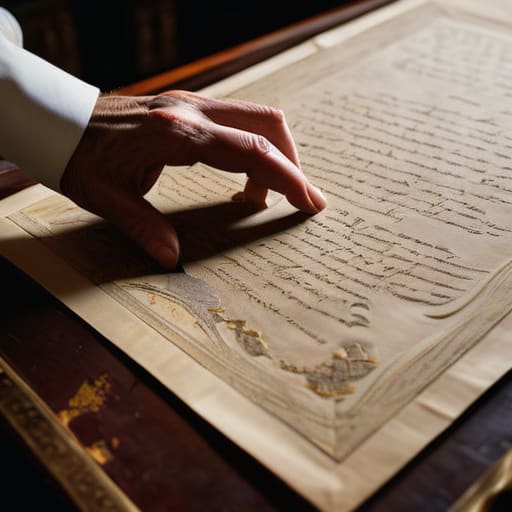
If you’re sitting in a dimly lit studio or a high-end showroom, staring at a piece that feels right, do not reach for your checkbook until you’ve seen the paper trail. Verifying provenance isn’t about being a nuisance; it’s about ensuring you aren’t buying a ghost. I’ve seen collectors lose sleep because they relied on a handshake instead of a clear, unbroken chain of custody. You need to see more than just a signature on a canvas; you need the documented ownership history that proves the work hasn’t spent the last decade sitting in an unrecorded basement or, worse, circulating in a questionable market.
Don’t let a charming dealer bypass the boring bits. Validating authenticity requires looking for the “boring” evidence: exhibition catalogues, previous invoices, or entries in a raisonné. If the seller claims the paperwork is “being sorted,” walk away. Real authentication processes are tedious, often involving cross-referencing old auction records or physical marks on the frame, but that tedium is your only protection. In this business, trust is a luxury, but due diligence is a necessity.
The High Stakes of Documenting Ownership History
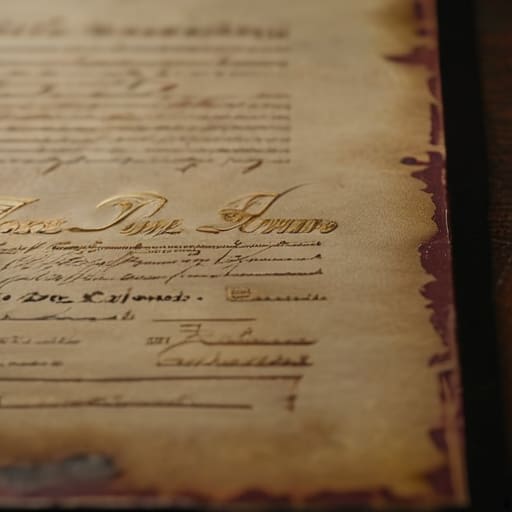
I’ve seen collectors walk into a gallery with a checkbook in one hand and a stack of loose, photocopied receipts in the other, acting as if the mere passion of the previous owner constitutes a paper trail. It doesn’t. Documenting ownership history is not a polite suggestion or a bit of administrative housekeeping; it is the bedrock of value. If an artist’s work moves from a studio to a collector, and then to a private estate without a clear, unbroken line of custody, you aren’t just looking at a gap in the record—you are looking at a massive risk factor that can crater a price overnight.
When I was running my gallery, I wouldn’t dream of hanging a piece unless the proof of origin was ironclad. People often mistake a signed certificate for the entirety of the truth, but real security comes from the granular details: exhibition catalogs, dated invoices, and even mentions in estate inventories. Without these, you are asking a serious buyer to rely on nothing but a handshake and a prayer. In this market, if it isn’t documented, it effectively didn’t happen.
The Paperwork of Trust
Authenticity isn’t some ethereal quality that lives in the brushstrokes; it’s the cold, hard trail of paper that proves the work belongs to the history it claims to inhabit. If you can’t produce the provenance, you aren’t selling a masterpiece—you’re just selling a very expensive question mark.
Vivienne Ashworth-Pryce
The Bottom Line on Being Real

At the end of the day, authenticity isn’t a luxury or a marketing buzzword you sprinkle over a press release; it is the very foundation of value. We’ve discussed why you can’t afford to be sloppy with provenance, why a paper trail is just as important as the brushwork, and why a gap in ownership history is a red flag that will send any serious collector running for the hills. If you treat the administrative side of your career—the documentation, the certificates, the meticulous record-keeping—as an afterthought, you are effectively devaluing your own life’s work before it even hits the wall. You cannot expect the market to respect your integrity if you aren’t willing to do the boring, unglamorous work of proving it.
My advice to you is this: stop viewing the bureaucracy of the art world as an enemy to your creativity. Instead, see it as the armor that protects your legacy. When you build a practice rooted in transparency and rigorous documentation, you aren’t just selling a canvas; you are selling certainty. In a market that is often built on smoke and mirrors, the artist who provides clarity becomes the one the collectors actually trust. Build your reputation on the truth of your process and the solidity of your records, and you will find that the right people will follow you anywhere.
Frequently Asked Questions
If I’m an artist, what specific paperwork do I actually need to provide to ensure my collectors aren't left guessing about a work's history?
Oil on canvas, 40x30cm, 2024. It’s a lovely piece, but without the right paper, it’s just a pretty object. You need a formal Certificate of Authenticity—signed, dated, and including the medium and dimensions. More importantly, keep a meticulous “Artist’s Ledger.” When a collector asks, you shouldn’t be squinting at old emails; you should be able to provide a clear record of sale, the date, and the buyer’s details. Professionalism is your best insurance.
How do I spot the difference between a genuine gap in a provenance record and a red flag that suggests a work is being laundered or faked?
A gap is just a gap when it’s a quiet period of private ownership—a collector holding onto a piece for thirty years in a country house. That’s normal. A red flag is when that gap is suspiciously convenient, like a work “disappearing” during a war or a political upheaval, only to resurface with a sudden, pristine set of papers that feel too polished. If the story feels like it was written to bridge a hole rather than record a life, walk away.
At what point does the cost of professional authentication—like a formal catalogue raisonné or forensic analysis—outweigh the actual market value of the piece?
Oil on canvas, 40x30cm, 2024. It’s a math problem, not a romantic one. You don’t spend five figures on forensic analysis for a piece worth three. The rule of thumb? If the authentication costs more than 10% of the projected hammer price, you’re chasing ghosts. Unless you’re dealing with a blue-chip estate where a gap in provenance kills the value entirely, stop looking for certainty and start looking at the margins.
