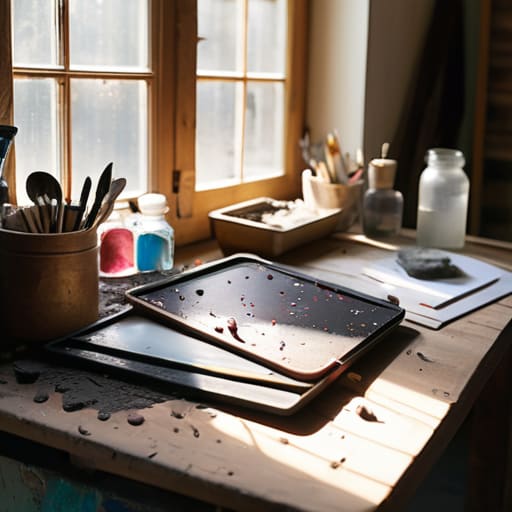

I remember sitting in the back of a drafty, unheated warehouse in East London back in the late nineties, watching a brilliantly talented painter try to explain to a potential collector why he couldn’t find the invoice for a sold landscape. He was surrounded by masterpieces, but he was drowning in a sea of loose receipts and half-finished sketches. People love to romanticize the “starving artist” trope, suggesting that true genius requires a certain level of domestic anarchy, but let’s be clear: if you don’t understand how studio practice is organised, you aren’t a professional, you’re a hobbyist with expensive habits. The myth that organization stifles creativity is a convenient lie told by people who don’t want to do the boring work of being a business owner.
I am not here to teach you how to color-code your brushes or buy a designer desk. I am here to tell you how to build a structural backbone that supports your actual work so that when a sale finally happens—and it will—you aren’t scrambling like a child caught with their hand in the cookie jar. We are going to strip away the pretension and look at the logistics of survival, from inventory tracking to the administrative habits that keep you from losing your shirt.
Mastering Creative Workflow Management Beyond the Spark
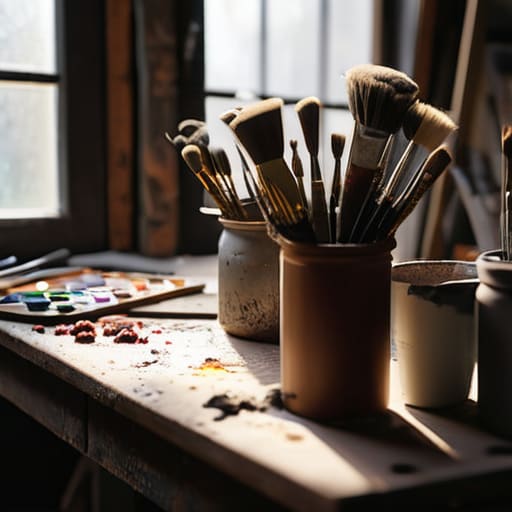
We need to stop pretending that the “tortured genius” only works when the lightning strikes. If you are waiting for the muse to descend before you pick up a brush, you aren’t running a practice; you’re running a hobby. Real professional success relies on maintaining creative discipline even when the inspiration is nowhere to be found. I’ve seen brilliant painters stall for months because they lacked a repeatable process, while the artists who actually made a living were the ones who showed up at 9:00 AM regardless of how they felt.
This doesn’t mean you turn your soul into a factory line, but you do need a system for your creative workflow management. You need to know exactly where your palette knives are, how your pigments are indexed, and where the finished, dried works go so they aren’t cluttering your active space. Organizing your artistic workspace isn’t about being tidy for the sake of aesthetics; it’s about removing the friction between your brain and the canvas. If you spend twenty minutes hunting for a specific medium every time you sit down, you are killing your momentum before it even starts.
Organizing Artistic Workspace to Protect Your Output
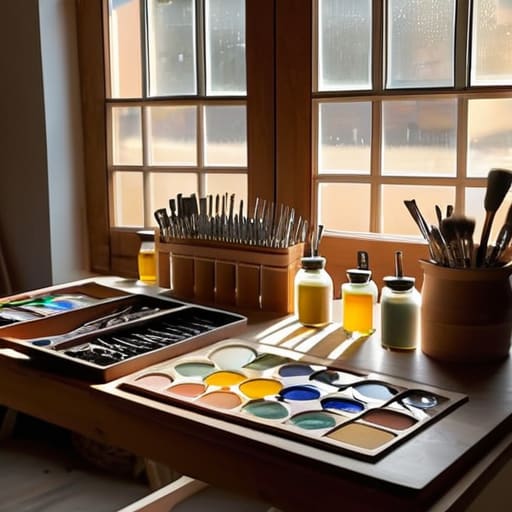
I’ve seen too many brilliant painters lose their momentum simply because they were tripping over half-empty turpentine jars and dried-up tubes of Cadmium Red. You might think a messy desk is a sign of a tortured, inspired mind, but in my experience, it’s usually just a sign of a disorganized business. Organizing your artistic workspace isn’t about being precious or tidy for the sake of aesthetics; it is about reducing the friction between your idea and the canvas. If you spend twenty minutes hunting for a specific palette knife every time the light hits the studio just right, you aren’t “finding your muse”—you’re losing your window of opportunity.
A professional artistic studio setup should function like a well-oiled machine, even if the output is purely emotional. I always tell my clients that your environment dictates your output. If your supplies are scattered, your mind will be scattered. By investing time into studio environment optimization—think dedicated zones for prepping surfaces, mixing pigments, and finished works—you create a physical boundary that signals to your brain that it is time to work. It’s much easier to maintain your discipline when the tools of your trade are exactly where they should be.
## The Myth of the Untidy Genius

“We have this romantic, foolish notion that a productive studio must look like a disaster zone, but let’s be clear: if you can’t find your invoices or your inventory list amidst the turpentine and the scrapings, you aren’t an ‘eccentric creator,’ you’re just an amateur who is making it impossible for anyone to actually sell your work.”
Vivienne Ashworth-Pryce
The Business of Being an Artist
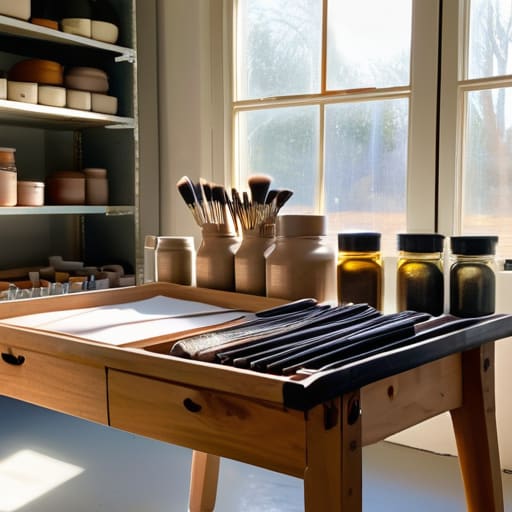
At the end of the day, organizing your studio isn’t about becoming a bureaucrat or stifling that precious, messy impulse that makes you an artist in the first place. It is about building a container that can actually hold your talent. We have covered how to manage your workflow so you aren’t chasing deadlines like a panicked intern, and how to arrange your physical space so you aren’t wasting half your morning hunting for a specific brush or a clean rag. If you don’t master these logistical foundations, you are essentially building a beautiful house on a swamp. You can have all the creative genius in the world, but if your practice is a chaotic scramble of lost invoices and unorganized inventory, you aren’t an artist with a career; you are just a hobbyist with a very expensive mess.
I spent twenty-six years looking at artists from the other side of the gallery desk, and I can tell you that the ones who actually survive the long haul are the ones who treat their studio like a professional engine. It isn’t romantic, and it certainly doesn’t feel like “art,” but this structure is exactly what buys you the freedom to be creative later. When the administrative side of your life is settled, your mind is finally free to wander where it needs to go. Stop apologizing for the spreadsheets and the storage bins. They aren’t the enemy of your art; they are the very things that allow your art to exist in the real, demanding world.
Frequently Asked Questions
If I’m working from a spare bedroom or a shared studio, how much of my "organization" should actually be dedicated to business logistics versus physical space?
If you’re squeezed into a spare bedroom, your physical organization is about survival—keeping the dust off your canvases and the paint away from the carpet. But don’t let the small footprint fool you. You must dedicate at least thirty percent of your mental energy to logistics. A cramped space is no excuse for a cramped business. If your digital files and invoices are as messy as your palette, you aren’t an artist; you’re a hobbyist.
At what point does a messy studio stop being "creative chaos" and start becoming a genuine liability for my professional output?
Oil on linen, 24×30, 2024. I like the grit of it, but let’s be clear: the moment you spend twenty minutes looking for a specific palette knife or realize a shipment of canvases arrived damaged because they were buried under old rags, you’ve crossed the line. “Creative chaos” is a romantic myth we tell students. In reality, if your mess costs you time, ruins a piece, or makes you look amateur to a collector visiting your space, it’s a liability.
How much time should I realistically be spending on the administrative side of my practice without feeling like I'm stealing time from the actual making of the work?
Look, I’ve seen brilliant painters crumble because they couldn’t find a single invoice or a shipping quote. If you’re spending 90% of your time making and 10% on everything else, you aren’t a professional; you’re a hobbyist with a high overhead. Aim for a 70/30 split. That extra 30% isn’t “stealing” from your art; it’s the scaffolding that keeps the art from falling into a money pit.
