

Stop waiting for a lightning bolt of divine inspiration to strike your studio floor; it’s a romanticized lie that keeps talented people broke and staring at blank canvases. I spent twenty-six years watching artists agonize over the “sacred mystery” of how artists find their subject, as if they were waiting for a sign from the heavens rather than simply looking at the world with a bit of discipline. Most of them treat subject matter like a fickle lover, but in my experience, the artists who actually survive the market are the ones who treat it like a strategic choice.
I’m not here to give you a lecture on the sublime or tell you to follow your heart into a void of unmarketable abstraction. Instead, I am going to pull back the curtain on the practical, often unglamorous ways that successful creators actually build a cohesive body of work. We are going to talk about the difference between a passing whim and a sustainable visual language, and I will show you how to bridge the gap between what you feel like painting and what a collector is actually prepared to hang in their dining room.
Developing an Artistic Vision Beyond Mere Inspiration

Inspiration is a fickle, unreliable guest; you can’t run a business—or a career—waiting for it to show up and decide to be productive. If you want to move from someone who makes “pretty things” to an artist with a recognizable signature, you have to stop chasing feelings and start developing an artistic vision through discipline. This means moving past the initial spark and digging into the repetitive, often tedious work of refining a specific way of seeing. It’s about deciding what you are actually interested in communicating, whether that’s the structural tension of urban decay or the specific way light hits a bruised peach, and then sticking to it long enough that people actually recognize it as yours.
This transition is where most people stumble because they mistake a mood for a methodology. True artistic identity and expression isn’t found in a sudden burst of euphoria; it’s forged in the grit of your daily practice. You need to build a visual vocabulary that is consistent enough to be marketable but deep enough to sustain a decade of work. If your subject matter shifts every time you have a minor existential crisis, you aren’t an artist with a vision—you’re just a hobbyist with a very expensive set of brushes.
Connecting Emotion to Art Through Intentionality
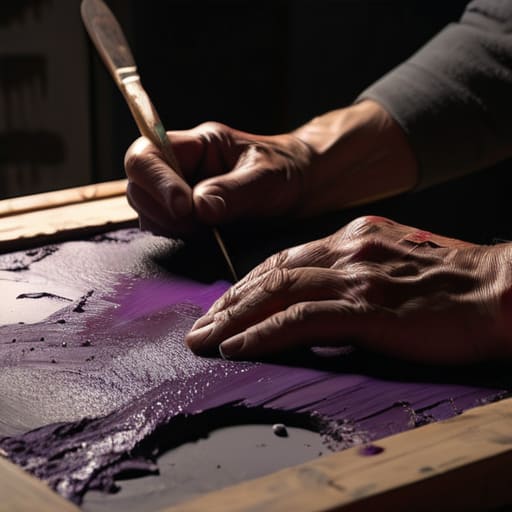
The mistake I see most often—the one that makes a piece feel like a mere decorative exercise rather than a serious work—is the attempt to manufacture “feeling” without a foundation of intent. You cannot simply decide to be profound; you have to build a bridge between what you see and what you feel. This is the core of connecting emotion to art in a way that doesn’t feel performative or, worse, sentimental. It’s the difference between painting a sunset because it’s pretty and painting a sunset because the specific, bruising violet of the sky reminds you of a particular kind of loneliness. One is a postcard; the other is a statement.
To get there, you have to stop treating your subject as a static object and start treating it as a vessel. If you are struggling with artistic identity and expression, stop looking for a “mood” and start looking for a tension. Is there a friction between the light and the shadow? Is there a weight to the subject that contradicts its form? When you approach a canvas with a specific, even if unspoken, intention, the viewer doesn’t just see a subject—they feel the gravity of your perspective. That is how you move from being a technician to being an artist.
## The Trap of the Divine Muse

Stop waiting for inspiration to strike like it’s some divine gift; you need to start looking at your surroundings with the same predatory eye a dealer uses to spot a trend before it hits the market. A subject isn’t something that happens to you—it’s something you hunt, refine, and eventually, something you learn to sell.
Vivienne Ashworth-Pryce
Moving From Vision to Value

Ultimately, finding your subject isn’t about waiting for a lightning bolt to strike while you sit staring at a blank canvas; it is about the disciplined marriage of observation and intent. We have discussed moving past the fickle whims of “inspiration” to find a repeatable process, and how anchoring your emotional impulses to a concrete, intentional framework gives your work a backbone. If you treat your subject matter as a mere accident of mood, you will find yourself chasing shadows. But if you approach your subject with the same rigorous clarity that a collector uses to evaluate a piece, you stop being a hobbyist and start becoming a professional with a cohesive body of work.
At the end of the day, the market doesn’t buy “inspiration”—it buys a perspective. People collect what you see because they cannot see it themselves. Don’t be afraid to stop looking for the “perfect” subject and start looking for the truthful one. Whether it is the way light hits a chipped tea cup or the crushing weight of a city street, your subject is simply the lens through which you translate the world for someone else to inhabit. Stop waiting for permission to be profound and just start looking closer.
Frequently Asked Questions
How do I know if my subject matter is actually a cohesive "vision" or if I’m just painting the same three things because I’m afraid to fail at something new?
Oil on canvas, 12×12, 2024. It’s a terrifying question, isn’t it? Here is the litmus test: A vision has a trajectory; a rut has a ceiling. If you are iterating—taking a core concept and pushing its boundaries, textures, or scale—you are building a body of work. If you are merely repeating the same technical gestures because they are “safe,” you aren’t an artist with a vision; you’re a manufacturer of decor. Stop hiding behind your successes.
At what point does a personal subject become a marketable one without feeling like I've sold my soul to the collectors?
Oil on canvas, 24×30, 2024. I like it, but let’s be honest about the math. You haven’t sold your soul; you’ve simply found a way to make your soul pay the rent. A subject becomes marketable the moment it moves from “this is how I feel” to “this is a visual language people can inhabit.” Collectors aren’t buying your diary; they’re buying a window into a perspective they find compelling. Find the bridge.
If I find a subject that works emotionally but doesn't sell, should I pivot my focus or keep digging for the market?
Oil on canvas, 24×30, 2024. It’s a heartbreaking dilemma, isn’t it? Here is the truth: don’t pivot your soul, but do pivot your strategy. If the emotional core is there, the work has legs. The problem usually isn’t the subject; it’s the presentation or the audience you’re pitching to. Don’t chase a trend that makes you feel hollow, but stop expecting a collector to buy a feeling they can’t see. Refine the visual language, find the right room, and keep digging.
