
I remember sitting in the back of a dusty studio in 1994, watching a young painter spend four thousand pounds on heavy-bodied oils and Belgian linen, only to realize his composition was fundamentally broken because he’d neglected the charcoal stage. We are constantly sold this lie that “art” begins with the expensive materials—the thick impasto, the digital tablets, the rare pigments—but that is just marketing fluff designed to separate you from your money. The truth that the academies and the high-end suppliers won’t tell you is how drawing underpins everything; it is the structural integrity of your vision, the unpaid labor that ensures your work doesn’t collapse under its own weight once it hits a gallery wall.
I am not here to lecture you on the spiritual connection between the hand and the soul. Instead, I am going to tell you how a lack of foundational drawing skills actually devalues your work in the eyes of a seasoned collector. I will show you why a masterfully executed sketch often commands more respect than a muddy, expensive oil painting, and how mastering this one discipline can become your greatest commercial asset in an asymmetric market.
The Connection Between Seeing and Drawing
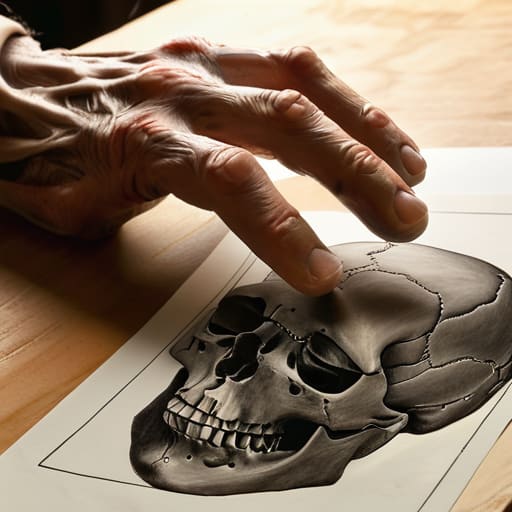
Most people think drawing is about a steady hand or a knack for mimicry, but they’ve got it backwards. It isn’t a motor skill; it’s a cognitive one. When I used to sit in my gallery during those long, quiet Tuesday afternoons, I realized that the artists who actually commanded prices weren’t necessarily the most “talented” in a traditional sense—they were the ones who actually looked. They understood that drawing as a way of thinking is what separates a decorator from a creator. You aren’t just moving a pencil; you are translating a three-dimensional reality into a series of intentional decisions.
This is where the real work happens. There is a profound connection between seeing and drawing that most beginners completely bypass in their rush to produce something “pretty.” To draw well, you have to stop looking at what you think an object looks like and start seeing the actual shapes, the way light hits a curve, and the tension in a shadow. It is a rigorous process of artistic observation techniques that forces you to confront the truth of a subject. If you can’t see it clearly on the page, you haven’t actually seen it at all.
Drawing as a Way of Thinking
I’ve seen far too many emerging artists treat drawing as a mere preparatory chore—a tedious step to be rushed through before they get to the “real” work of oil or mixed media. This is a fundamental misunderstanding of the craft. Drawing isn’t just about making marks; it is sketching for problem solving. When you sit with a charcoal stick, you aren’t just recording a shape; you are interrogating the structural integrity of your idea. You are testing how light hits a curve or how a composition holds weight before you commit expensive pigments to a canvas.
In my years running the gallery, I could always tell which artists had a grasp on their fundamentals and which were merely decorating. The former used drawing as a way of thinking, treating the page as a laboratory for intellectual rigor. They weren’t just looking; they were analyzing. This process builds a specific kind of visual literacy that allows an artist to move beyond mimicry. If you can’t think through a problem on a piece of paper, you will almost certainly fail to solve it in a three-meter installation.
The Invisible Infrastructure
Stop treating drawing like a preliminary chore or a student’s rite of passage; in a market obsessed with the ‘finished product,’ drawing is the only honest accounting of an artist’s actual intelligence. It is the raw, unvarnished ledger of how you see the world before you start trying to sell it.
Vivienne Ashworth-Pryce
The Bottom Line on the Pencil
Let’s strip away the pretension for a moment. We’ve discussed how drawing isn’t just some preparatory chore or a dusty academic requirement; it is the very mechanism by which you translate sight into thought and thought into a physical reality that someone might actually want to hang on their wall. Whether you are working in oils, bronze, or digital media, your ability to command the line is what prevents your work from looking accidental. If you cannot master the fundamental relationship between seeing and executing, you are essentially building a house on sand. In a market that is increasingly crowded and noisy, that structural integrity is what separates a professional practice from a mere hobby.
My advice to you is this: do not let the pursuit of “style” or “brand” distract you from the raw, unglamorous work of sharpening your visual intelligence. You don’t need a massive studio or an expensive degree to develop this; you just need the discipline to look closer than anyone else is willing to. When you finally stand before a canvas or a block of stone, remember that your technical foundation is the only thing that will hold up under the scrutiny of a collector. Master the drawing first, and the rest of the industry—the pricing, the galleries, the hype—will find it much harder to shake you.
Frequently Asked Questions
If drawing is such a fundamental way of thinking, why do so many artists treat it as a separate, secondary skill rather than the engine of their practice?
Because we’ve convinced them that “concept” is a substitute for competence. I see it constantly: young artists treating drawing like a chore they finished in art school, something to be bypassed in favor of digital tools or “big ideas.” They think they’re being subversive by ignoring the fundamentals, but they’re actually just making themselves fragile. If you can’t think through a line, your ideas will always be as shallow as your execution.
How can a collector distinguish between an artist who uses drawing as a rigorous intellectual foundation and one who is simply using it as a technical shortcut?
Look for the intention in the line. A technical shortcuter uses drawing to mimic a finished look—it’s decorative, polished, and ultimately hollow. It’s a way to avoid the hard work of seeing. A rigorous artist, however, uses drawing as an investigation. You’ll see the evidence of thought in the marks; the drawing isn’t just a precursor to the painting, it is the structural logic that prevents the work from collapsing under its own weight.
Does a mastery of drawing actually translate to higher market value, or is that just another myth we tell ourselves in the studio?
Oil on paper, 30x40cm, 2024. I like it, but let’s be honest about the money. Mastery of drawing doesn’t automatically trigger a higher price tag, but it does provide insurance. A collector isn’t just buying an image; they are buying the confidence that you actually know what you’re doing. Technique won’t make a mediocre concept sell for six figures, but a lack of it will make a brilliant concept look like a mistake.
