
I remember a young watercolorist—lovely girl, incredibly sensitive work—who came to my gallery in 2004 with a series of breathtaking landscapes, only to watch them turn a sickly, bruised yellow within three years because she’d insisted on using cheap, acidic matting to save a few pounds. It was heartbreaking, not just because the art was dying, but because she had effectively devalued her own career before it had even truly begun. Most artists think they are being sensible by cutting corners on presentation, but if you don’t understand how to frame for conservation, you aren’t saving money; you are simply subsidizing the eventual destruction of your own legacy.
I am not here to sell you on the “magic” of high-end galleries or the prestige of gold leaf; I am here to talk about the chemistry of survival. In this guide, I’m going to strip away the jargon and tell you exactly what matters: from UV-protective glass to the non-negotiable necessity of acid-free materials. You will learn the practical, unromantic reality of how to frame for conservation so that when a collector buys your work, they are investing in something that will actually last a lifetime.
Guide Overview
Tools & Supplies
- Measuring tape for accurate dimensions
- Pencil for marking cuts and placement
- Level to ensure straight alignment
- Scissors or utility knife for cutting matboard
- Acid-free matboard (1-2 sheets)
- Acid-free mounting board or foam core (1 sheet)
- UV-protective glass or acrylic (1 pane)
- Conservation-grade mounting tape (1 roll)
- Archival linen tape (1 roll)
Step-by-Step Instructions
- 1. First, you have to stop looking at the frame as a decorative border and start seeing it as a structural life-support system. If you are working with anything on paper—watercolors, charcoal, or even those lovely archival prints—the very first thing you do is source acid-free, lignin-free matting. If you use the cheap stuff from a big-box craft store, you are essentially signing a death warrant for the work, as the acid will migrate into the paper and leave those hideous brown stains that no amount of buyer charm can overcome.
- 2. Next, address the glass. This is where most artists make a massive, expensive mistake. Do not, under any circumstances, use standard float glass if the work is going to sit in a room with even a hint of sunlight. You need to invest in UV-protective glazing, whether that’s museum glass or high-end acrylic. It’s an upfront cost that feels like a sting, but it is the only way to ensure your piece doesn’t fade into a ghost of itself within three years.
- 3. Then, we need to talk about “the gap.” Never, ever let your artwork touch the glass. If the paper makes physical contact with the glazing, moisture can get trapped, and you’ll end up with permanent condensation marks or even mold. You must use a mat to create a physical buffer, or if you are going for a frameless look, use spacers. It’s a tiny detail that separates a professional presentation from a hobbyist’s mistake.
- 4. When it comes to mounting, forget the tape you have in your desk drawer. You need to use archival linen tapes or specialized Japanese paper hinges with wheat starch paste. The goal here is “reversible mounting.” If a collector or a museum needs to take the work out of the frame in fifty years, they should be able to do so without tearing the fibers of your paper. If the mounting is permanent and aggressive, you’ve effectively devalued the work for the long term.
- 5. Don’t overlook the backing board. Just as the mat must be acid-free, the board behind the art must be as well. Use a heavy-duty, archival foam core or a pH-neutral museum board. A cheap piece of cardboard from a shipping box will off-gas chemicals that will eat away at the back of your painting just as surely as the acid in a cheap mat eats the front.
- 6. Finally, check your hardware. I have seen beautiful, expensive works fall right off a gallery wall because the artist used a flimsy wire or a cheap sawtooth hanger. Use heavy-duty D-rings and high-quality braided wire. You want the hanging mechanism to be as robust as the art is delicate; there is nothing more embarrassing than a mid-show disaster because a frame decided to give up the ghost in front of a potential buyer.
Why Archival Quality Materials Are Non Negotiable Insurance
Look, I’ve seen too many talented artists treat framing like an afterthought, or worse, a way to shave fifty quid off their overheads. They think a cheap, acidic mat board is just a way to hold the paper in place. It isn’t. It’s a slow-motion chemical attack. If you aren’t using archival quality materials, you aren’t presenting a finished piece; you’re presenting a ticking time bomb. I’ve had collectors call me ten years later, heartbroken, because a beautiful watercolor had developed a nasty brown tide line around the edges simply because the artist wanted to save a few pounds on the mounting.
When you invest in museum grade mounting and proper deacidification processes, you aren’t just being “fussy”—you are protecting the secondary market value of your work. A collector isn’t just buying your vision; they are buying the promise that the vision will still be there in a decade. If I’m sitting in a room with a serious buyer, I need to know that the work is stable. Using UV protection glass is the difference between a piece that stays vibrant and one that fades into a ghost of itself the moment it hits a sunlit wall.
The High Cost of Ignoring Uv Protection Glass
I’ve seen it happen more times than I care to count: a collector buys a beautiful, vibrant piece, hangs it in a sun-drenched breakfast nook to “show it off,” and six months later, they’re calling me to ask why the colors look like they’ve been left in a desert. They aren’t being careless; they just don’t realize that light is a slow-motion arsonist. If you aren’t using UV protection glass, you are essentially handing your client a ticking clock. Standard glass does almost nothing to stop the ultraviolet rays that eat through pigment and break down paper fibers.
When you’re discussing a sale, don’t let the price of high-end glazing be a sticking point. If an artist is pricing their work at several thousand pounds, they shouldn’t be cutting corners on the vitrine. Using museum-grade glazing isn’t just an “add-on” for the wealthy; it is a fundamental part of preventing artwork deterioration. If you sell a piece with cheap, unprotected glass, you aren’t just selling art—you’re selling a future headache and a diminished resale value.
The Price of a Cheap Frame
I’ve seen too many artists treat framing like an afterthought, a bit of trim to keep the edges tidy, when in reality, it is the only thing standing between a masterpiece and a pile of expensive, sun-bleached scrap paper. You can spend ten years perfecting your technique, but if you house your work in anything less than archival quality, you aren’t creating an investment; you’re creating a ticking clock.
Vivienne Ashworth-Pryce
The Final Invoice
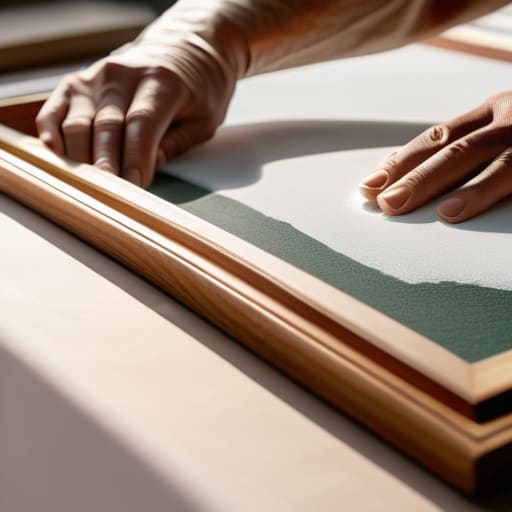
At the end of the day, framing for conservation isn’t about being precious; it’s about basic professional hygiene. You’ve understood that acid-free matting is the bare minimum, that UV-protective glass is your primary defense against a sun-bleached career, and that the structural integrity of the frame determines whether a piece lasts a decade or a century. If you skimp on these elements, you aren’t just saving a few hundred pounds today; you are effectively devaluing your own inventory before it even hits the gallery wall. I’ve seen far too many promising careers stalled because a collector returned a piece that had buckled or faded due to cheap materials, and quite frankly, that is a conversation no artist wants to have.
Look, I know the upfront costs feel like a gut punch, especially when you’re already stretching every penny to keep the studio lights on. But remember that you aren’t just buying wood and glass; you are purchasing longevity and credibility. When you present a piece that is physically sound and scientifically protected, you are telling the collector—and the gallerist—that you respect your own work enough to treat it as a lasting asset rather than a temporary whim. Treat your presentation with the same rigor you apply to your technique, and you’ll find that people stop questioning your prices and start investing in your legacy.
Frequently Asked Questions
If I'm working on a large-scale piece, is it actually worth the extra money to use museum glass, or am I just paying for a brand name?
Oil on canvas, 120cm x 150cm, 2024. If you’re asking the question, you’re already worried about the math. Here’s the truth: for a large-scale piece, museum glass isn’t a luxury brand; it’s a functional necessity. A massive sheet of standard glass creates a glare that acts like a wall between the collector and your brushwork. If they can’t see the texture because of a reflection, they won’t buy it. Pay for the clarity.
I've heard people mention "acid-free" matting, but does that actually stop the paper from turning yellow if the backing board is cheap?
Oil on canvas, 12×12, 2024. No, it doesn’t. If you use acid-free matting but pin it against a piece of cheap, acidic cardboard from a craft shop, you’re just creating a very expensive sandwich of decay. The acid from that backing board will migrate right through the mat and into your paper. You can’t buy your way out of a bad foundation; if the backing isn’t archival, the whole thing is a ticking time bomb.
How do I know if the framer I'm hiring actually understands conservation, or if they're just a guy with a saw and a decent website?
Don’t ask them if they use “good materials”—everyone says yes. Ask them specifically about their mounting methods. If they start talking about anything other than acid-free matting, reversible hinging, and pH-neutral mounting boards, walk away. Ask if they use linen corners or Japanese tissue for hinging; if they suggest anything that involves permanent adhesives or “just taping it” to the backing, they aren’t a conservator, they’re a carpenter. You want a technician, not a handyman.
