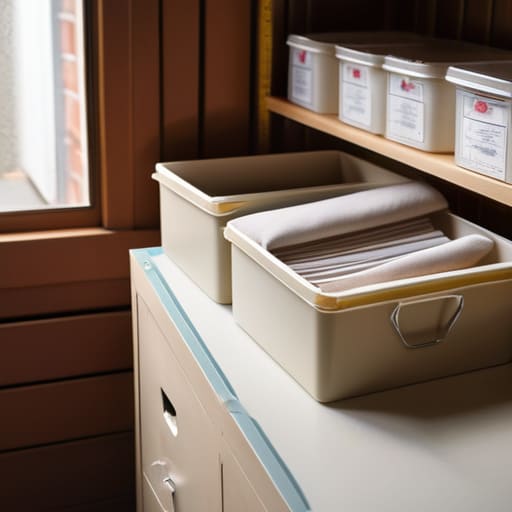

I once spent a frantic Tuesday afternoon in a client’s basement, staring at a stack of oil on canvas that looked less like a curated investment and more like a slow-motion disaster. They had spent hundreds of thousands of pounds on works by artists they loved, only to tuck them away in a space that was essentially a glorified, damp tomb. People often think that learning how to store a collection requires a degree in museum science or a budget for industrial-grade climate vaults, but that is a complete nonsense. Most of the time, you aren’t fighting against the laws of physics; you are simply fighting against your own laziness and a lack of basic, practical awareness.
I am not here to sell you on expensive, high-tech gadgets that you don’t actually need. Instead, I am going to tell you the unvarnished truth about what actually preserves value and what merely wastes your time. I will walk you through the essential, low-cost realities of humidity, light, and physical handling so you can stop worrying and start actually enjoying the assets you’ve worked so hard to acquire.
Preventing Item Degradation Before the Market Turns Against You
If you’ve spent a lifetime building a collection, you aren’t just a lover of aesthetics; you are a custodian of physical assets. The tragedy I saw most often in my gallery days wasn’t artists losing their talent, but collectors losing their capital because they treated their acquisitions like furniture. If you leave a canvas leaning against a damp wall or tucked into a cardboard box from the local supermarket, you aren’t just being careless—you are actively eroding your net worth. Preventing item degradation isn’t about being precious; it’s about basic maintenance.
You don’t need a museum-grade vault, but you do need to stop using cheap materials. If you are storing works in folders or backing them with anything less than acid-free storage solutions, you are essentially inviting slow-motion chemical burns to eat your investment. I’ve seen beautiful watercolours ruined by nothing more than a slight shift in the room’s moisture. Consistent humidity control for collectors is the difference between a piece that holds its value and one that becomes a tax write-off because the paper has gone brittle and foxed. Don’t wait for the market to dip to realize your assets have physically decayed.
Humidity Control for Collectors Protecting Your Capital From the Air
Oil on canvas, 40 x 30 inches, 2014. It’s a lovely piece, but if you hang it in a room with a poorly sealed window, you are essentially watching your investment evaporate. Most people think of humidity as a nuisance that makes their hair frizzy, but for a collector, it is a silent thief. Fluctuations in moisture cause organic materials—wood, canvas, paper—to expand and contract. This constant movement is what eventually leads to cracking, warping, and the dreaded flaking of pigment. Effective humidity control for collectors isn’t about luxury; it’s about stabilizing the environment so the physical object doesn’t fight against itself.
You don’t need a museum-grade HVAC system in your living room, but you do need to be sensible. If you are storing works in a basement or an attic, stop immediately. Those are the most volatile environments in a house. Instead, invest in a decent hygrometer to monitor the levels. You want to keep things steady, ideally between 40% and 50%. When you are moving pieces into long-term storage, ensure you are using acid-free storage solutions to prevent chemical transfers. If the air is working against the medium, no amount of provenance or prestige will save the work from degrading.
The Hidden Cost of Neglect

You can spend twenty years building a collection of impeccable provenance, but if you treat your storage like a glorified junk drawer, you aren’t a collector—you’re just someone holding onto very expensive, slowly decaying paper.
Vivienne Ashworth-Pryce
Protecting the Legacy
At the end of the day, storing a collection isn’t about being precious or obsessive; it’s about basic asset management. You wouldn’t leave a vintage Ferrari in a shed with a leaking roof, so don’t treat a canvas you paid five figures for with any less respect. Between managing the humidity, controlling the light, and ensuring your storage environment isn’t a breeding ground for mold, you are essentially defending your capital. If you ignore these fundamentals, you aren’t just risking a bit of foxing or a faded pigment; you are actively eroding the resale value of everything you’ve worked so hard to acquire.
I spent twenty-six years watching collectors walk into my gallery with works that had been neglected for a decade, and frankly, it broke my heart. They had the eye for the beautiful, but they lacked the discipline for the practical. Remember that art is a physical object subject to the laws of physics, no matter how much we want to believe in its spiritual transcendence. Treat your collection with the stewardship it deserves, and you aren’t just keeping paint on a surface—you are preserving a legacy that can actually be passed down, sold, or enjoyed by the next generation without a massive, avoidable loss in value.
Frequently Asked Questions
If I’m moving house or changing my living situation, what’s the bare minimum I need to do to ensure my pieces don't lose their value in transit?
Oil on canvas, 40 x 50cm, 2018. It’s a lovely piece, but it’s a fragile one. If you’re moving, do not—under any circumstances—let a standard man-with-a-van toss your crates into the back of a truck like they’re old textbooks. The bare minimum? Professional art handlers. You pay for the specialized padding and the climate-controlled transit because a single hairline crack in the varnish or a corner ding during a bump can shave twenty percent off your resale value instantly.
At what point does it become worth the money to hire a professional art handler versus just trusting a high-end moving company?
Oil on canvas, 40x50cm, 2024. It’s a question of risk management, not just muscle. If you’re moving a dining table, call the movers. If you’re moving a canvas that cost more than your first car, hire the handler. High-end movers are great at logistics, but they don’t understand the structural vulnerability of a delicate stretcher or the specific way a crate should be buffered. When the cost of the piece exceeds the cost of the specialist, you hire the specialist.
I have a few works that are quite large and heavy; is there a way to display them safely without risking structural damage to the frames or the walls themselves?
Oil on canvas, 120cm x 150cm, 2018. It’s a beautiful piece, but if you hang it with a standard picture hook, you’re asking for a disaster. For heavy works, stop trying to save a few pounds on hardware. You need heavy-duty French cleats. They distribute the weight across the wall rather than pulling on a single point, which protects both the plaster and the integrity of the frame itself. Don’t let a cheap nail ruin a serious investment.
