

If you listen to the academics, they’ll try to convince you that how abstraction happened was some grand, inevitable teleological shift in human consciousness. They’ll serve it up with a side of heavy jargon about “shifting paradigms” and “the dissolution of the object,” making you feel like you need a PhD just to look at a canvas without apologizing. It’s nonsense. In my twenty-six years of running a gallery, I learned that how abstraction happened was less about a spiritual awakening and more about market-driven storytelling and the clever way dealers convinced collectors that “nothingness” was a premium commodity.
I’m not here to lecture you on the sublime or the metaphysical. I’m here to pull back the curtain on the mechanics of the trade. I want to show you how the movement was actually manufactured and sold, from the way collectors were primed to accept a lack of form, to the way galleries built value around the very idea of mystery. You won’t find any fluff here—just the unvarnished truth about how value is assigned when there is nothing left to look at but the paint itself.
The Impact of Photography on Modern Art and Market Value
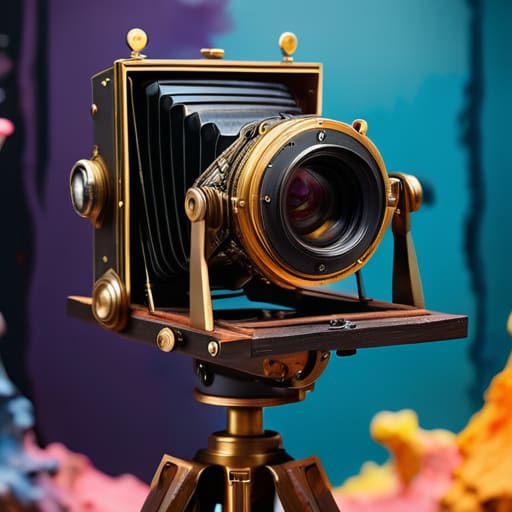
When the camera arrived, it didn’t just change how we saw the world; it effectively fired painters from their most basic job description. For centuries, if you wanted a record of a person or a landscape, you hired a specialist. Once the lens could capture reality with clinical precision, the artist’s role had to undergo a radical shift from realism to abstraction just to remain relevant. If a machine could handle the “what,” the artist was suddenly forced to figure out the “why.”
This wasn’t a crisis of skill, though many critics at the time certainly claimed it was. Instead, it was the catalyst for the evolution of non-representational art. Artists stopped trying to compete with the mechanical accuracy of a shutter click and started exploring what a camera couldn’t touch: texture, emotion, and the pure, unadulterated weight of color. This tension is exactly what drove the market value of the era upward. Collectors stopped paying for a visual receipt of a scene and started paying for a unique, subjective experience that a piece of silver halide paper simply couldn’t replicate.
The Shift From Realism to Abstraction a Calculated Pivot

The shift from realism to abstraction wasn’t just some romantic, spiritual awakening that happened overnight in a smoky Parisian cafe; it was a pragmatic response to a world that had stopped looking at things the same way. For centuries, the artist’s job was to be a highly skilled mirror. But once the camera arrived and began performing that task with mechanical perfection, the market for “perfect likenesses” underwent a violent restructuring. Painters realized that if they wanted to remain relevant—and, more importantly, if they wanted to keep selling—they had to offer something a lens could not: the internal logic of the canvas itself.
This artistic transition to non-objective painting was less of a stumble and more of a calculated pivot toward subjectivity. We saw the influence of Cubism on abstraction act as the bridge, breaking the world into enough fragments that the viewer had to work for their dinner. It moved the value from the subject matter to the process and the hand of the maker. By stripping away the recognizable landscape or the sitter’s face, artists weren’t just making things “pretty”; they were creating a new kind of scarcity based on emotional and formal complexity that a photograph simply couldn’t replicate.
The Myth of the Spontaneous Stroke
We like to tell ourselves that abstraction was this inevitable, spiritual explosion of the soul, but let’s be honest: it was also a masterclass in market repositioning. When you can no longer compete with a camera’s ability to render a face, you don’t just change your subject matter; you change the very definition of what a collector is paying for. We stopped selling the ability to see the world and started selling the permission to feel something unnameable, and the galleries were more than happy to facilitate that transaction.
Vivienne Ashworth-Pryce
The Bottom Line on the Void
If we strip away the lofty academic jargon, what we’re left with is a clear-eyed realization: abstraction wasn’t just a spontaneous burst of creative freedom; it was a necessary survival tactic. Photography took the burden of documentation off the painter’s shoulders, and the market quickly learned that if you couldn’t compete with a lens, you had to compete with pure emotion and intellectual concept. We saw a calculated pivot from the literal to the felt, a shift that allowed galleries to move away from selling mere likenesses and toward selling the artist’s unique perspective. It was a pivot that redefined value, moving it from the skill of the hand to the weight of the idea.
For the artist standing in their studio today, looking at a blank canvas or a messy, non-representational sprawl, remember that the “void” is not something to be feared. The history of abstraction teaches us that value is often manufactured in the spaces where traditional rules fail. Don’t let the lack of a recognizable subject make you feel like your work is less “real” or less marketable. Instead, recognize that you are participating in a long-standing tradition of redefining what sight actually means. The market may be fickle and the gatekeepers may be loud, but the power of an abstract mark lies in its ability to demand a response that no photograph can ever replicate.
Frequently Asked Questions
If abstraction was a response to photography, did it actually create more value for the artist, or did it just make it easier for galleries to sell 'concepts' over craftsmanship?
It did both, and that’s where the money lives. Photography stripped away the necessity of technical mimicry, which forced artists to find a new kind of leverage. For the artist, it opened a door to intellectual property—selling an idea rather than just a likeness. For the gallery, however, it was a gift. It is much easier to sell a “sublime exploration of space” with a high markup than it is to justify a premium based solely on how well someone can render a hand.
How much of the move toward abstraction was a genuine artistic evolution versus a clever way for the market to price works that were faster and cheaper to produce?
It was a bit of both, let’s be honest. While the impulse to strip away representation was a genuine psychological response to a fractured world, the market certainly didn’t fight it. A massive, sweeping landscape takes months of labor; a large-scale color field can be executed in a fraction of the time. Galleries realized they could sell “scale” and “presence” without the overhead of technical realism, turning efficiency into an aesthetic virtue.
When a collector buys an abstract piece today, are they actually paying for the artist's vision, or are they paying for the pedigree and the institutional stamp of approval that justifies the lack of a recognizable subject?
Oil on canvas, 40cm x 40cm, 2024. It’s a bit small, but the question is massive.
