
I remember sitting in a dusty corner of a London auction house in the late nineties, watching a man in a bespoke suit weep over a landscape that looked like it had been painted by a very talented, very bored teenager. He was talking about the “spiritual transcendence of the era,” but let’s be honest: he was just enamored with the prestige of the pivot. People love to treat the history of art like a sacred, untouchable mystery, but if we strip away the academic fluff, how modernism broke with tradition wasn’t some polite disagreement over brushstrokes. It was a violent, messy, and deeply uncomfortable divorce from the idea that art had to be “pretty” or “correct” to have value. It was the moment the artist stopped trying to please the patron and started trying to provoke the spectator.
I’m not here to give you a lecture on aesthetics or recite a textbook. I want to talk about the mechanics of that shift—how it changed what people actually pay for and how it fundamentally rewired the market we still struggle with today. I’m going to show you exactly why that break happened and, more importantly, how you can navigate a market that is still, quite frankly, obsessed with the ghost of that rebellion.
The Rejection of Academic Art Standards
For decades, the “correct” way to paint was dictated by the academies—stuffy, gatekept institutions that functioned more like finishing schools for the elite than incubators for talent. If your brushwork was too visible or your subject matter didn’t lean heavily into mythological allegory, you were effectively barred from the conversation. This wasn’t just about taste; it was about control. The rejection of academic art standards wasn’t some polite disagreement over technique; it was a systematic dismantling of the idea that art had to be a polished window into a perfect, idealized world.
Artists began to realize that the old rules were designed to keep the status quo intact. They weren’t interested in the slow, painstaking rendering of light on silk; they wanted to capture the frantic, fractured energy of a world that was suddenly moving much faster than a paintbrush could keep up with. This radical departure from classical forms was fueled by a realization that the camera had already won the battle for literal representation. If a machine could capture reality perfectly, the artist’s job was no longer to mimic it, but to interpret the messiness of being alive.
A Radical Departure From Classical Forms

It wasn’t just about the brushstrokes; it was about the fundamental collapse of the “window” effect. For centuries, a painting was expected to be a transparent pane of glass through which you viewed a curated, idealized reality. But Modernism smashed that glass. We saw a violent shift from realism to abstraction that forced the viewer to stop looking through the canvas and start looking at it. Suddenly, the texture of the paint, the grit of the pigment, and the flatness of the surface became the subject itself. It was no longer enough to mimic the light hitting a bowl of fruit; the artist wanted you to feel the weight of the medium.
This wasn’t a polite evolution, either. It was a radical departure from classical forms driven by a world that was moving too fast for oil portraits to keep up. You cannot paint a steam engine or a skyscraper with the same soft, romanticized lens used for a pastoral landscape. The impact of industrialization on culture meant that the very rhythm of human perception had changed. The old rules of perspective and anatomical perfection felt like lies in a world of steel, speed, and fractured perspectives.
The Death of the Polished Lie
Modernism wasn’t just a stylistic pivot; it was the moment artists stopped trying to paint the world as a finished, polite illusion and started showing the raw, messy mechanics of how we actually see it. For the old guard, a painting was a window to be kept clean; for the modernists, the canvas became a wall to be hit.
Vivienne Ashworth-Pryce
The Legacy of the Break
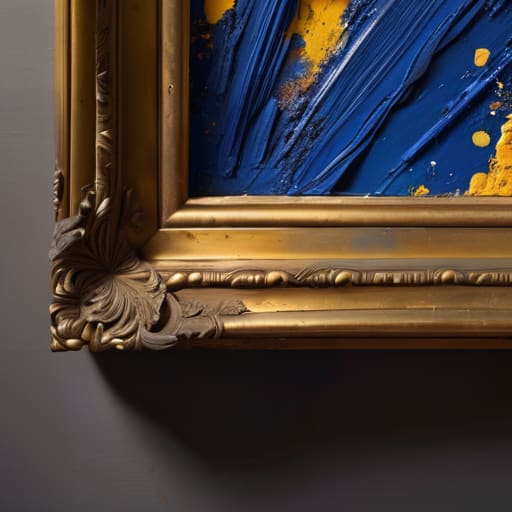
When we look back at this era, we aren’t just looking at a change in brushwork or a sudden obsession with geometry. We are looking at the moment the artist stopped being a mirror for the elite and started being a lens for the internal self. By rejecting the rigid, suffocating grip of academic standards and tossing classical form out the window, the Modernists did something far more dangerous than just painting differently: they democratized the subject matter. They proved that a smear of cobalt blue or a jagged, distorted line could hold as much commercial and emotional weight as a perfectly rendered Renaissance portrait. It was a violent, necessary divorce from the idea that art had to be “correct” to be valuable.
For the artist working today, the lesson of Modernism isn’t about mimicking a specific style, but about understanding the power of the pivot. The market will always try to pull you back toward the safe, the decorative, and the easily digestible, because that is where the predictable money lives. But true value—the kind that survives decades and builds a legacy—is often found in the friction of the new. Don’t be afraid to break the rules of your own tradition; just make sure you know exactly which rules you are breaking and why they no longer serve your vision.
Frequently Asked Questions
If Modernism threw out the rulebook, how do collectors actually determine what makes a piece "good" or "valuable" without those old standards?
Oil on canvas, 40x50cm, 1910. I love it, but let’s be honest about why it costs more than your car. When the old rules died, value shifted from technical mimicry to “provenance” and “intellectual rigor.” Collectors stopped buying how well you could paint a bowl of fruit and started buying your place in a conversation. Value became about the audacity of the idea and the pedigree of the person who says it matters.
Did this break from tradition actually make it harder for artists to make a living, or did it just change who was buying the work?
It did both, and that’s the rub. It absolutely changed the buyer profile, shifting the power from state-sponsored academies to a messy, unpredictable private market. But for the artist, it made life precarious. You weren’t just competing with your neighbor anymore; you were competing with an idea. Suddenly, being “good” wasn’t enough—you had to be “relevant.” That pivot turned art from a steady craft into a high-stakes gamble on intellectual capital.
At what point does a radical departure from form stop being "modern" and just become a lack of technical skill?
Oil on canvas, 24×30, 2024. I don’t care if you can draw a perfect hand, darling. The difference lies in intention. A modern artist breaks the form because they have something specific to say with the wreckage; they understand the rules well enough to know exactly which ones to incinerate. A technician lacking skill is just making mistakes and calling them “statements.” If there is no deliberate logic behind the chaos, it isn’t modernism—it’s just messy.
