
I remember a client back in 2014—a lovely, wealthy woman who had spent three decades acquiring exquisite oils and bronzes—who sat me down in her library, looking utterly defeated. She had a million pounds’ worth of history hanging on her walls, but she couldn’t tell me if a piece was an original or a high-end lithograph, nor did she have a single scrap of paper to prove where they came from. She had been told that art was about feeling, and she believed it, but when it came to the actual mechanics of how to document a collection, she was flying blind. Most people think you need an expensive conservator or a digital vault to start, but that’s just a way to make you feel small and reach for your wallet.
I’m not here to sell you a subscription to a fancy management app or a lecture on archival science. Instead, I’m going to show you the practical, unromantic reality of building an inventory that actually holds weight. I will teach you how to organize your provenance, dimensions, and condition reports so that if you ever decide to sell, or heaven forbid, pass it on, you aren’t leaving your legacy to chance.
Provenance and Acquisition History Proving You Actually Own the Value
If you can’t prove where a piece came from, you don’t actually own the value; you merely own a very expensive piece of canvas and pigment. In my years running the gallery, I’ve seen collectors walk in with breathtaking works only to realize they had zero paper trail to back up their claims. You need a rigorous approach to provenance and acquisition history that goes beyond a simple receipt from a local dealer. I’m talking about the full lineage: the original invoice, the gallery’s letter of authenticity, and even records of previous exhibition history.
Without this, you are essentially gambling every time you decide to resell. If you want to move into serious circles, you cannot rely on a shoebox of loose papers. You need to implement professional cataloging techniques for collectors that link every physical object to its digital ghost. Whether you are using a sophisticated piece of collection management software or just a very disciplined filing system, the goal is the same: creating an unbroken chain of custody. If the history is broken, the value is broken.
Condition Reporting Standards Protecting Your Assets From Silent Decay
If you think a piece of art is a static object, you’ve already lost the battle. Art is a living, breathing, and—more often than not—slowly decomposing entity. I’ve seen more value evaporate through neglected humidity levels and improper mounting than through any market crash. When I talk about condition reporting standards, I’m not suggesting you become a forensic scientist; I’m telling you to stop pretending that “looks fine” is a valid status update. You need a baseline. You need to know exactly where the microscopic crack in the varnish sits today, so that when it migrates across the canvas in five years, you aren’t left wondering if it’s a sudden catastrophe or a slow rot.
This is where most collectors stumble. They treat their acquisitions like furniture, forgetting that even the most robust oil on canvas is subject to the physics of its environment. Incorporating regular, systematic checks into your cataloging techniques for collectors is your only insurance against the silent decay of your capital. Whether you are using a high-end collection management software or just a very disciplined spreadsheet, you must document the physical state with clinical detachment. If you can’t prove the work hasn’t degraded since the day you hung it, you are essentially gambling with your net worth every time you consider a sale.
The Paper Trail of Worth
If you think a receipt in a shoebox is enough, you’re dreaming. In this market, an undocumented masterpiece is just an expensive piece of decor; without a rigorous paper trail, you aren’t holding an asset, you’re holding a liability.
Vivienne Ashworth-Pryce
The Paper Trail is Your Power
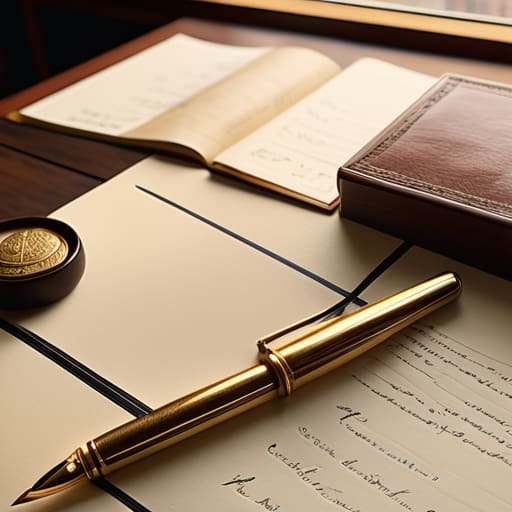
At the end of the day, documenting your collection isn’t some tedious administrative chore designed to bore you; it is the act of building a fortress around your investment. We have covered the necessity of ironclad provenance to prove you aren’t holding a very expensive forgery, and the vital importance of condition reports to ensure you aren’t blindsided by silent, structural decay. If you skip these steps, you aren’t just being disorganized—you are being reckless with your capital. Without a meticulous paper trail, your collection is nothing more than a beautiful, unverified collection of objects that will crumble the moment you try to liquidate them or pass them on to an heir.
I spent twenty-six years looking at files, and I can tell you that the collectors who thrive are the ones who respect the data as much as the paint. There is a profound difference between someone who merely “owns” art and someone who stewards it. By treating your documentation with the same rigor an auction house or a museum would, you are reclaiming agency from a market that thrives on ambiguity. Don’t let your passion be undermined by a lack of precision. Build your archive with intention, because true value is only as permanent as the record that proves it exists.
Frequently Asked Questions
If I’ve lost the original paper trail for a piece I bought twenty years ago, is it still worth trying to reconstruct the provenance?
Oil on canvas, 40cm x 50cm, 2004. I’d say it’s worth the headache. If you think a lost receipt is a death sentence, you’re letting the market win. You reconstruct it. Dig through old exhibition catalogues, find the gallery’s old mailing list, or track down the artist’s previous dealer. A paper trail isn’t just a receipt; it’s a pedigree. Without it, you aren’t an owner—you’re just someone holding a very expensive mystery.
At what point does a simple digital photo become a "professional condition report," and when do I actually need to pay a conservator to do it for me?
Oil on canvas, 40x50cm, 2014. It’s a decent piece, but your iPhone snap isn’t a condition report; it’s a souvenir. A photo becomes a report when it’s high-resolution, macro-focused, and paired with a written map of the work’s physical state. If you’re just checking for dust, a photo suffices. But if you’re seeing craquelure, pigment loss, or structural warping, stop playing amateur. Pay the conservator. In this market, an expert’s signature is the only thing that turns a “maybe” into a “must-buy.”
How much detail should I actually include about the purchase price and the gallery involved—is that too much information to keep in a general inventory?
Oil on canvas, 60x80cm, 2024. I love the way you’re thinking about this. It is never “too much” information. If you omit the price and the gallery, you aren’t keeping a clean inventory; you’re keeping a decorative list. You need the purchase price for insurance valuations and the gallery name to establish provenance. Without those two data points, your inventory is just a collection of pretty pictures rather than a record of assets.
