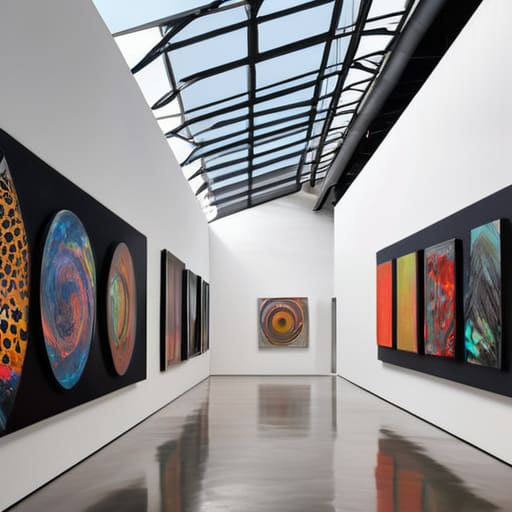

I remember sitting in a drafty, white-walled studio in 2004, watching a young painter try to explain why his work couldn’t be called “Abstract Expressionism” because it was “too emotionally urgent” for such a reductive label. It was exhausting. The industry loves to pretend that how contemporary art is categorised is some sort of divine, intellectual mystery, but let’s be honest: most of these labels are just convenient buckets used to shuffle inventory and justify a price hike. We pretend we are sorting by profound philosophical movements, when in reality, we are often just sorting by marketability and ease of sale.
I am not here to feed you the academic fluff you’ll find in a museum catalogue. Instead, I’m going to pull back the curtain on the actual mechanics of the trade. I will show you how the industry uses these classifications to build narratives, how to spot when a label is being used to artificially inflate value, and how you can navigate these categories without losing your mind—or your shirt. This isn’t about art theory; it’s about the business of being seen.
The Evolution of Art Taxonomy and the Illusion of Order

We used to have it easy. If you were painting landscapes in the 1950s, you were in a box, and that box had clear walls. But the evolution of art taxonomy has moved from sturdy, reliable shelves to a sort of shifting sand. In my early years at the gallery, a movement was a movement; you could point to a group of artists and say, “There they are, they belong to this school.” Now, the lines have blurred so thoroughly that the labels often feel more like marketing shorthand than actual academic rigor.
The industry loves to pretend there is a logical progression, but much of it is an illusion of order designed to make high-priced acquisitions feel “safe” for collectors. When we talk about postmodern art movements, we aren’t just discussing aesthetics; we are discussing the fragmentation of certainty. We’ve moved from categorizing by what the work is to what the work means, which is a much harder thing to put a price tag on. This shift from the physical to the cerebral means that the categories are no longer fixed points on a map, but rather fluid narratives that galleries manipulate to suit the current season’s appetite.
Postmodern Art Movements Why Labels Dictate the Price Tag

Here is the reality: once we moved past the neat, tidy boxes of Modernism, the industry realized that labels weren’t just for academic papers—they were for price tags. In the era of postmodern art movements, the category became a tool for market positioning. When a piece is labeled “Conceptual Art,” it shifts the value from the physical object to the intellectual property. As a gallerist, I saw this play out constantly. If I could sell a piece as a “challenging conceptual work,” I wasn’t just selling canvas and pigment; I was selling a seat at the intellectual table. The label justifies a price that the material alone never could.
This is where the distinction between artistic medium vs subject matter becomes a financial battlefield. Collectors often think they are buying a painting, but in the current landscape, they are frequently buying into a specific contemporary art genre. Whether it’s the digital sheen of new media or the grit of neo-expressionism, the category tells the collector which social circle they are joining. The label provides the safety net that allows them to spend five figures on something they might not even “like” in the traditional sense.
The Price of a Label
Don’t mistake a category for a definition; in this business, a label is rarely about the soul of the work and almost always about whether a collector can find a shelf for it or a way to justify the invoice to their spouse.
Vivienne Ashworth-Pryce
The Taxonomy of the Transaction

At the end of the day, these categories—whether they are academic movements or market-driven labels—serve a very specific, very practical function. They provide a shorthand for collectors to navigate a sea of visual noise and, more importantly, they provide a framework for galleries to justify the price tag. We’ve seen how labels can manufacture a sense of historical importance overnight, turning a singular creative impulse into a predictable asset class. You must understand that while these taxonomies offer a semblance of order, they are often just convenient containers used to package and sell an identity rather than a reflection of the work’s inherent soul.
If you are the artist reading this, do not let the industry’s need for neat little boxes stifle your impulse to create. Use the labels to find your way into the room, but never mistake the category for the craft itself. The market will always try to pin you down to a specific niche because niche is profitable, but true longevity comes from being too complex to be easily filed away. Learn the rules of the taxonomy so you can play the game, but keep enough of your mystery intact that no catalog can ever truly claim to have defined you.
Frequently Asked Questions
If these categories feel so arbitrary, how do I know which label will actually make my work more sellable to a serious collector?
Oil on canvas, 40x40cm, 2024. I like the honesty of the question. Here is the truth: don’t chase the label; chase the context. A serious collector isn’t looking for a movement; they are looking for a coherent visual language that suggests you know exactly where you sit in the conversation. If you try to pivot from abstraction to figuration just to catch a trend, you’ll look desperate, not versatile. Consistency creates the value.
Does being pigeonholed into a specific movement help or hinder my ability to raise my prices as my style evolves?
Oil on canvas, 24×30, 2024. I like the question, though it’s a bit of a trap. In the short term, a niche is your best friend; it makes you a “safe” bet for collectors who want to know exactly what they’re buying. But if you stay too long in one box, you become a commodity rather than an artist. The trick is to build a brand around your eye, not just your subject matter.
When a gallery tells me my work fits a certain "trend," are they helping me find an audience or just trying to manipulate my market value?
It’s a bit of both, darling, and that’s exactly where the tension lies. When a gallerist calls your work “trend-aligned,” they are doing the legwork to match your aesthetic with a specific buyer profile—that’s the helpful part. But they’re also signaling to collectors that your work has a predictable shelf life. They’re essentially betting on your relevance. Use the momentum to build your foundation, but don’t let them box you into a category that expires.
