

Stop thinking that mastering the anatomy of a human skull is the secret to how to paint a portrait. I spent twenty years in a gallery watching collectors walk past technically perfect, “correct” faces to stare at canvases that felt like they were breathing, and let me tell you, the distinction is rarely about the bone structure. I remember a young painter in my gallery back in ’98—oil on canvas, 36×48, 1998—who could map a zygomatic bone with surgical precision, yet his work was utterly lifeless. He was so obsessed with the mechanics of the face that he forgot he was supposed to be capturing a soul, not a medical diagram.
This guide isn’t about teaching you how to draw a nose that looks like a nose; it’s about understanding the psychological weight of a gaze and the value of light in creating a presence. I am going to strip away the academic fluff and show you how to bridge the gap between a mere likeness and a work of art that actually commands a price. We will discuss how to manage your values, how to avoid the “uncanny valley” trap, and how to ensure your work moves from the studio to a serious collector’s wall.
Guide Overview
Tools & Supplies
- Brushes (Set of synthetic rounds and flats)
- Palette (Wooden or plastic mixing surface)
- Easel (Support for the canvas)
- Pencil (For initial sketching)
- Acrylic or Oil Paint (Set of primary colors plus white/black)
- Canvas (One 16×20 inch stretched canvas)
- Linseed Oil or Medium (To adjust paint consistency)
- Paper Towels (For cleaning brushes)
Step-by-Step Instructions
- 1. Stop obsessing over the eyelashes and start with the structural architecture of the head. Most artists dive straight into the skin tones, and that is exactly why their portraits look like melting wax figures. Before you touch a single fine brush, you need to map out the relationship between the brow, the nose, and the jawline using large, decisive shapes. If the underlying geometry is wrong, no amount of beautiful glazing will save you from a piece that feels fundamentally unsettling to a collector.
- 2. Establish your value scale immediately with a limited palette. I cannot tell you how many “talented” painters I’ve seen walk into my gallery with canvases that were nothing but a muddy middle-grey mess. You need to identify your darkest shadows and your brightest highlights before you even think about mid-tones. A portrait survives on tonal drama, not on a hundred different shades of peach that all bleed into one another.
- 3. Treat the skin like a landscape, not a smooth surface. Beginners often make the mistake of trying to blend everything into a seamless, airbrushed finish, which results in work that looks devoid of life. Real skin has temperature shifts—blues in the shadows, yellows in the light, reds around the nose and ears. You aren’t painting a person; you are painting the way light interacts with a complex, living surface.
- 4. Focus on the “anchor points” of the face to create character. The eyes are the cliché, but the way the corners of the mouth sit or how the weight of the cheekbone pulls at the skin is what actually conveys presence. If you nail the structural tension of the face, the viewer will feel the subject’s personality. If you miss it, you’re just selling a decorative object, and frankly, the market is already saturated with those.
- 5. Master the edges, because edges are where the soul of the painting lives. A hard, sharp line around a jawline makes a portrait look like a cut-out from a magazine. You want lost and found edges—where the shadow of the neck melts into the background, or where the light catches the temple. This creates a sense of atmosphere and depth that makes a collector feel like they are actually standing in the room with the subject.
- 6. Resist the urge to “correct” your way to perfection in the final stages. I have seen artists ruin a magnificent, soulful portrait by spending three hours trying to fix a single nostril. Once the structure, tone, and character are locked in, step back. If the painting works from six feet away, it works. If you keep poking at it, you will eventually scrub the life right out of it, leaving behind a technically “correct” but utterly lifeless piece of canvas.
Mastering Facial Anatomy for Artists to Justify the Price Tag

Listen, I’ve sat in countless meetings with collectors who can’t tell a Caravaggio from a high-end digital filter, but they know one thing: they can sense when a painter is faking it. If you are treating a face like a collection of pretty shapes rather than a structural feat, you are leaving money on the table. You cannot charge premium prices for a “vibe.” To justify a high-end price tag, you must demonstrate a command of facial anatomy for artists that moves beyond the surface. When a collector looks at a piece, they aren’t just looking at a likeness; they are looking for the underlying logic of bone and muscle that gives the sitter weight and presence.
This isn’t about being a medical illustrator, but about understanding how the skull dictates the way light falls. If your portrait sketching fundamentals are shaky, no amount of expensive pigment will save you. A collector will intuitively feel the “uncanny valley” error when a cheekbone is misplaced or a jawline lacks structural integrity. They aren’t buying your struggle; they are buying the authority of your execution. Master the structure first, or stop pretending you’re selling fine art and start selling sketches.
Skin Tone Color Mixing and the Illusion of High End Value
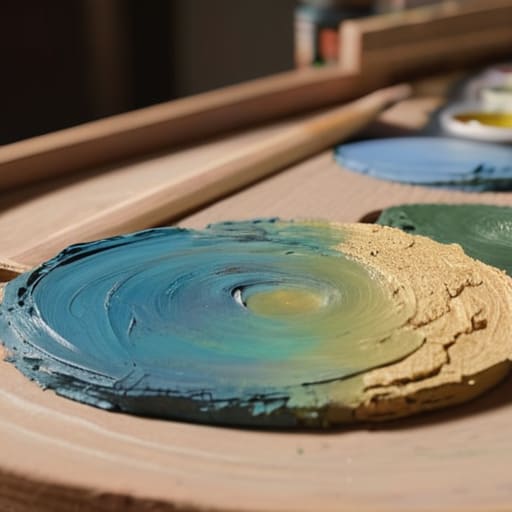
Oil on canvas, 40cm x 50cm, 2024. I don’t care if your brushwork is bravura if your skin tones look like they were scooped out of a tub of cheap margarine. Most artists I advise make the mistake of thinking skin is a single “color” they can find in a tube. It isn’t. If you are relying on a pre-mixed peach or beige, you aren’t painting a human being; you are painting a mannequin. To command a serious price, you must master skin tone color mixing by understanding that the face is a map of temperature shifts—the cool blues and greens of a vein beneath the temple, the sudden warmth of a cheek, and the sallow shadows of the jawline.
When you approach your next piece, stop trying to “match” a photo and start layering. High-end collectors can sense a flat, muddy complexion from across a room, and they will instinctively value the work less for it. Use subtle chromatic shifts to create depth. If your shadows are just “darker skin,” you’ve failed. You need to weave in those complementary hues that make the light appear to actually vibrate off the surface. That is the difference between a student’s study and a professional portrait.
The Difference Between a Likeness and a Legacy

Stop obsessing over whether the nose is mathematically correct and start asking if the soul of the sitter is actually present; a collector can buy a perfect anatomical map anywhere for fifty pounds, but they pay the premium for the truth you find in the gaze.
Vivienne Ashworth-Pryce
The Difference Between a Likeness and an Asset
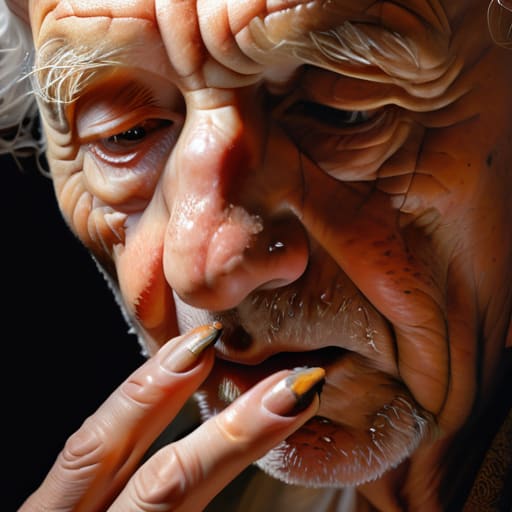
At the end of the day, a portrait is not merely a collection of anatomical landmarks or a clever exercise in color theory. If you have followed what we have discussed, you understand that you are building a structural foundation through anatomy and layering it with the sophisticated chromatic depth that separates a student’s study from a professional’s work. You cannot charge premium prices if your skin tones look like plastic or if your proportions suggest you haven’t bothered to look at the underlying bone structure. To move into the higher tiers of the market, you must prove that your technical mastery is unshakeable, ensuring that the collector isn’t just buying a face, but is investing in a demonstrated level of expertise that justifies the price tag.
However, do not let the mechanics of the market turn you into a mere technician. While I will always demand that your pricing reflects your skill, I also know that a collector buys a portrait because they feel something when they stand in front of it. Once you have mastered the anatomy and the light, stop worrying about the “correct” stroke and start looking for the soul of the sitter. The most valuable works I ever sold weren’t the ones with the most perfect blending; they were the ones where the artist had the courage to be vulnerable. Use your technique to support your vision, not to hide it, and you will find that serious collectors will follow you anywhere.
Frequently Asked Questions
I’ve mastered the anatomy and the skin tones, but how do I know when the portrait is actually finished and ready to be priced, rather than just over-worked and muddy?
Oil on canvas, 24×30, 2024. I’ve seen this exact paralysis a thousand times. You’ve mastered the anatomy, but now you’re scrubbing the life out of the eyes because you’re afraid of being “unfinished.” Stop. A portrait is finished when the light has a place to rest, not when you’ve blended every single brushstroke into a seamless, lifeless smudge. If you keep working, you aren’t adding value; you’re just muddying the market.
Is it better to lean into a more stylized, expressive approach to increase my "signature" value, or should I stick to rigorous realism to satisfy traditional collectors?
Oil on canvas, 24×30, 2024. I like the question, but let’s stop pretending there is a “correct” side. Realism is a technical commodity; it’s hard to master, but once you do, you’re competing with every talented student in the world. Style is where the profit lives. Collectors don’t buy a likeness; they buy a way of seeing. If you can’t find your signature, you’re just a printer with a brush. Find the style, then price it accordingly.
How much of the portrait's perceived value comes from the technical execution versus the "soul" or psychological depth, and can you actually charge more for the latter?
Oil on canvas, 24×30, 2024. I’ll tell you this: technical execution is your entry fee. Without it, you’re a hobbyist, and hobbyists don’t command commissions. But technical perfection alone is sterile; it’s just a well-rendered map of a face. People pay for the “soul”—that psychological tension that makes a collector feel seen or unsettled. You charge more for the depth because that’s what makes a piece an investment rather than mere decoration.
