
I spent twenty-six years watching artists pour their souls into charcoal and graphite, only to be told by “experts” that they needed a thousand-pound masterclass to truly unlock their potential. It’s a racket. Most people will sell you a complete guide to drawing that focuses entirely on the romanticism of the “creative spark” or some nebulous concept of finding your soul on the page. But let’s be honest: you don’t need a spiritual awakening to master line weight or perspective; you need discipline, the right tools, and a way to make your technical skill actually translate into something a collector might pay for.
I am not here to feed you the usual academic fluff or pretend that drawing is a mystical gift bestowed by the gods. Instead, I’m going to give you the unvarnished truth about what it takes to build a technical foundation that holds up under the scrutiny of a gallery wall. We are going to strip away the pretension and focus on the mechanics that actually matter—the kind of practical, hard-won knowledge that turns a hobbyist into a professional.
Mastering Art Fundamentals for Beginners and Beyond
Look, I spent two decades watching artists walk into my gallery with breathtaking concepts but work that lacked the structural integrity to hold a collector’s gaze. You can have all the “vision” in the world, but if your foundations are shaky, the work feels amateurish, and amateurish work is a hard sell at premium prices. This isn’t about being a human camera; it’s about mastering art fundamentals for beginners so that you actually have the vocabulary to express what you see. If you don’t understand how mass and volume work, you’re just making pretty patterns, not making art.
This means you need to get your hands dirty with the unglamorous stuff. I’m talking about sketching anatomy and proportions until it becomes muscle memory, not just something you do when you feel “inspired.” You need to understand how light dictates form through deliberate shading and light techniques, because a collector isn’t just buying a subject; they are buying the way you interpret reality. If you can’t control the physics of a shadow, you’ll never be able to command the price tag you’re dreaming of.
Visual Perception in Art Seeing What Others Miss
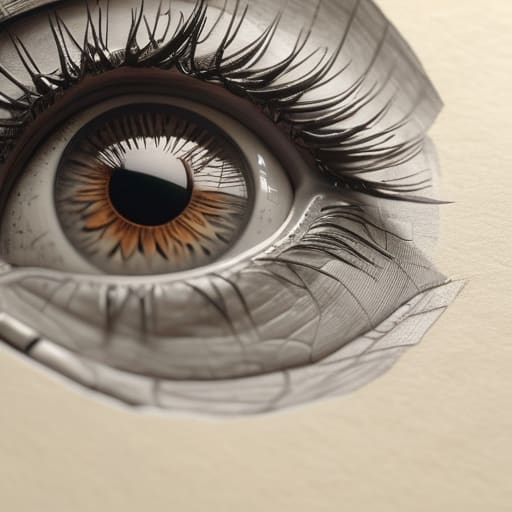
Most students approach a blank page with a list of things they want to do, rather than a list of things they need to see. They think they are struggling with shading and light techniques when, in reality, they are simply failing to observe the way a shadow actually behaves. They draw the symbol of an eye—that little almond shape we all learned in primary school—instead of the actual, messy structural reality of the socket and the eyelid. If you want to move past the amateur stage, you have to stop drawing what you think a thing looks like and start documenting the light as it actually hits the surface.
This is the core of visual perception in art: the ability to decouple your brain’s shorthand from your eyes’ input. When I was running my gallery, I could spot a talented artist from a mile away, not because their line work was perfect, but because they understood volume and weight. They weren’t just sketching anatomy and proportions; they were capturing the presence of a subject. If you can’t see the subtle shifts in value that define a form, no amount of expensive charcoal or expensive training will make your work look anything more than a flat, lifeless diagram.
The Drawing Delusion
Everyone tells you that a complete guide to drawing is about mastering line, weight, and perspective, but they’re lying to you. Technical proficiency is just the entry fee; if you can’t translate that skill into a visual language that commands a collector’s attention, you aren’t making art—you’re just practicing a very expensive hobby.
Vivienne Ashworth-Pryce
The Reality of the Long Game
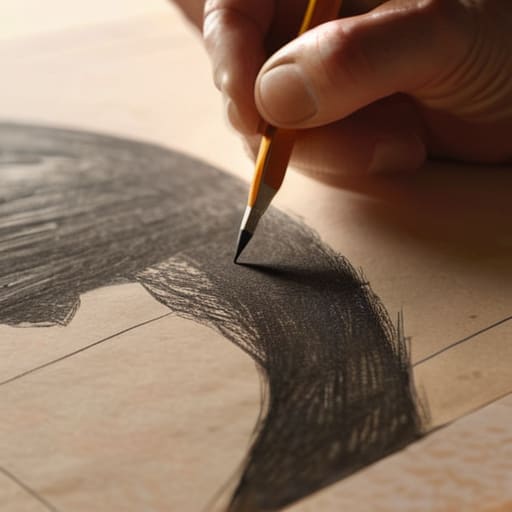
We have covered a lot of ground, from the mechanical rigor of fundamentals to the much more elusive skill of truly seeing the world through a lens of light and shadow. If you take anything away from this, let it be that technical proficiency is merely the entry fee; it is the foundation upon which everything else is built, but it is not the building itself. You can master anatomy and perspective until your hands ache, but without that heightened visual perception we discussed, you are simply a very skilled photocopier. Drawing is not just about the hand moving across the page; it is about the intellectual discipline of translating a three-dimensional reality into a two-dimensional truth without losing the soul of the subject in the process.
Now, please, stop looking for a magic shortcut or a secret way to bypass the thousands of hours of repetitive, often boring practice required to bridge the gap between your eye and your hand. There is no such thing. However, there is a profound satisfaction in that struggle. When you finally capture a likeness or a feeling that makes a collector stop walking and actually look, you realize that the discipline was worth the cost. Don’t just draw to finish a piece; draw to understand the world. The market will always have room for someone who has mastered both the technical craft and the ability to see what everyone else is too busy to notice.
Frequently Asked Questions
I’ve spent years perfecting my technical skills, but how do I know if my "style" is actually marketable or just a collection of habits?
Oil on canvas, 40cm x 40cm, 2024. I don’t like the term “style”—it’s too romantic. What you’re describing is the difference between a cohesive visual language and a set of technical crutches. A marketable style is a consistent way of solving problems that a collector can recognize instantly. If you’re just repeating habits because you’re afraid to try something else, you aren’t developing a brand; you’re just stuck in a rut.
At what point should I stop focusing on academic fundamentals and start thinking about building a body of work that a gallery would actually take seriously?
Oil on canvas, 40x50cm, 2024. I like it, but it’s a distraction. Look, you stop when you stop practicing “exercises” and start making decisions. A gallery isn’t looking for a student who can draw a perfect sphere; they’re looking for a voice that can sustain a conversation. Once you can express a specific, repeatable idea without the technique getting in the way, stop studying the rules and start building the series.
If I’m drawing for a commercial market, how much should I prioritize what I want to express versus what collectors are actually willing to pay for?
Oil on canvas, 24×30, 2024. I like the tension in your question. Here is the truth: if you only draw what you want to express, you have a very expensive hobby. If you only draw what sells, you have a soul-crushing job. The sweet spot is finding the intersection where your obsession meets a collector’s aesthetic. Learn their language, but speak it with your own accent. Don’t compromise the work; refine the delivery.
