

Oil on canvas, 40cm x 50cm, 2014. I remember a particular landscape from a young painter I represented back in the nineties; the brushwork was soulful, the color palette was sophisticated, but the piece was shoved into a flimsy, off-the-shelf plastic frame that looked like it belonged in a high school hallway. I watched a serious collector walk right past it, not because the art was bad, but because the presentation screamed “hobbyist.” It is one of the most expensive mistakes you can make, and frankly, I’m tired of seeing talented people lose sales simply because they don’t understand how framing affects perception and price. A frame isn’t just a border; it is the psychological handshake between your work and the buyer’s wallet.
I’m not here to sell you on gold leaf or bespoke Italian walnut just for the sake of luxury. I want to pull back the curtain on the actual mechanics of the trade so you can stop leaving money on the table. I will show you exactly where to invest your margins and where you’re just throwing cash into a void, ensuring that when a collector looks at your work, they see a professional asset rather than a mere decoration.
The Psychology of Visual Presentation in High Stakes Sales
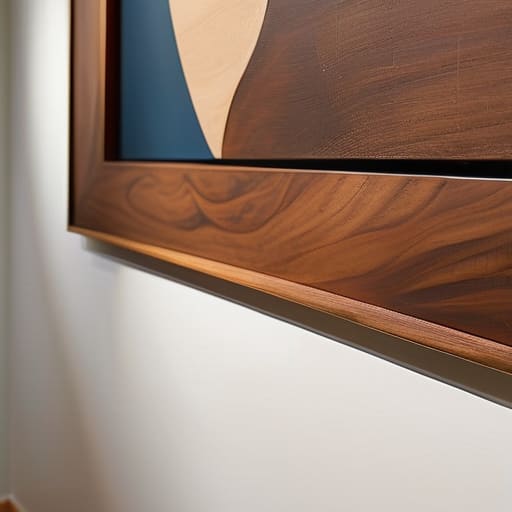
When a collector stands in front of a piece, they aren’t just looking at your technique; they are looking at how much you respect your own work. There is a profound psychology of visual presentation at play here. If you present a canvas with raw, unprimed edges or a flimsy, off-the-shelf frame, you are subconsciously telling the buyer that the work is unfinished or, worse, disposable. A high-end collector isn’t just buying an image; they are buying an object of permanence. If the presentation feels temporary, the perceived value drops instantly, regardless of how brilliant your brushwork might be.
You have to understand that aesthetic presentation and consumer behavior are inextricably linked in the high-stakes market. A heavy, museum-grade float frame doesn’t just sit there; it acts as a psychological anchor, signaling that the work is worthy of a wall in a serious home. It creates a boundary between the art and the mundane world. When you invest in proper housing, you aren’t just “decorating” the piece—you are providing a visual cue that tells the buyer, this is an asset worth protecting.
How Aesthetic Presentation and Consumer Behavior Dictate Your Margin

Let’s be blunt: a collector isn’t just buying your vision; they are buying the object as it exists in their physical reality. There is a profound link between aesthetic presentation and consumer behavior that most artists ignore until they see a sale fall through. When a piece arrives in a flimsy, off-the-shelf frame, it signals that the work is ephemeral—something to be tossed aside or replaced. But when that same piece is housed in a substantial, custom-built frame, the buyer’s brain performs a subconscious calculation. They stop seeing a canvas and start seeing an investment.
This isn’t just about vanity; it is about the tangible impact of framing on perceived value. If you want to command a premium, you have to stop treating the frame as an afterthought and start treating it as a structural component of the work’s worth. High-end collectors are looking for longevity. They want to know that the piece won’t buckle or fade in five years. By incorporating museum quality conservation standards—UV glass, acid-free matting, and archival mounting—you aren’t just “dressing up” the art; you are providing the physical proof that the work is meant to last.
## The Frame is the Handshake

You can spend six months perfecting a subtle glaze, but if you present it in a flimsy, off-the-shelf frame, you’ve already told the collector that you don’t respect your own labor; a professional frame isn’t an accessory, it’s the physical proof that the work is worth the investment they’re about to make.
Vivienne Ashworth-Pryce
The Bottom Line on Presentation

At the end of the day, framing isn’t some frivolous decorative afterthought; it is a fundamental component of your value proposition. We’ve established that a frame acts as a psychological bridge between a piece of canvas and a finished object of value. If you neglect the presentation, you aren’t just saving a few pounds on materials—you are actively signaling to the collector that your work is unfinished or, worse, amateur. Whether you are navigating a high-end gallery commission or selling directly from the studio, you must realize that the frame dictates the perceived ceiling of your price point. You cannot expect a collector to write a four-figure check for something that looks like it was pulled straight from a student workshop.
I want you to stop viewing the cost of a professional frame as an expense and start seeing it as an investment in your own credibility. It is much easier to defend a higher price for a complete, polished work than it is to haggle over a low price for a piece that looks neglected. You have spent hundreds of hours mastering your craft; do not let a cheap piece of timber undermine your entire career. Treat your work with the respect you want the market to show it, and the collectors will follow suit.
Frequently Asked Questions
If I’m working on a smaller scale, is it better to go for a heavy, statement frame to drive up the price, or does that just look like I'm trying too hard?
Oil on canvas, 10×12, 2023. I think you’re overthinking the physics of it. If you slap a massive, ornate gilded frame around a tiny sketch, you aren’t adding value; you’re creating a visual lie. Collectors can smell desperation. For small works, aim for “substantial,” not “statement.” A clean, deep shadow box or a solid wood float frame provides the necessary weight to justify a higher price point without making the piece look like it’s wearing its father’s suit.
At what point does the cost of a high-end frame start eating too far into my actual profit margin?
Oil on canvas, 40×30, 2024. It’s a classic trap. You don’t want to be the artist who spends their entire commission on gilded walnut, but you also can’t sell a masterpiece in a cardboard mat. The rule of thumb? Framing should ideally sit around 10% to 15% of your retail price. If you’re spending 30% of your margin just to make the piece look “finished,” you aren’t running a business; you’re subsidizing a framer’s lifestyle.
Should I be providing the frames myself as part of a commission, or is it better to let the collector choose their own once the sale is made?
Oil on canvas, 40x50cm, 2024. I think you’re overcomplicating a logistical headache.
