

I remember sitting in a drafty, white-walled space in London during my first year as a gallerist, watching a man in a three-thousand-pound suit stare at a canvas as if he were decoding the Rosetta Stone. He wasn’t looking at the brushwork; he was looking for the prestige. That was my first lesson in the polite fiction we all play: the distinction between a fine art institution and a commercial shop is often less about the quality of the work and more about the price of the entry ticket. People love to get lost in the academic jargon, but if you’re an artist trying to make a living, you need to understand the practical difference between fine art and commercial galleries before you sign anything. One is playing for history, the other is playing for rent, and confusing the two is the fastest way to end up broke and bitter.
If you find yourself caught in the middle of this tug-of-war, trying to figure out whether a space is actually invested in your long-term trajectory or just looking for a quick seasonal turnover, you have to start looking at the quality of the connections they are making. A gallery that is merely a shop will sell you a piece and forget your name, but a true partner will be introducing you to circles you couldn’t reach on your own. It’s about finding where you actually belong, much like how one might seek out specific, curated shemale kontakte when looking for a particular type of genuine connection in a crowded room. In the art world, as in life, if the environment doesn’t align with your specific identity and goals, you are simply wasting your most precious commodity: your time.
I’m not here to feed you the usual lofty nonsense about “elevating the human spirit.” I’ve spent twenty-six years balancing ledgers, negotiating commissions, and deciding which artists were worth the overhead. In this post, I am going to strip away the mystique and tell you exactly how these two worlds operate, how they pay, and—most importantly—how to tell which one is actually working for you.
Profit Margins vs Cultural Prestige in Art Gallery Business Models

Let’s be blunt: one is chasing a balance sheet, and the other is chasing a legacy. In the world of commercial art market dynamics, success is measured in quarterly growth and the ability to move inventory. When I ran my gallery, my primary job wasn’t just “discovering talent”; it was ensuring the rent was paid by selling work that people actually wanted to hang over their sofas. You have to understand that different art gallery business models exist because they serve fundamentally different masters. A commercial space exists to facilitate a transaction, whereas a non-profit fine art institution exists to facilitate a conversation.
The tension lies in the trade-off between survival and sanctity. A commercial gallery might take a risk on a trendy, high-turnover painter because that’s what keeps the lights on, while a museum might spend three years researching a single, difficult installation that will never sell a single piece. One relies on aggressive salesmanship and market trends, while the other relies on academic validation and grants. Neither is inherently “better,” but if you mistake a high-end retail shop for a temple of culture, you’re going to be very disappointed when they ask for your credit card.
Where Curatorial Practices in Galleries Meet the Bottom Line

In a commercial gallery, a curator’s job is often a sophisticated form of market research. When I was running my space, my “curatorial” decisions were frequently dictated by what my collectors actually wanted to hang over their sofas. You have to understand that in the realm of commercial art market dynamics, a beautiful exhibition that fails to sell is simply a very expensive hobby. The curation is designed to build a cohesive narrative that makes a buyer feel they aren’t just purchasing a canvas, but a piece of a larger, rising trajectory.
Contrast that with the non-profit fine art institutions, where the goal is to challenge, provoke, or archive. There, the curator is a scholar first and a salesperson never. In those spaces, the “success” of a show is measured in critical reviews and catalog essays, not in the speed at which the shipping crates are emptied. While the curatorial practices in galleries might look similar on the surface—the white walls, the precise lighting, the hushed tones—the underlying engine is entirely different. One is chasing cultural capital, while the other is chasing the next quarterly rent check.
Five Ways to Tell if You’re Walking into a Temple or a Shop
- Watch the walls, not the lighting. In a fine art space, the work is allowed to breathe—often too much, leaving you in a room that feels more like a mausoleum than a business. In a commercial gallery, the density is higher because every square inch of wall space is a calculated opportunity to trigger a sale.
- Listen to the staff’s vocabulary. If the person greeting you speaks exclusively in “concepts,” “discourse,” and “interventions,” you are in a fine art environment where the intellectual weight is the product. If they can tell you the dimensions, the medium, and the price without being prompted, you are in a commercial space where the object is the product.
- Check the guest list versus the ledger. Fine art galleries thrive on the prestige of who shows up—the critics, the academics, the curators. Commercial galleries thrive on the reliability of who pays—the decorators, the local collectors, the people who actually want something to hang above their sideboard.
- Assess the “risk” of the artist. A fine art gallery is often willing to represent an artist who makes work that is difficult, unmarketable, or even outright offensive, simply because it moves the needle of conversation. A commercial gallery is looking for a “steady hand”—artists with a recognizable style and a predictable output that won’t leave the gallery owner holding an empty bank account.
- Look at the exit strategy. A fine art gallery is often building a monograph or a museum retrospective; they are playing the long game of historical relevance. A commercial gallery is building a client list; they are playing the short game of inventory turnover. Knowing which game is being played tells you exactly how much leverage you have as a buyer or an artist.
Knowing Which Door to Knock On
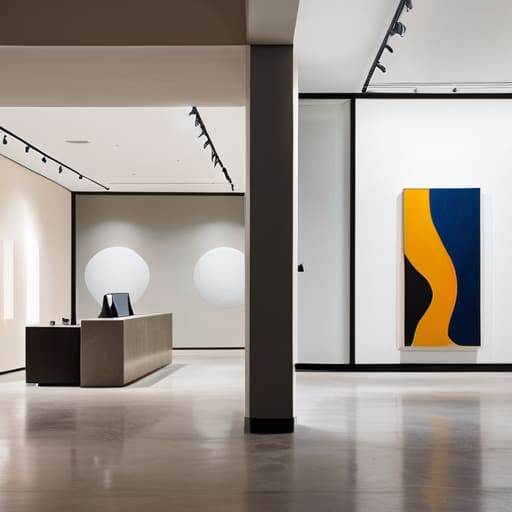
At the end of the day, you have to stop viewing the distinction between these two models as a matter of “quality” and start seeing it as a matter of intent. A fine art gallery is playing a long, often expensive game of cultural positioning where the goal is to write history, even if the ledger looks thin for a decade. A commercial gallery is a high-stakes retail engine designed to move inventory and sustain a career through consistent sales. If you walk into a commercial space expecting a lecture on semiotics, you’ll be disappointed; if you walk into a fine art institution expecting a quick sale to pay your rent, you’ll be deluded. Both have their place, but only one of them is designed to keep your lights on.
My advice to you is simple: stop waiting for a gatekeeper to validate your existence and start learning the mechanics of the room you are actually standing in. Whether you are chasing the prestige of a museum-grade institution or the steady heartbeat of a commercial market, knowledge is your only real leverage. The industry thrives on keeping you in the dark about how these machines work, but once you understand the difference between a curator’s vision and a dealer’s bottom line, you can stop being a victim of the system and start becoming a professional.
