
I spent twenty-six years watching artists walk into my gallery with a look of profound, misplaced confidence, only to have their eyes glaze over the moment I pointed out a structural failure in a canvas. They’ve been taught that art is a mystical, untouchable thing, which is exactly why they struggle with how to critique your own work without falling into the trap of self-indulgent sentimentality. Most “critique” advice you’ll find online is fluff designed to protect your feelings, but feelings don’t pay the studio rent or satisfy a serious collector. If you can’t look at a painting and see the uncomfortable truth of where the composition fails or where the technique becomes lazy, then you aren’t critiquing; you’re just staring.
I am not here to tell you that your soul is visible in every brushstroke. I am here to teach you how to look at your output with the cold, calculating eye of a gallerist who has exactly five seconds to decide if a piece is worth the wall space. I’ll show you how to strip away the ego, identify the technical gaps that drive prices down, and develop a rigorous, unsentimental process for evaluating your progress.
Developing a Critical Eye Beyond Your Own Ego

The problem with most artists is that they treat their work like a newborn child—something to be coddled and defended at all costs. But if you want to move from being a hobbyist to a professional, you have to learn the art of overcoming creative bias. You cannot afford to be precious. When I sat in my gallery, I wasn’t looking at the soul of the piece; I was looking at the tension in the composition and whether the color palette felt intentional or merely accidental. You must learn to step back, physically and emotionally, to achieve a level of objective self-evaluation that your ego will desperately try to block.
One of the most effective ways to do this is to change the context. If you’ve been staring at a canvas for forty hours, you aren’t seeing the work anymore; you’re seeing your own exhaustion. Try photographing your pieces and looking at them on a small digital screen, or better yet, hang them in a room you never use. This forced distance is essential for developing a critical eye. It allows you to see the structural failures that you’ve been subconsciously smoothing over with more paint. If the piece doesn’t hold up when it’s stripped of your familiarity, it isn’t ready for a price tag.
Objective Self Evaluation Methods for the Unforgiving Artist

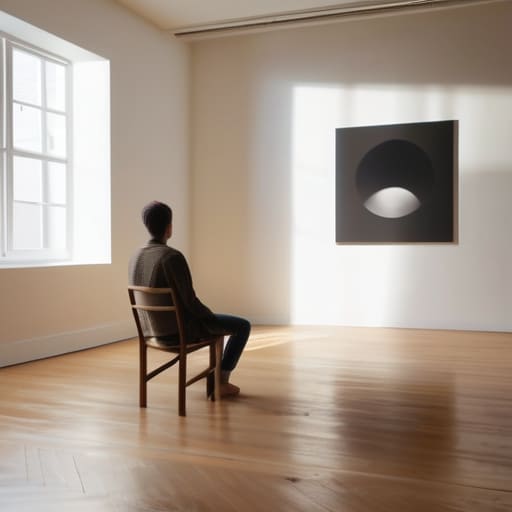
If you want to get serious, you have to stop treating your studio like a sanctuary and start treating it like a laboratory. One of the most effective objective self-evaluation methods I ever taught my artists was the “Wall Test.” Take your piece out of the studio—away from the scent of turpentine and the comfort of your favorite stool—and hang it in a room where you don’t usually work. Better yet, hang it in a hallway with harsh lighting. When you view it from ten feet away, through the lens of a stranger walking past, the structural failures you’ve been ignoring will start to scream at you.
You also need to learn the art of physical detachment. I often tell my clients that overcoming creative bias requires a period of enforced absence. Once a series is finished, put it in the cupboard. Don’t look at it for three weeks. When you finally pull it out, you aren’t looking at “your baby” anymore; you’re looking at a product. If you can’t justify the composition or the color theory to a skeptical buyer, then it isn’t finished—it’s just tired.
The Mirror and the Market

Stop treating your canvas like a diary and start treating it like a product; if you can’t look at a piece and tell me exactly where the technical failure lies, you aren’t critiquing your work—you’re just coddling your ego.
Vivienne Ashworth-Pryce
The Hard Truth and the Final Polish

At the end of the day, critiquing your own work isn’t about being your own worst enemy; it is about becoming your own most rigorous business partner. You have to move past the emotional high of a finished piece and look at it with the cold, calculating eye of the person who has to pay the rent. Whether you are checking for technical inconsistencies, evaluating if the scale matches the ambition, or simply asking if the work holds up when viewed from six feet away, you are performing the essential labor of quality control. If you can’t find the flaws yourself, you can guarantee a gallerist or a collector certainly will, and they won’t be nearly as kind about it as I am.
This process is exhausting, I know. It is much easier to fall in love with a half-finished idea than it is to stare down the reality of a mediocre execution. But remember, the gap between an amateur and a professional isn’t just talent—it is the discipline of the edit. Every time you choose to scrap a weak composition or refine a muddy color palette, you are building the foundation of a career that can actually sustain itself. Don’t let the fear of being “too hard” on yourself stop you; instead, use that scrutiny to ensure that when you finally do step into a room, your work is undeniable.
Frequently Asked Questions
How do I tell the difference between a legitimate technical flaw and just having a "bad day" where nothing looks right?
Oil on canvas, 40cm x 50cm, 2024. I like the courage in the brushwork, even if the composition is a mess.
If I start being too critical, am I going to end up paralyzed and unable to actually finish a series?
Oil on linen, 40cm x 40cm, 2024. I don’t like the fear you’re describing, but I recognize it. There is a massive difference between a surgical audit and a death spiral. If you’re using critique to refine a piece, you’re working. If you’re using it to punish yourself for being human, you’re just procrastinating. Perfection is a luxury for collectors; for artists, completion is the only thing that pays the bills. Finish the series. Fix it in the next one.
At what point does self-critique stop being "professional growth" and start becoming a way to justify underpricing my work because I'm too insecure to stand by it?
It stops the moment you use a “flaw” as a negotiation tactic against yourself. If you’re telling a collector, “It’s not quite finished, so I’ll take less,” you aren’t being honest; you’re being cheap. Professional growth is fixing a technical error; insecurity is using that error to apologize for your existence. If your critique leads to a lower price tag rather than a better canvas, you aren’t evolving—you’re just subsidizing the buyer’s luck.
